Fashion Trends
Fall Fashion Trends Worth Knowing
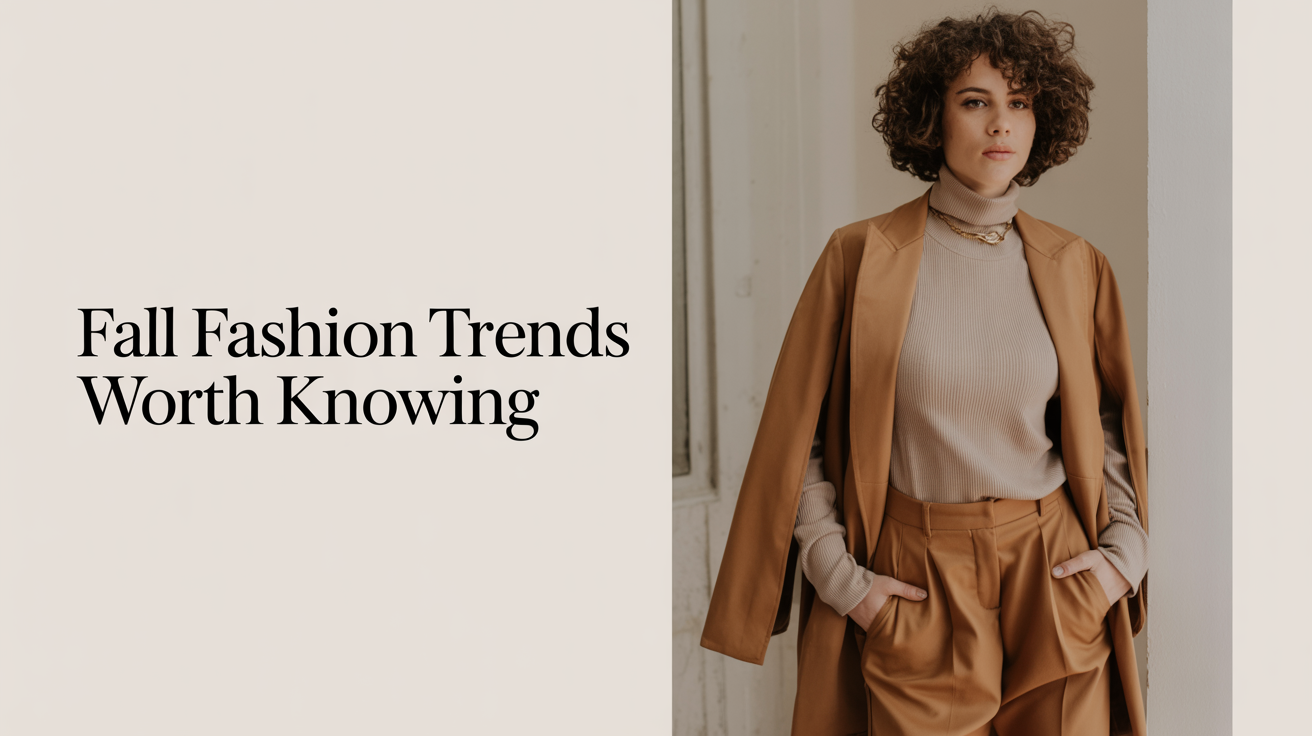
Every September the same thing happens: the temperature drops maybe four degrees, and suddenly everyone remembers they own coats. Fall fashion trends get talked to death in magazine round-ups, but most of that noise collapses into the same recycled list. This is a more specific one. These are the directions that reappear in autumn collections reliably enough to be worth building around: silhouettes, fabrics, and color stories that genuinely move the needle on a fall wardrobe, not just the trends du jour that vanish by November.
The return of structured outerwear
Not the puffer. Not the teddy coat (though it will always have its fans). The coat that keeps showing up in autumn trends is the one with architecture: a defined shoulder, a double-breasted front, wool or wool-blend fabric that holds its shape through a rainstorm.
The silhouette has ranged from a fitted single-button blazer coat to a voluminous wrap with a wide lapel. What they share is intentionality. These are coats that don't need anything underneath to look complete. A camel wool overcoat over a simple ribbed turtleneck and straight-leg trousers is dressed enough for almost anything.
What to look for in fabric
Wool content matters more than the weave. A 60% wool melton will outlast and outperform a 100% polyester "faux wool" in both warmth and drape. Cashmere blends stay softer longer but pill faster if the construction is poor. Bouclé is having a sustained moment. The nubby, looped texture holds a coat's structure while reading as softer than a flat suede or leather.
Color-wise, the autumn coat palette gravitates toward:
| Color | How to wear it |
|---|---|
| Camel / toffee | Works as a neutral; pairs with burgundy, navy, cream |
| Chocolate brown | Richer alternative to black; ground it with caramel accessories |
| Forest green | Deep enough to feel autumnal without being festive |
| Slate grey | The workhorse; works with nearly everything in a fall wardrobe |
| Burgundy / oxblood | Bolder statement piece; keep the rest simple |
Brown as the new neutral
Black is never going anywhere, but autumn trends have spent years quietly lobbying for brown. Not the muddy mid-tone that dates to the 1970s, but rich, specific browns: cognac leather, walnut suede, mocha knit.
The case for brown is largely practical. It works with other autumn tones in a way black often doesn't. Burgundy and cognac look considered together. Camel and chocolate brown feel expensive. Layer three shades of brown and it reads as tonal dressing, which is one of those looks that appears effortless and actually requires no effort once you know the formula.
Suede is the fabric where brown really earns its place. A suede midi skirt in cognac with a cream blouse and ankle boots is a complete autumn outfit. Swap the cream for a deeper ivory or biscuit, and it gets more interesting. Swap the blouse for a textured knit, and it becomes more casual.
If you've been meaning to read up on how quiet luxury works as a styling philosophy, the brown-as-neutral approach is basically a masterclass in it. The palette is the point.
Texture as the main event
Fall is when texture justifies itself. Lightweight fabrics that work beautifully in spring (silk charmeuse, linen, fine cotton poplin) read as insufficient once the air gets dry and cool. Autumn trends lean into the opposite: bouclé, boucle-knit, ribbed wool, velvet, corduroy, shearling trim.
The most interesting autumn dressing often comes from mixing two textures that contrast each other in weight or nap. Corduroy trousers with a silk blouse. A velvet blazer over a cotton ribbed turtleneck. Shearling details (collar, cuffs) on a smooth leather jacket.
Corduroy specifically
It goes in and out of fashion at the runway level, but corduroy never fully disappears from the actual clothes people buy and wear. The wide-wale version, those thick ridges, feels more relaxed and 1970s-adjacent. Fine-wale corduroy cuts a cleaner line and works in professional contexts where denim wouldn't.
Corduroy trousers in chocolate, rust, or forest green are some of the most wearable seasonal fashion buys available at any price point. They're durable, they press well, and they sit in the uncanny valley between casual and smart in a way that's genuinely useful.
Color stories: what autumn does best
Autumn trends in color are less about a single "it" shade and more about a general direction. The palette moves away from the cool, watery tones of spring and toward warmth, depth, and saturation.
- Rust and terra cotta: earthy orange-reds that look particularly good on medium and deep skin tones
- Plum and fig: purple with enough red in it to feel warm rather than cold
- Ochre and mustard: tricky to wear, but a small dose (a scarf, a bag) adds warmth to any neutral outfit
- Burnt sienna: one of those colors that photographs better than it sounds; a mid-tone orange-brown
- Navy (always): not specifically autumnal, but it reads richer in autumn fabrics and heavier weights
The more useful seasonal fashion principle here is that autumn is when warm undertones win. If you have pieces in your wardrobe that never quite looked right (a blush that felt too pink, a white that felt stark), autumn is often when you discover they work with the richer tones in circulation.
Tailoring with room in it
The sharp-shouldered, skin-close tailoring that dominated certain periods is not what autumn trends keep returning to. The current long-run direction is toward a blazer or suit jacket with a little ease — not boxy, but not constructed to the ribcage either.
This is the silhouette that made the old money aesthetic so approachable for regular dressing: a blazer that falls from the shoulder with a half-inch of room across the chest, sleeves that hit at the wrist without pulling, a single or double button closure that doesn't gap. It's not the jacket that announces itself. It's the jacket that makes the outfit look considered.
Trouser shapes follow the same logic. Wide-leg trousers are in active rotation in autumn collections because they feel deliberate rather than tight. They look better with heels, but they also work with loafers or flat ankle boots for a more relaxed outcome. The key fit point is the waist and hip. If those are right, the leg width almost doesn't matter.
A practical note on alterations
Most ready-to-wear blazers are built for a generic body. A tailor can take in the side seams, shorten the sleeves, or suppress the waist slightly for around $40–80 depending on location. That one round of alterations can make a $150 blazer look like it cost three times that.
Boots and the case for ankle length
Full-length knee boots are a fall wardrobe staple that never fully falls out of rotation. But the boot that gets more interesting use out of a seasonal wardrobe is the ankle boot, specifically in a block heel or low stacked heel with a pointed or slightly almond toe.
Why ankle length? Because the hem relationship matters more than it gets credit for. An ankle boot that ends below the hem of wide-leg trousers disappears. The same boot with a midi skirt creates a visible transition at the ankle that draws the eye down. With cropped straight-leg denim, the boot is part of the silhouette.
- Block heel (5–7cm): works with trousers, jeans, midi skirts; stable enough for actual walking
- Stacked leather heel (3–4cm): more casual, works with denim and relaxed weekend dressing
- Kitten heel (3–4cm): dressier than it looks with tailored trousers; underused in autumn styling
Material preference in autumn boots: smooth leather ages best and polishes back up after rain damage. Suede looks better initially but requires more maintenance in wet weather. Chelsea boot construction (elastic side panels, no laces) is one of the most functional shapes for daily wear.
For reference on how to build this kind of thinking into a broader seasonal refresh, the approach in spring fashion trends works in reverse: clear out what isn't working before you add anything new.
Frequently Asked Questions
What fall fashion trends actually last from year to year?
The ones that survive are the ones based on fabric weight and silhouette rather than a single color or motif. Structured outerwear, tonal brown dressing, textured knits, and easy tailoring keep appearing because they solve real dressing problems in cold weather. A camel coat or a pair of wide-leg wool trousers bought this year will be just as useful in five years.
How do I update a fall wardrobe without buying everything new?
Start with one coat and one pair of trousers or a skirt in the season's palette. If you already own navy, grey, and black, the addition of cognac leather or a rust knit introduces warmth without replacing anything. Accessories (a bag, a scarf, a belt) are the lowest-investment way to work a new color into an existing wardrobe.
What colors work best for autumn trends if I'm not sure what suits me?
As a starting point: if you look good in gold jewelry, you'll likely look good in the warmer autumn palette (rust, camel, ochre, cognac). If silver suits you better, lean toward the cooler autumn tones: forest green, plum, slate, navy. Neither rule is absolute, but it's a faster starting point than trial and error.
Is corduroy actually back, or is it just nostalgia?
It never fully left at the retail level, but it shows up in seasonal fashion collections with enough regularity to justify buying it if you like how it looks. Fine-wale corduroy in particular has held its ground in tailored trousers and structured blazers. Buy a cut and color you'd reach for regardless of trend status.
How do I wear texture mixing without it looking accidental?
Keep the color story consistent when the textures vary. Two or three textures in the same tonal range (all warm neutrals, or all deep jewel tones) read as intentional. Mixing colors and textures simultaneously is harder to pull off. Ground at least one item in a plain, smooth fabric (a silk blouse, a flat leather boot) and the other textures have something to contrast against.