Fashion Trends
The Coquette Aesthetic: How to Style the Bow-and-Lace Look
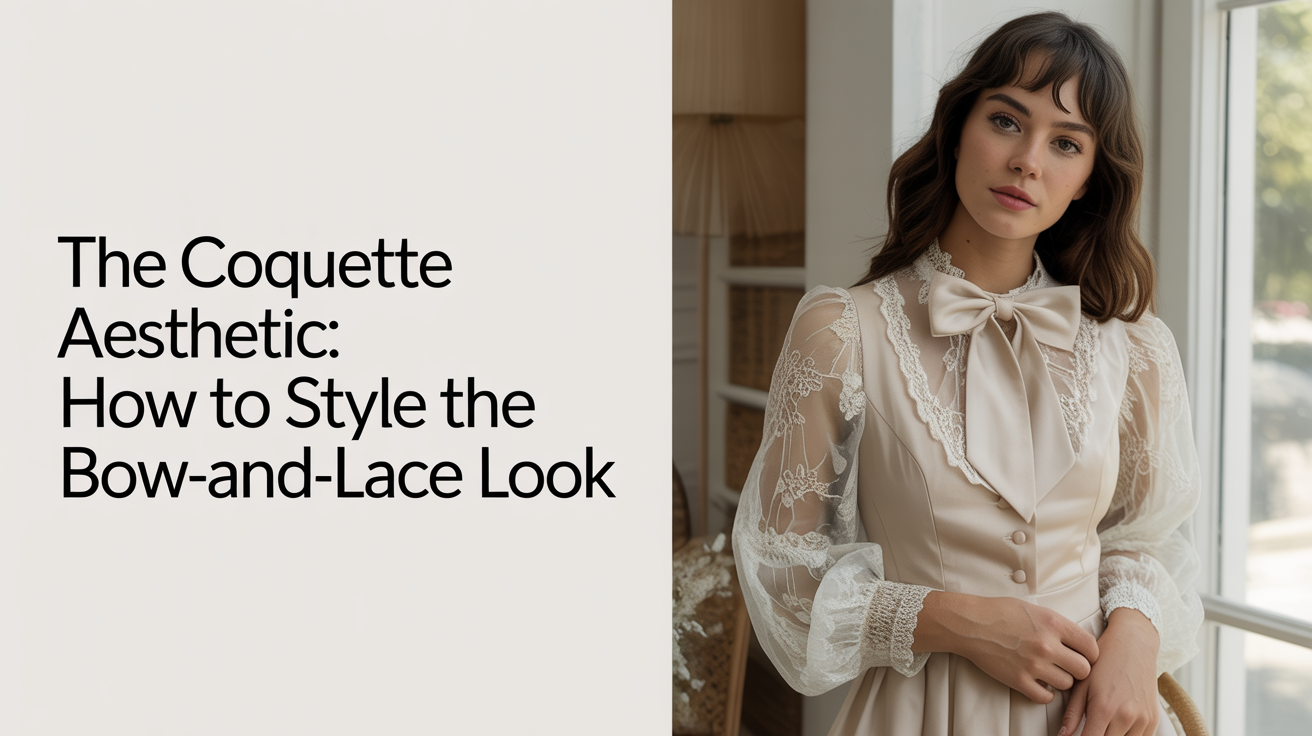
The coquette aesthetic has been circulating on Pinterest boards and TikTok saves for a few years now, but the pieces it's built around, satin slips, hair ribbons, ballet flats, babydoll dresses, have been in wardrobes much longer. What's shifted is the way they're being combined and the mood they're meant to project: something soft, self-aware, and deliberately feminine.
This guide looks at what coquette fashion style actually requires in your wardrobe, which details are doing the most work, and where you can save yourself a shopping trip by reaching for things you probably already own.
What the Coquette Aesthetic Is (and Isn't)
The word coquette historically described a woman who flirts without serious intent. The fashion version borrows that sensibility: it's femininity worn with a sense of play rather than earnest romance. The color palette leans into dusty rose, ivory, white, lilac, and sage. Textures do a lot of the heavy lifting, specifically satin, lace, chiffon, and velvet ribbon.
What it isn't is maximalist. A coquette outfit usually has one strong statement piece, a ribbon-tied blouse, a lace-trimmed hem, a bow at the collar, and the rest of the look stays quiet. Piling on bows, lace, and a satin slip all at once tips into costume territory quickly.
It also isn't strictly vintage. While some coquette styling pulls from early 2000s aesthetics and 1990s slip dresses, the mood is more "considered femininity" than period-accurate throwback. You're not trying to look like you raided a period closet. You're choosing pieces that feel soft and considered together.
The Pieces That Actually Drive the Look
Satin Slip Dresses
A bias-cut satin slip in ivory, blush, or chocolate is probably the most recognizable coquette piece. The silhouette is close to the body through the hips and falls straight to mid-thigh or knee. Charmeuse and crepe-backed satin both work. The thing to look for is weight: a too-thin fabric clings and wrinkles in a way that reads cheap rather than sensual.
If you already own a satin nightgown or chemise in a wearable length, that's the same piece. The coquette aesthetic has genuinely rehabilitated the nightgown-as-outfit, so there's no need to buy a purpose-built slip dress if you have something similar already hanging in your closet.
Ribbon and Bow Details
Hair ribbons are the easiest coquette entry point. A grosgrain or satin ribbon tied around a low ponytail or bun costs very little and immediately shifts the register of a plain outfit. Velvet ribbon in wine, ivory, or black reads more refined. Pastel satin ribbons skew younger and sweeter, which is perfectly fine if that's the tone you're going for.
Bows on clothing itself, at collars, cuffs, or waistlines, are worth thinking about more carefully. A bow at the collar of a blouse works well. Bows printed on fabric or oversized statement bows on bodices tend to age faster and commit you more heavily to a specific trend cycle.
Ballet Flats
Coquette styling strongly favors flats over heels. Ballet flats, specifically the pointed or round-toe versions with a ribbon tie around the ankle, fit the aesthetic well. They reinforce the soft, understated side of the look.
You don't need ballet flats exclusively. Mary Janes, kitten-heel mules, and simple loafers can all work. What doesn't fit is anything with an aggressive heel, a chunky sole, or an athletic profile. The shoe should feel like it belongs in the same soft, quiet world as the rest of the outfit.
Babydoll Silhouettes
Babydoll dresses and tops, short and full-skirted with the skirt gathered at or just below the bust, are a defining coquette silhouette. They read more playful than a slip dress and pair well with fitted cardigans when the weather calls for layering.
Fit matters here: a babydoll that's too boxy reads as shapeless rather than intentional. Look for styles with some structure at a smocked or shirred bodice so the silhouette has definition.
Lace Details
Lace works best as trim rather than full-coverage fabric in a coquette context: a lace hem peeking out under a slip dress, a lace-edged collar on a blouse, or visible lace straps under a cardigan. Head-to-toe lace crosses into bridal territory quickly, and that's a different aesthetic entirely.
What to Buy vs. What to Pull From Your Closet
This is where most style guides skip past the practical part. Before buying anything, check what you already own.
Likely already in your closet:
- A white or cream blouse with any delicate detail (eyelet, broderie anglaise, smocking)
- A silk or satin top that you've been treating as sleepwear
- A midi or mini skirt in a soft fabric (chiffon, crepe, satin)
- Pearl jewelry, which reads coquette without any modification
- A plain cardigan in a neutral or dusty tone
- Hair ties that can be swapped for a ribbon (a few dollars at any fabric or craft store)
Worth buying only if the gap is real:
- A satin slip dress if you genuinely don't own a similar piece
- Ballet flats if your flat options are all athletic or very casual
- One lace-trimmed piece (a camisole is the most versatile starting point since it layers under almost everything)
The bow-and-lace fashion trend is easy to buy into expensively and quickly. The more durable approach is building the look from pieces with long usefulness: a satin cami that works across multiple outfit contexts, ballet flats that see year-round wear, a ribbon that doubles as a hair tie and a gift wrapping accent.
How to Put Coquette Outfits Together
A Practical Daytime Look
Satin cami tucked into a pleated midi skirt in ivory or blush. Fitted cardigan over the top. Ballet flats. Hair in a low bun with a narrow ribbon. This reads polished without being ostentatious, and every piece has a life well outside this specific aesthetic.
The old money aesthetic shares some of this groundwork, specifically the preference for quality fabrics and restrained accessories, but the coquette version leans softer and more overtly romantic in its details. Where old money goes for quiet authority, coquette goes for quiet sweetness.
An Evening Version
A satin slip dress worn alone with a simple necklace (delicate chain, pearl pendant) and ballet flats or kitten-heel mules. A thin cardigan or a draped satin blouse over the top for warmth. The goal is that the outfit looks effortless rather than assembled.
If you're drawn to the quieter, fabric-forward side of this aesthetic, quiet luxury styling covers similar territory and is worth reading alongside this guide, since the two aesthetics overlap considerably in their aversion to logos and loud branding.
The Bow-and-Lace Look Without Full Commitment
If the full coquette aesthetic feels too defined for your usual style, add a single bow detail to an otherwise straightforward outfit. A ribbon headband on a casual look. A bow-collared blouse with straight-leg trousers. A lace-trimmed camisole under a blazer. These touches reference the aesthetic without requiring you to rebuild your wardrobe around it.
Frequently Asked Questions
Is the coquette aesthetic the same as balletcore?
They overlap but aren't identical. Balletcore pulls more directly from dancewear: wrap cardigans, leotard-style tops, legwarmers, and bun hairstyles as a signature move. Coquette is broader and more about fabric texture and feminine detail (ribbons, lace, satin) than any specific dance-adjacent reference. You can wear ballet flats for coquette reasons without being in balletcore territory.
How do I dress coquette if very feminine silhouettes don't suit me?
The aesthetic is a set of textures and details, not a single silhouette. A satin blouse with ribbon ties at the neck paired with straight-leg trousers reads as coquette without requiring a dress or skirt. Focus on one detail at a time and see what feels natural before committing further. The mood matters more than the silhouette.
What colors are coquette?
Dusty rose, ivory, white, lilac, sage, and pale butter yellow form the core palette. Black and chocolate brown also appear, particularly in velvet ribbons and satin pieces. The key is that colors stay muted rather than saturated. A vivid magenta or a bright red don't fit the register, even in a silhouette that would otherwise work.
Can you wear the coquette aesthetic in winter?
Yes, the pieces adapt well to colder months. Velvet ribbon instead of satin. A lace-trimmed turtleneck. A babydoll dress over a fitted long-sleeve base layer. Ballet flats traded for Mary Janes or ankle boots in soft leather. The aesthetic reads year-round because it's more about fabric and detail than any specific garment.
Do bows and lace need to appear in the same outfit?
No, and combining too many coquette signals at once is where the look tips into parody. One strong detail per outfit is a more reliable approach: a bow in the hair, or lace at the hem, not both simultaneously. Restraint is actually what makes the aesthetic feel intentional rather than assembled from a costume kit.