Outfits
Work Outfit Ideas for a Polished Office Look
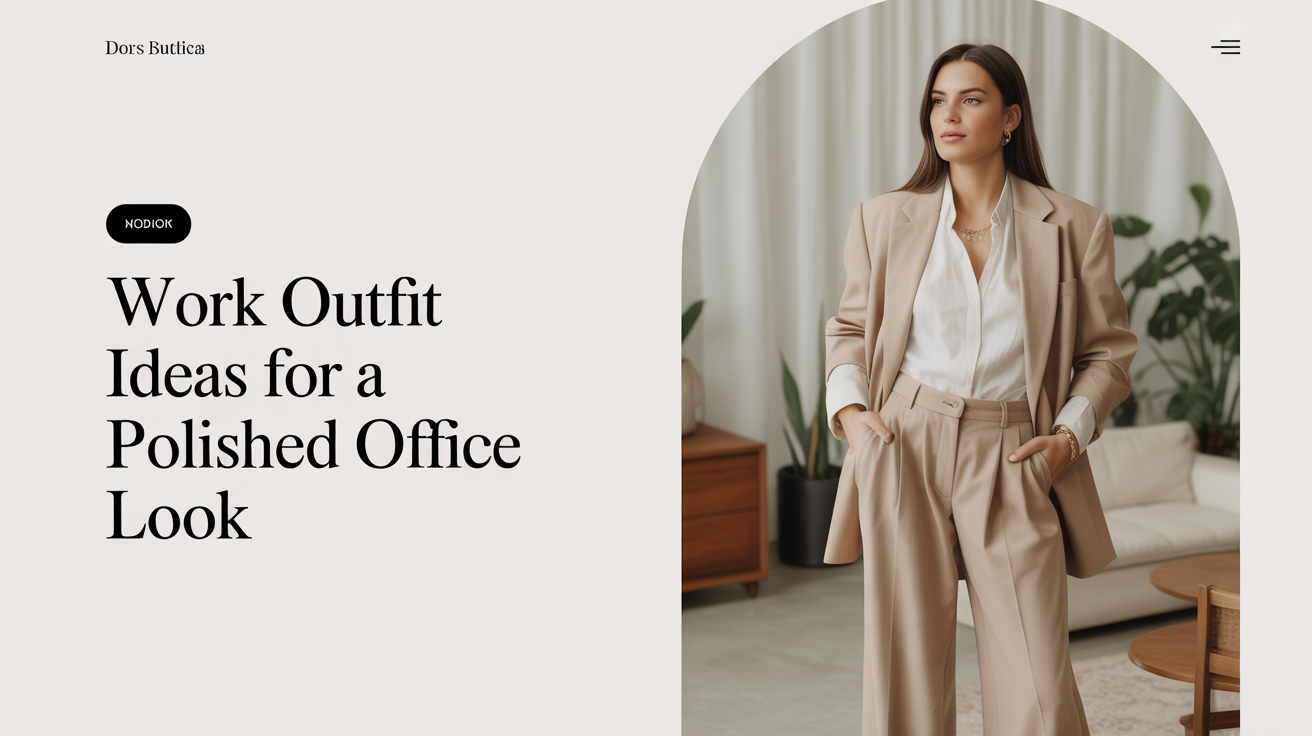
Getting dressed for work sounds simple until you're standing in front of your closet at 7am with no idea what "business casual" actually means. Most dress code policies are vague on purpose, which helps no one. This guide breaks it down: what each code requires, which pieces do the most work, and concrete outfits you can actually wear.
At a Glance
- Three dress codes cover most workplaces: business formal (suits, structured pieces), business casual (polished separates), and smart casual (elevated everyday clothes).
- When a written policy is vague, watch what people one level above you wear on an ordinary Tuesday. That's the real standard.
- Seven core pieces (trousers, blazer, two blouses, a midi dress or skirt) recombine into most of the outfits in this guide.
- Fit and shoe condition read before fabric, color, or trend do. A $30 tailoring visit fixes more outfits than a shopping trip.
- The same outfit structures carry across seasons with material swaps: linen and cotton in summer, wool and knits in winter.
- For interviews, dress one level more formal than what current employees wear day to day.
The three office dress codes, decoded
Most workplaces fall into one of three categories. The confusion usually comes from companies that use the terms interchangeably or don't define them at all. Business formal, for context, tends to mean suits, ties, dress shirts, and formal skirts or pantsuits, while business casual is built to balance professionalism with more comfort. Smart casual sits outside both of those official categories, which is exactly why it causes the most confusion. A university career-services guide to the three codes puts smart casual plainly: it's business casual attire with a stylish twist, built for flexible offices where clean sneakers and accessories are fair game but anything resembling loungewear isn't.
| Dress code | What it means | What it rules out |
|---|---|---|
| Business formal | Tailored suits, structured dresses, closed-toe heels or flats | Jeans, sneakers, bare shoulders, casual knits |
| Business casual women | Polished separates, blouses, trousers, midi skirts | Ripped denim, flip-flops, graphic tees, athletic wear |
| Smart casual outfit | Neat, intentional casual (clean denim is fine) | Anything that looks like loungewear or gym wear |
When a dress code is unclear, look at what people above you are wearing on a regular Tuesday. That's your baseline. If your workplace has never actually written its dress code down, that ambiguity is common. It's worth asking HR or a manager directly rather than guessing for months; most people are relieved someone finally asked.
Building-block pieces worth owning
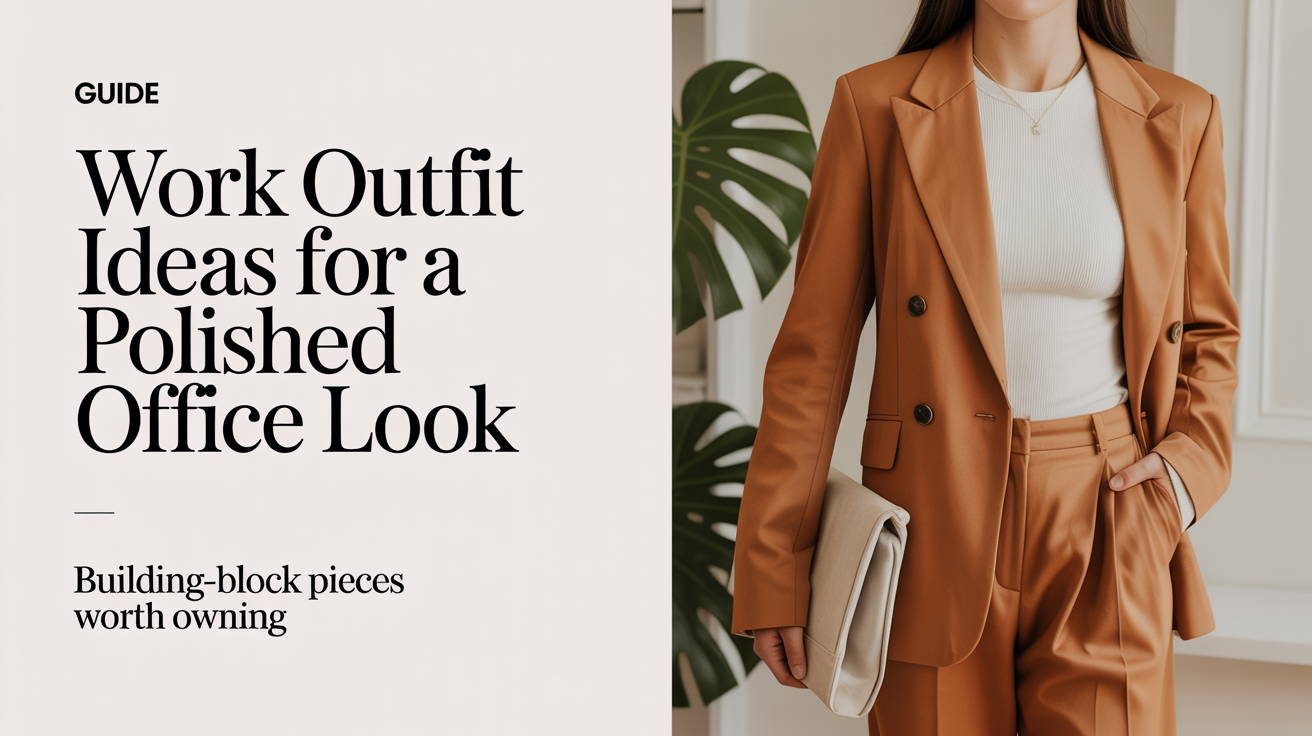
The goal is a small set of pieces that combine well, so you're not rebuilding outfits from scratch every morning.
For business formal
A well-cut blazer is the most reliable thing in a formal work wardrobe. Not oversized, not cropped: one that hits at the hip and has a defined shoulder. Pair it with matching trousers and you have a suit without buying one.
A sheath dress in a solid neutral (charcoal, navy, camel) works harder than almost anything else. It needs no styling decisions. Add a structured bag and low heels and you're done.
For business casual
The wide-leg trouser has mostly replaced the slim cigarette pant as the go-to office bottom, and it's more forgiving to wear all day. Look for a mid-weight fabric that holds its shape, something with at least a small percentage of wool, ponte knit, or a heavier cotton-blend twill rather than a thin, clingy synthetic that shows every seam of what's underneath.
A silk or satin blouse reads as polished without being stiff. Tucked into trousers or half-tucked into a midi skirt, it lifts any outfit up a level. Solid colors or small prints both work.
A blazer in a non-matching fabric (linen, boucle, a subtle check) gives you more flexibility than a suit jacket because it reads as a separate instead of half a set.
For smart casual
Tailored dark jeans are the workhorse here. Not distressed, not acid-wash: a clean, dark rinse with a straight or slim leg. Styled with a blouse and loafers, they read as intentional rather than lazy.
A knit top in a structured fabric (ribbed, or a heavier jersey) is better than a flimsy t-shirt. Same silhouette, much more polished result.
Outfit ideas by dress code
Business formal outfits
The classic suit alternative: Wide-leg trousers in charcoal with a matching blazer, white button-down underneath, pointed-toe flats. Clean, easy, appropriate for almost any formal environment. If the meeting is important, swap flats for a block heel.
The dress route: A structured midi dress in deep navy, worn with a thin belt at the waist to define the silhouette. Nude or black low heels, simple stud earrings. This outfit requires exactly zero thought on a busy morning.
Cooler months: A turtleneck under a blazer instead of a blouse. Slim trousers, ankle boots with a low block heel. The turtleneck makes the whole thing feel a bit more current without breaking any rules.
Business casual outfits
For summer office outfits, a linen blouse in white or a pale stripe tucked into a flowy midi skirt works well. Add a woven mule and you have an outfit that's cool enough for heat but polished enough for a client call.
The trouser outfit: Wide-leg trousers in a warm tan, tucked-in ribbed tank, blazer draped over the top or worn open. Loafers. This is the outfit women in finance wear on Fridays.
The dress version of business casual: A wrap dress in a small print or a solid jewel tone. It's professional, comfortable, and doesn't need styling decisions. The wrap silhouette works across a wide range of body types.
With a skirt: A pleated midi skirt in a neutral paired with a slightly cropped blazer and a fitted top underneath. Add block-heel mules. The slight crop on the blazer keeps the proportions interesting without being inappropriate.
Smart casual outfits
Dark straight-leg jeans, a tucked-in silk blouse, and loafers. This is the simplest smart casual formula there is. Add a blazer if the day calls for it.
With a knit: Tailored trousers in a soft fabric, a ribbed turtleneck, simple gold earrings. This works year-round with fabric swaps: lightweight knit in spring, heavier ribbed in winter.
A more put-together take: Straight-leg dark jeans, a neat button-down left partially untucked, and clean white sneakers. This reads as intentionally casual rather than accidentally so.
Cost-per-wear: why a smaller, better wardrobe wins
A $200 blazer worn twice a week for three years works out to roughly $0.65 per wear. A $50 blazer that loses its shape after ten wears and gets replaced twice in that same period costs almost as much in total and never looks as good in the meantime. Cost-per-wear is a more useful number than sticker price for anything you'll wear weekly, and it's the reason building around a handful of well-made basics usually beats buying more, cheaper pieces.
| Piece | Typical price range | Realistic wears per year | Approx. cost per wear (year one) |
|---|---|---|---|
| Well-cut blazer | $120 to $300 | 60 to 100 | $1.50 to $3.50 |
| Wide-leg trousers | $70 to $160 | 70 to 110 | $0.80 to $2.00 |
| Silk or satin blouse | $60 to $150 | 40 to 70 | $1.00 to $3.00 |
| Sheath or wrap dress | $90 to $220 | 30 to 50 | $2.00 to $5.00 |
| Structured leather bag | $150 to $400 | 150 to 250 | $0.70 to $2.00 |
Seasonal swaps that keep the same outfits working
You don't need a separate wardrobe for each season. The same outfit structures work year-round with material and layering swaps.
Spring and summer: Linen, lightweight cotton, and silk breathe well in heat. Swap trousers for a midi skirt or wide-leg linen pants. Mules and sandals with a modest heel read as polished in warmer months.
Autumn: Layer a long cardigan over a blouse-and-trouser combo instead of a blazer. Ankle boots replace mules. Warmer tones (rust, olive, camel) feel appropriate for the season without requiring a wardrobe overhaul.
Winter: Turtlenecks under blazers and suit jackets. Thick-soled loafers or block-heel boots. A wool coat in a neutral color worn over your usual outfit carries you from commute to office without needing to change anything underneath.
If your office is air-conditioned to arctic temperatures in summer, keep a cardigan or thin blazer at your desk. Dressing for the outdoor temperature and then freezing inside all day is a miserable way to spend a Tuesday.
What to wear to work events and off-site meetings
Work events sit in an awkward middle ground. A company dinner is more dressed-up than the office but less formal than a wedding guest look. An off-site with clients calls for something polished that still feels like you.
For a client dinner: a tailored midi dress or trousers with a nice blouse. Avoid anything you'd have to constantly adjust: short hems, low necklines, or straps that slip. You want to be thinking about the conversation, not your clothes.
For a team happy hour after work: smart casual is fine. The same dark jeans and blouse you wore to the office read differently with the blazer off.
For an important presentation: wear what makes you feel most authoritative, not most comfortable. For most people those aren't the same thing. A blazer you feel good in is worth the extra warmth.
The same thinking applies when you want a date night outfit that still feels like yourself rather than a costume, since confidence in the fit matters more than the outfit itself.
Common mistakes that undercut an otherwise good outfit
These aren't rules about what's appropriate. They're observations about what tends to make outfits look unintentional.
Fit problems. A blazer with shoulders that droop, trousers that pool at the ankle, or a blouse that pulls across the chest. Tailoring is cheaper than people think (often $15 to $40 for a hem, waist take-in, or sleeve shortening) and genuinely changes what clothes look like.
The wrong shoes. A polished outfit on top of worn-down heels or shoes that clearly don't match the formality level of everything else. Shoes read first and get noticed. Resoling a good pair of leather shoes usually costs less than replacing them and extends their life by years.
Overdoing accessories. One or two pieces read as intentional. Five reads as indecisive. In an office context, less usually works better.
Ignoring the fabric. A polyester blazer and a silk blazer cut exactly the same shape look different in practice. Fabric quality affects how an outfit reads more than most people expect, especially under office lighting, which tends to flatten cheap synthetic sheen.
Treating "business casual" as permission to wear anything. It's not. The word "business" is doing work in that phrase.
FAQ
What counts as business casual for women?
Business casual means polished but not formal. Trousers or a midi skirt with a blouse, a wrap dress, tailored chinos, or a knit sweater over smart trousers all count. Jeans are sometimes acceptable in business casual environments, though it depends on the company. What's usually not acceptable: distressed denim, sneakers (unless your workplace specifically allows them), sheer tops without a layer underneath, or anything that looks like activewear.
Can women wear jeans to a business casual office?
Sometimes. Dark, clean, unripped jeans styled with a blouse and loafers can pass as business casual in many workplaces. Light-wash, distressed, or very casual jeans usually don't. Watch what your colleagues wear and take your cue from there.
What's the difference between business casual and smart casual?
Business casual skews more formal. Think trousers, blazers, structured dresses. Smart casual allows for cleaner denim, more relaxed fits, and a bit more personality in the styling. In both cases, the goal is looking intentional rather than thrown-together.
How do I build a work wardrobe without spending a lot?
Start with neutrals that work together: one pair of well-fitting trousers, one blazer, two blouses, and one midi dress or skirt. These seven or so pieces can combine into a lot of outfits. Once you know what you actually wear, add color and variety. Buying things you don't reach for is where the money goes.
What should I wear for a job interview?
Default to one level above what employees wear day-to-day. If the office is smart casual, show up in business casual. If it's business casual, wear something closer to formal. When in doubt: trousers, a neat blouse, and a blazer. It reads as prepared without being overdressed for most industries. Creative fields are the exception, so research the company culture before you decide.
How many outfits do I actually need for a five-day work week?
Fewer than most people assume, if the pieces mix well. Three bottoms (two trousers, one skirt or dress), five tops, and two blazers can realistically produce ten or more distinct outfits through recombination alone. The goal isn't variety for its own sake; it's having enough combinations that laundry day and a busy week don't leave you stuck.
Is it unprofessional to repeat an outfit at work?
No. Repeating a well-fitted, well-maintained outfit is normal and not something colleagues track the way people worry they do. What actually reads as unprofessional is visible wear, like a stretched-out collar or scuffed shoes, not wearing the same blazer twice in one week.