Nails
Chrome and Glazed Donut Nail Ideas
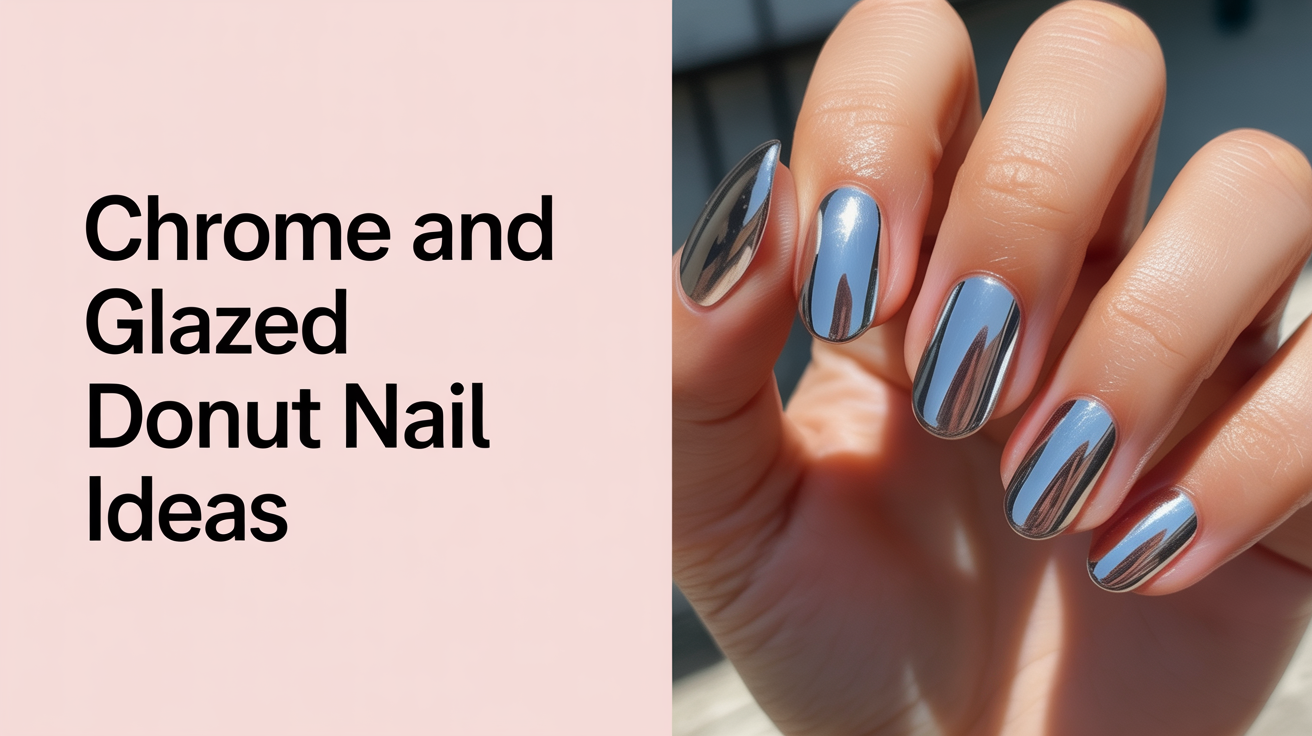
Chrome nails have been trending for a few years, but the glazed donut version popularized by Hailey Bieber gave the look a softer, more wearable spin. Both finishes fall under the metallic nails umbrella, and both rely on the same core technique: a chrome powder rubbed over cured gel. The difference comes down to which base color you choose and how much mirror effect you want.
This guide covers the difference between the two looks, how to apply chrome powder at home, which chrome nail designs are actually worth trying, and what to pair them with so the finished look holds together.
Chrome Nails vs. Glazed Donut Nails
These two finishes are close cousins, not the same thing. Knowing the distinction helps you choose the right base and powder combination before you start.
Chrome Nails
Chrome nails use a metallic powder buffed over a dark or vivid gel base (typically black, navy, red, or a deep jewel tone) to produce a high-contrast mirror finish. The result is bold and reflective, closer to polished metal than nail polish. Silver chrome over black is the most recognizable version. You can also get chrome powders in gold, rose gold, purple, and green, and some shift between two colors depending on the angle (those are called duochrome or aurora powders).
Glazed Donut Nails
Glazed donut nails use the same chrome powder technique, but over a sheer, milky, or nude base. The effect is softer and more luminous than hard chrome: your nails look like they have a glossy, pearl-tinted glow rather than a flat mirror surface. Think the inside of an oyster shell or a pearl earring rather than a piece of foil. The name comes from the look of a glazed donut, where the icing catches the light in a soft, diffused way. Sheer pink, off-white, and barely-there lavender are the most common base options.
How Chrome Powder Actually Works
Chrome powder is not the same as regular glitter or metallic polish. It is a finely milled metallic pigment that physically bonds to the tacky surface of a no-wipe gel top coat. You apply it with a felt-tipped applicator or a silicone brush, buff it onto the uncured top coat, then seal everything with another layer of top coat to lock the powder in place.
A few things to know before you start:
You need gel, not regular polish. Chrome powder requires the sticky layer that comes from an uncured gel coat. It will not adhere properly to regular nail polish, no matter how tacky the surface looks.
The base coat color matters more than the powder. The pigment of the powder tints the finish, but the underlying color shows through and affects the final appearance significantly. A silver powder over a nude base gives you glazed donut. The same silver powder over black gives you a hard mirror chrome.
More buffing pressure means more reflectivity. Light, gentle circles with the applicator give you a softer sheen. Firm, consistent pressure creates a more metallic, high-chrome finish.
Cap the edges. After buffing the powder on, run your applicator along the tip of the nail to prevent chipping at the free edge. This is the step most people skip, and it makes a noticeable difference in how long the finish lasts.
If you are doing this at home, you will need a UV or LED lamp. The process does not work with air-dry polishes.
Chrome Nail Designs Worth Trying
Not all chrome nail designs are the same. Some are bold enough to be a statement piece. Others work just as well in a professional setting as they do at a dinner party.
Classic Silver Chrome Over Black
This is the original, and it still holds up. A black gel base with silver mirror powder gives the most dramatic result of any combination. The contrast is stark, the shine is intense, and it photographs extremely well. This version suits short square or coffin-length nails particularly well because the shape supports the boldness of the finish.
Rose Gold Chrome
A dusty pink or mauve base under rose gold chrome powder produces a finish that reads warm and polished rather than flashy. The metallic quality is there, but it is subtle enough to wear with simple outfits without competing with them. This is a solid option if you want metallic nails but are not drawn to anything silver or cool-toned.
Black Chrome
Black chrome powder over a dark grey or black base creates a finish that looks closer to hematite than to conventional chrome. It has a slightly smoky, less reflective quality than silver, which makes it feel less costume-y and more wearable for everyday use. It works particularly well on shorter nails because the subdued shine keeps the look proportionate.
Duochrome and Aurora Powder
Duochrome powders shift between two colors depending on the viewing angle. Common combinations include green-to-blue, pink-to-gold, and purple-to-teal. These tend to work best over a dark base (black or deep navy) so the color shift reads clearly. Over a nude or sheer base, the shift can get muddy. If you want something that moves and catches light in unexpected ways, this category is worth exploring before committing to a single-tone chrome.
The Glazed Donut French Stack
One popular variation on the glazed donut look pairs the sheer chrome finish with a simple French tip. Apply the sheer milky base across the whole nail, buff the chrome powder to get the glowing effect, then use a clean white or soft pink line at the tip before sealing. The layered effect looks more considered than plain glazed donut nails, and it builds on french tip nail designs beyond the classic without copying the standard look.
Picking the Right Chrome for Your Nail Length and Shape
Chrome powder is unforgiving because it reflects everything, including the edges and corners of your nails. Short, well-shaped nails actually work well with chrome because the finish makes them look more polished and intentional. Longer nails with chrome do require clean filing; any uneven edges will be obvious under that reflective surface.
Shape considerations:
- Square and squoval: Chrome sits flat across the nail and reflects light evenly. These shapes suit mirror chrome well.
- Oval and almond: The curved edge diffuses the reflection slightly, which softens the look. Good for glazed donut variations.
- Coffin and stiletto: The pointed or flat tip creates a sharp light edge that adds drama. Better suited to bold chrome over dark bases.
If you are deciding between gel and acrylic as your chrome base, the finish can be done over either, but the adhesion process differs slightly. Gel gives you a thinner, more flexible base, while acrylic tends to be more durable for longer lengths. More detail on the structural differences is covered in gel vs. acrylic nails: which one is right for you.
Chrome also pairs well with color on the rest of the hand. If your nails are silver chrome, a slate, deep burgundy, or forest green on the surrounding nails keeps the look cohesive without being too matchy. For glazed donut nails, a matching sheer tint across all nails with the ring fingers in chrome is a clean, considered variation.
Frequently Asked Questions
Can you do chrome nails with regular polish instead of gel?
Chrome powder requires the tacky, uncured layer of a no-wipe gel top coat to adhere properly. Regular nail polish does not have that surface, so the powder will not bond the same way. Chrome foil transfers exist and do work over regular polish, but those are a different product and give a less seamless finish than powder.
How long do chrome nails last?
Sealed properly over gel, chrome powder can last two to three weeks without major chipping. The powder itself does not chip; it is locked under the top coat. What you may notice over time is tip wear at the free edge. Capping the edge with top coat during application reduces this significantly.
Can you do glazed donut nails without a UV or LED lamp?
No. The glazed donut effect requires a gel base and a gel top coat, both of which need UV or LED curing. If you do not have a lamp, gel polish pens that cure under direct sunlight exist, but they are slow and inconsistent. A salon visit is more practical if you do not own a lamp.
Is chrome powder the same as foil transfers?
They look similar but behave differently. Chrome powder bonds to the tacky gel layer during buffing and becomes part of the nail surface. Foil transfers are applied with a sticky adhesive and sit on top of the nail rather than into it. Foils can be used without gel, but they tend to peel faster and do not give the same seamless mirror effect.
What base colors work best under a glazed donut finish?
The softest, most wearable glazed donut looks come from sheer or milky bases rather than opaque ones. Sheer pink, milky white, oat, and barely-there lavender all produce a luminous glow rather than a flat shine. Avoid fully opaque nude shades under chrome powder for this look; they read closer to conventional chrome than to the soft pearl effect most people are after with the glazed donut finish.