How-Tos
How to Pack a Carry-On for Any Trip
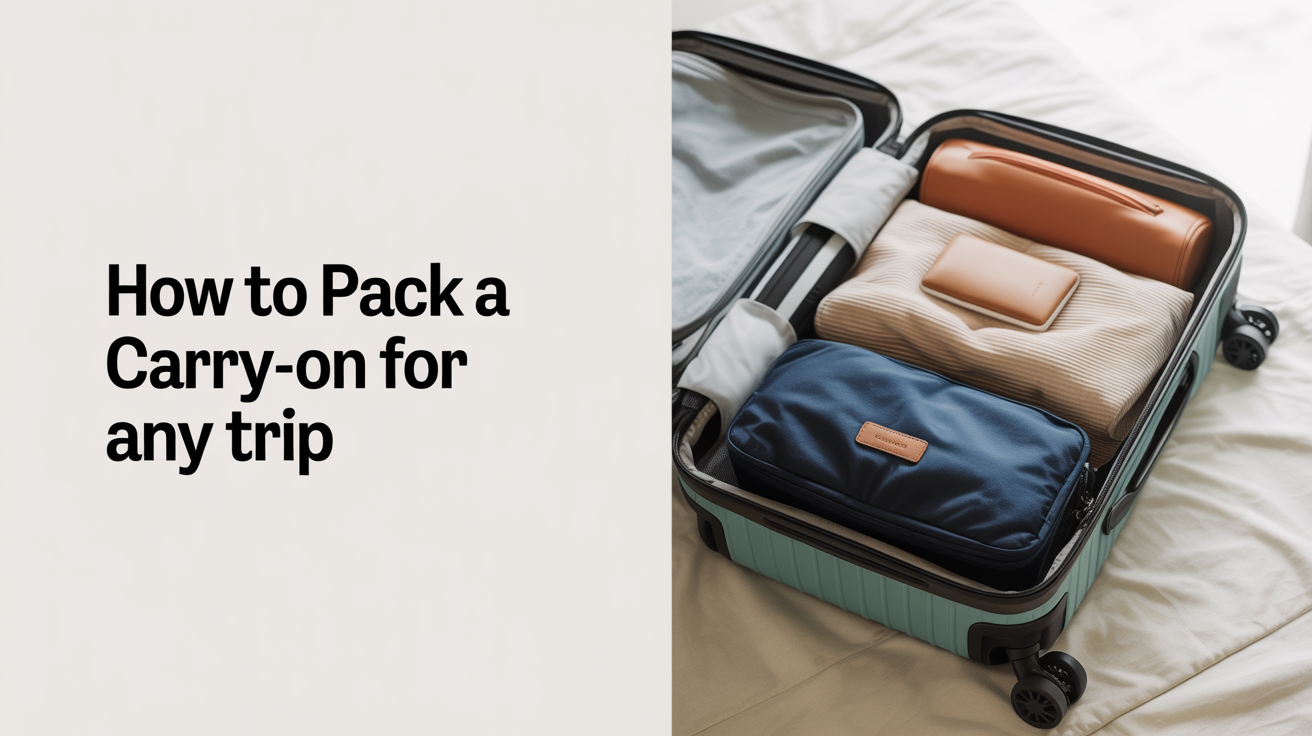
Fitting a week of outfits into one bag is not a talent people are born with. It is a system, and once you have it, checking luggage starts to feel unnecessary. These carry-on packing tips work whether you are heading to a city for a long weekend or spending ten days somewhere warm.
The short version: start with a neutral color base, plan outfits before you pack a single thing, and leave the backup options at home. Everything else follows from those three moves.
The Bag You Choose Sets the Ceiling
Airline size restrictions vary, but most domestic carriers accept a carry-on around 22 x 14 x 9 inches. International airlines, budget carriers in particular, run tighter. Check the specific airline before you travel.
A hard-sided spinner rolls easily but offers zero compression. A soft-sided bag with external compression straps gives you a bit more flexibility to squeeze in that last layer. Neither is wrong. What matters is knowing the internal volume of whatever you own and committing to packing within it rather than treating the zipper as a suggestion.
A personal item bag (a tote or small backpack that fits under the seat) is your best friend. Pack everything you might need mid-flight or mid-transit there, things like your toiletry pouch, a change of clothes if you are on a long haul, and your laptop. That frees the overhead bin bag to be a pure clothing vessel.
Building a Travel Capsule Wardrobe
This is where most packing goes wrong. People pull items they love rather than items that work together. A travel capsule wardrobe works because every piece connects to at least two others.
Pick One Color Base and Two Accents
Choose either black, navy, white, or tan as your neutral foundation. Everything you pack should read as belonging to that palette. Your two accent colors (a warm rust, a forest green, a dusty pink) show up in one or two pieces, not spread across five.
This sounds restrictive. In practice it means you can combine anything you pull out of the bag and it looks intentional, not like you grabbed whatever was clean.
Plan Outfits First, Then Pack Pieces
Write out the outfits you actually need. A three-day trip might need: two day looks, one dinner look, one travel-day look, and one outfit you can repeat. That is five outfit slots and maybe eight or nine individual pieces, many of which double-count.
A silk blouse worn tucked into trousers for dinner becomes the same blouse worn half-tucked over shorts the next afternoon. Wide-leg linen pants work both with that blouse and with a fitted knit. A blazer or denim jacket layers over everything.
Once you have the outfit list, write out the specific pieces required and pack only those. No extras "just in case." The just-in-case items are the ones that never leave the bag.
How Many Pieces for How Many Days
A rough guide:
| Trip Length | Bottoms | Tops | Layer | Shoes |
|---|---|---|---|---|
| 3–4 days | 2 | 3–4 | 1 | 2 |
| 5–7 days | 3 | 4–5 | 1–2 | 2–3 |
| 8–10 days | 3–4 | 5–6 | 2 | 2–3 |
Shoes eat space faster than almost any other item. Two pairs is the practical limit for carry-on travel. Wear the bulkiest pair on the plane and pack one flat or sandal. If you genuinely need a third pair, it has to be something packable, like a ballet flat or a folding sandal.
How to Fold and Pack Without Wrinkles
Rolling works for casual fabrics: denim, t-shirts, jersey knits, casual cotton. It compresses well and makes it easy to see everything at a glance.
Folding works better for structured pieces: blazers, trousers with a crease, silk blouses. Fold blazers inside-out along the natural seam, then fold in half lengthwise. It sounds counterintuitive but it tends to preserve the shoulder shape better than rolling.
The Bundle Method for Delicate Pieces
Lay your most wrinkle-prone item flat on the bed. Layer other clothes on top of it in a cross pattern, alternating directions. Then fold each piece in toward the center, encasing the others. The layers cushion each other and the whole bundle takes up less space than you would expect. This works especially well for silk, linen, and any structured shirt you care about arriving in good shape.
What to Pack Where
- Bottom of the bag: shoes (in shower caps or dust bags to protect clothes), rolled casual pieces
- Middle layer: the bundle of folded items, jeans
- Top layer: whatever you might need first when you arrive
- Side pockets: chargers, a small umbrella, a reusable bag
- Personal item: valuables, anything you need in transit, your toiletry pouch
Toiletries and the 3-1-1 Rule
For carry-on travel you are limited to liquids in containers of 3.4 oz (100 ml) or less, all fitting in one quart-sized clear bag. Most full-size bottles do not make the cut.
The practical approach is to buy travel-size versions of your three or four non-negotiables (face wash, SPF, a serum, one or two makeup items) and use solid formats for everything else. Solid shampoo bars, solid conditioner bars, and bar soap take up almost no room and sidestep the liquids rule entirely.
For a longer trip, check whether your hotel or rental has shampoo and conditioner. If they do, that is two things off your list immediately. A few brand names aside, hotel shampoo has gotten noticeably better in the past few years.
Keep your toiletry pouch in your personal item bag rather than the overhead bin. Security pulls it out at the checkpoint and having it accessible makes that process faster.
Shoes, Jewelry, and the Parts People Always Forget
Jewelry should be packed in a small roll case or a resealable bag, never loose in a side pocket. Chains tangle in about thirty seconds. Earrings disappear into bag lining. A dedicated pouch takes ten seconds to pack and saves real frustration on the other end.
Wear your jewelry rather than pack it where you can. Stacked rings, earrings, and a necklace worn on the plane are not going through a scanner or getting tangled in fabric.
A scarf doubles as a blanket on a cold flight, a cover-up at the beach, and an accessory that can shift an outfit from casual to polished. It takes up almost no space. Pack one.
The items most often forgotten at the packing stage: a power adapter if traveling internationally, a portable charger, a reusable water bottle (empty through security, fill it after), and any medication in its original packaging. These are not the glamorous parts of packing, but leaving them behind creates the most friction once you are on the ground.
What to Leave at Home
The honest carry-on packing tip that actually changes things: leave the backup outfits. Leave the second pair of jeans. Leave the pair of heels you might wear to one dinner if that dinner happens. Leave anything you are packing with the word "might" attached to it.
Packing light is less about clever folding techniques and more about trusting that you will figure it out if something goes sideways. You can buy a forgotten item almost anywhere. You cannot buy back the time you spent at baggage claim.
Frequently Asked Questions
Can I really pack for a week in a carry-on?
Yes, with the right approach. The key is a cohesive color palette and pieces that work in multiple outfit combinations. Seven days typically fits into a standard 22-inch carry-on if you limit yourself to two pairs of shoes, plan around three or four bottoms, and choose fabrics that do not wrinkle badly.
What fabrics travel best?
Jersey knits, merino wool, and ponte fabric are the most forgiving. They resist wrinkles, layer well, and bounce back after being folded for hours. Linen and silk wrinkle easily but can often be steamed or hung in a bathroom with a hot shower running to recover. Heavy cotton holds creases and takes a long time to dry if you hand-wash anything on the road.
Should I use packing cubes?
They help with organization but do not meaningfully compress clothing. If you are someone who unpacks into a hotel drawer, packing cubes make it easy to transfer whole categories at once. If you live out of your bag, they keep things from shifting around. They are worth using if the organizational benefit appeals to you, but they will not make a too-full bag work.
Is it better to roll or fold clothes in a carry-on?
Both, depending on the fabric. Roll casual knits, t-shirts, and jeans. Fold structured or delicate pieces flat, or use the bundle method for anything prone to wrinkling. The combination tends to use space more efficiently than committing to one method for everything.
What if my carry-on gets gate-checked?
On crowded flights, overhead bin space fills up and gate agents sometimes check carry-ons involuntarily. If your bag has anything fragile, valuable, or that you absolutely need during the flight, move those items to your personal item bag before boarding. Fragile items in gate-checked bags are more likely to be damaged than items in the main hold simply because they are handled quickly under time pressure.