Nails
Minimalist Nail Art Ideas for Everyday
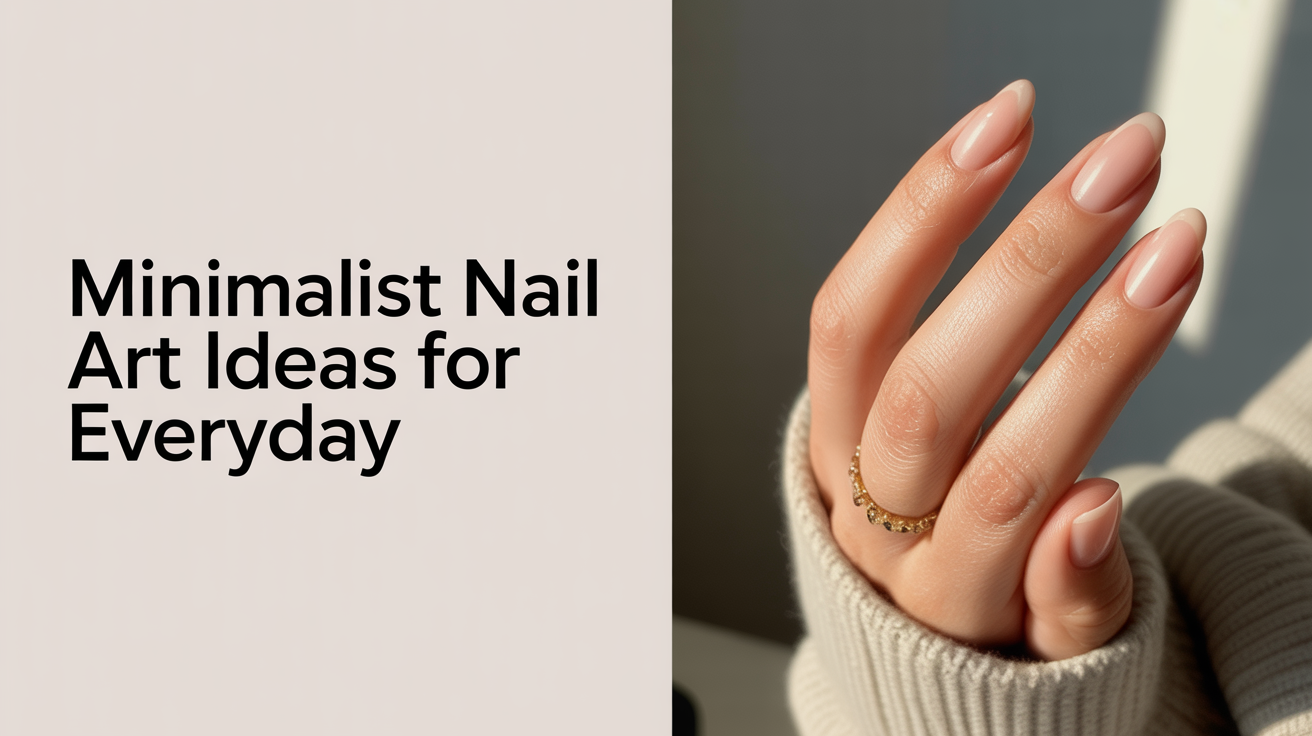
Minimalist nails are exactly what they sound like: low-detail, high-intention. A clean nude, a barely-there sheer, a single thin stripe. The appeal is not that they are easy (though many are). They read as intentional. You look put-together without looking like you spent forty minutes on your hands.
Below is a practical breakdown of designs, colors, and techniques that work for everyday wear.
What Counts as a Minimalist Nail Design?
The category is broader than people think. "Minimalist" does not only mean plain or bare. It means restrained: one detail, or none at all, done well. A sheer base with a single white geometric line qualifies. A nude with a micro French tip qualifies. Even a clean deep navy, buffed to a high shine with no art, qualifies.
What does not qualify: ombre gradients, intricate florals, rhinestone clusters, or anything that takes more than one step to explain. If you have to describe the design in more than five words, it is probably not minimalist.
The common thread is negative space and simplicity of color. Minimalist nails let the shape of the nail and the quality of the finish do the work, rather than layering on details to compensate for a rough application or an uneven surface.
Simple Nail Designs Worth Trying
Sheer Nudes and Milky Whites
A sheer, skin-toned polish is the most wearable nail of all. It goes with everything, photographs cleanly, and grows out gracefully. Look for polishes labeled "sheer nude," "barely-there," or "my skin but better." The goal is a wash of color, not full opacity.
Milky whites follow the same logic: a soft, slightly off-white with a translucent quality that reads as clean rather than stark. One coat gives a hint; two coats produce a soft, diffused finish that sits comfortably in clean girl nails territory.
Micro French Tips
The classic French manicure scaled all the way down. Instead of a thick, opaque white band, the micro French uses a very thin line, 1 to 2 millimeters wide, applied at the very tip of the nail. The color is usually white, off-white, or a warm beige, and the key is restraint in the width.
On nail shapes with a natural taper (oval, almond, squoval), this looks especially refined. On shorter nails, it adds the illusion of length without looking high-maintenance. For anyone curious about variations, there are french tip nail designs beyond the classic that swap the white for chrome powder, a translucent pink, or a barely-there shimmer.
Negative Space Lines
Negative space designs use the bare nail itself as part of the composition. The most practical version: a thin horizontal or diagonal stripe of color across an otherwise bare or sheer nail. The color does not have to be neutral. A single thin line in a deep red or forest green reads as subtle because the proportion is small.
A "frame" design works along the same principle, painting only a thin border around the edge of the nail while leaving the center bare. It looks more complex than it is, and a strip of nail tape makes it achievable without a particularly steady hand.
Cuticle Dot Accents
A dotting tool (or the rounded end of a bobby pin) pressed at the base of the nail creates a simple detail that takes under a minute per nail. One dot, centered at the cuticle, in a soft metallic or a contrasting matte. That is the whole design. It lands in subtle nail art territory without reading as fussy.
Colors That Read as Minimalist
The design matters, but so does the palette. Some colors carry a quiet tone regardless of how they are applied.
Nudes and sheers. The reliable choice. Anything that reads as close to your natural nail or skin tone stays understated in nearly any context.
Off-whites and creams. Warm, slightly muted whites are easier to wear day-to-day than a stark optical white. Polishes with names like "coconut," "linen," or "cream" tend to land in the right zone.
Muted pastels. Dusty pink, sage green, lavender-grey, powder blue. The key word is muted. Neon pastels read as the opposite of minimalist.
Warm neutrals. Caramel, warm taupe, soft terracotta. These have a similar "second skin" quality to nudes but carry a bit more personality without adding any complexity to the look.
Dark monochromes. Deep chocolate, charcoal, slate. A single opaque dark color, well-applied with a high-shine finish, is absolutely a minimalist look. It's a bolder version of the same principle, not a departure from it.
For seasonal takes on the lighter end of this palette, a guide to summer nail color ideas to try now covers specific shades that translate well in warm months.
Technique Matters More Than Products
A simple nail design has nowhere to hide. If the polish is streaky, the cuticles are ragged, or the tip is uneven, the simplicity of the design makes those issues more obvious, not less. The finish is the design.
Prep First, Always
Push back cuticles before you start. A cuticle pusher and a drop of cuticle oil, left for two minutes, softens the skin and makes it easier to move back cleanly. You do not need to cut anything. Just expose the full nail plate so the polish has a clean surface to sit on.
Then buff the nail lightly. A smooth surface means fewer visible brush strokes in the finished product, especially with sheer formulas that tend to show every imperfection underneath.
Thin Coats, Not Thick Ones
The instinct is to load the brush for full coverage on the first pass. For minimalist shades, this causes pooling at the cuticle and drag at the tip. Thin coats, allowed to tack up for 60 to 90 seconds between layers, produce a much cleaner result. Two thin coats of a sheer always look better than one heavy coat.
Nail Tape for Straight Lines
For any design involving a clean edge (the negative space stripe, the frame look, the micro French), nail tape makes the difference between clean and wobbly. Press the tape firmly, paint over it, let the polish tack up for about 30 seconds, then lift the tape before it is fully dry. Pulling tape off completely set polish causes cracking at the edge.
A Glossy Topcoat as the Last Step
A high-shine topcoat over even the plainest nude pulls everything together. It also seals the edges, which is where chipping begins. Wrapping the topcoat around the very tip of the nail (sometimes called edge sealing) extends a home manicure by two or three days.
At Home or at the Salon?
Minimalist designs are genuinely doable at home precisely because they do not require elaborate brush control. A sheer nude, a single dot, a thin taped line: these are achievable without nail tech training.
That said, if longevity is the goal, a gel manicure extends even a plain nude to two or three weeks without chipping. Whether gel or a different option makes sense for your lifestyle depends on a few factors, including how much maintenance you want to do and how often you like to change your color. Gel vs. acrylic nails lays out how the two compare if you are trying to decide between systems.
For everyday home wear, a quality polish plus a topcoat refresh every two or three days (no full repaint, just topcoat over the existing layers) gets you a solid week of decent-looking nails without salon costs.
Frequently Asked Questions
What nail shape works best for minimalist designs?
Oval and squoval (square with rounded corners) are the most commonly recommended shapes. Both read as clean and modern, and they suit most hand proportions. Short oval looks neat without requiring much maintenance. If you prefer square nails, filing the corners very slightly prevents the sharp edges that catch on things and break.
Can I do minimalist nail art without any special tools?
For most of the designs here, yes. Sheer nudes, milky whites, and monochromes need only a brush and a bottle of polish. A cuticle dot takes a bobby pin or the end of a toothpick. The only design that benefits noticeably from a dedicated tool is any striped or framed look, where nail tape is a real advantage over freehand.
What exactly is the "clean girl nails" look?
Short-to-medium length nails, filed into a soft oval or squoval shape, polished in a sheer or muted nude, with neat cuticles and a glossy finish. It is less about a specific product or color and more about the overall impression of groomed simplicity. A bare, well-buffed nail with a fresh topcoat qualifies as much as any polished nude does.
How do I keep simple nails from looking dull?
Finish is what separates a polished simple nail from a plain one. A sheer shade with a high-gloss topcoat, tidy cuticles, and clean edges reads as intentional rather than lazy. If you want a little more interest without adding visual complexity, a warm caramel or a muted terracotta tends to read as more alive than a standard beige. Switching from glossy to matte topcoat also changes the feel of the same color completely.
How long does a home minimalist manicure realistically last?
With standard polish, four to five days before tip chipping starts is a realistic expectation. You can push that closer to a week by applying a thin topcoat refresh every second day, skipping a full repaint. The biggest factors are prep (dry, buffed nails hold polish longer) and edge sealing at the tip, which is where nearly every chip begins.