Nails
Nail Shapes Explained: How to Choose the Right One
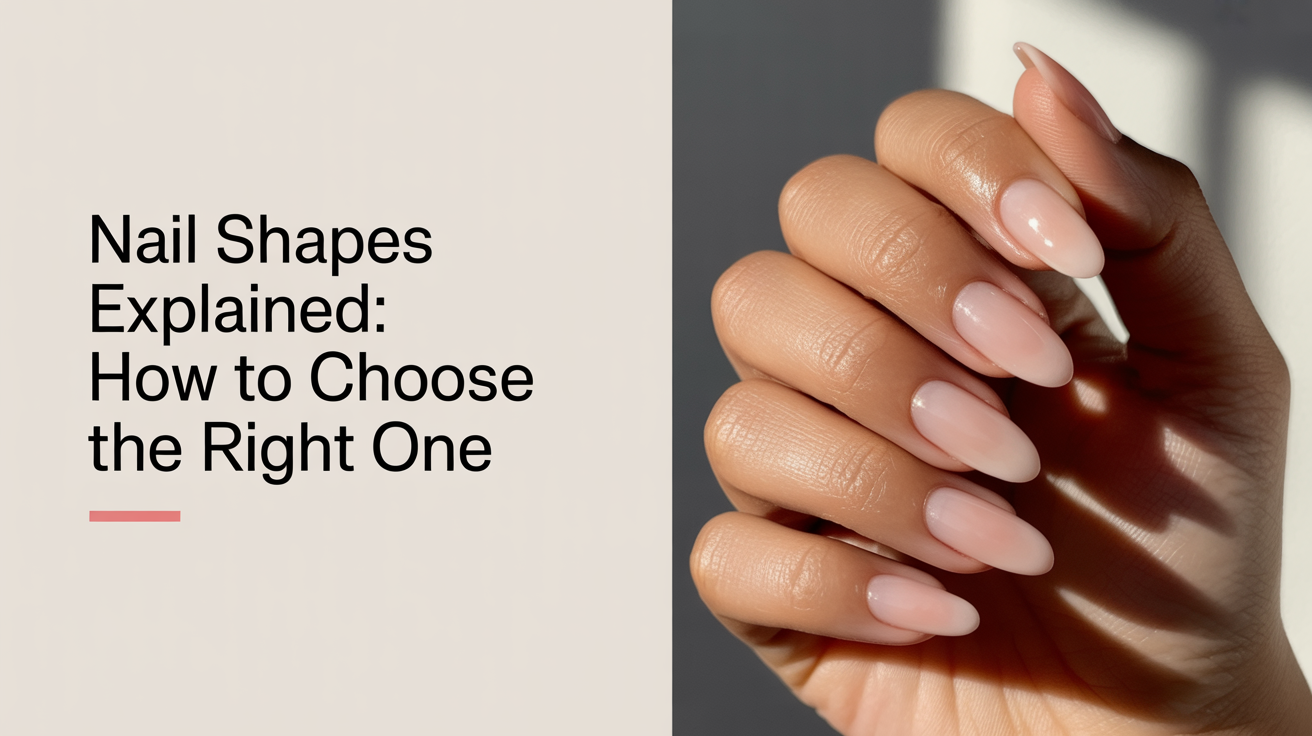
The shape you file your nails into changes how your hands look more than the color does. A square set on short fingers can make them read as wider; those same fingers with an almond shape look noticeably longer. Getting this choice right before you commit to a full set saves you from weeks of nails you're not happy with.
This guide breaks down every common shape, gives honest notes on who each one suits, and explains how to ask for exactly what you want at the salon.
The Six Core Nail Shapes
Square
Square nails have straight sides and a flat, 90-degree tip. They're a salon staple because they're easy to file consistently and look very clean on wider nail beds. Long, slender fingers carry the shape particularly well. On shorter or wider fingers, square tends to emphasize width rather than length, so most nail technicians will steer clients in that situation toward a different profile.
Durability is a strength here. There are no tapered sides to snag or weaken the structure, so the shape holds up well under everyday use. The one vulnerability is the corners: they catch on fabric and can chip at the edges faster than a rounded tip.
Round
Round nails follow the natural curve of the fingertip. The sides stay parallel (unlike oval, where they narrow inward) and only the very tip curves. This is the most common shape for nails kept close to the fingertip because it flatters nearly every hand type without needing extra length.
If you prefer short nail designs, round is the most practical starting point. It resists chipping well, holds up through everyday tasks, and is easy to maintain between salon visits with a simple nail file.
Oval
Oval is a softer shape where the sides taper inward slightly, narrowing toward a rounded tip. The result is a longer-looking finger without the drama of almond or stiletto. It works especially well on wider nail beds because the tapering sides create the visual impression of a slimmer nail.
On narrow nail beds, oval can look a bit thin and fragile. It also requires slightly more length than round to look intentional rather than just unfinished.
Almond
Almond nails have tapered sides that come to a soft, slightly pointed tip. This shape is most associated with elongating short fingers, and the effect is genuine. The narrowing sides and peaked tip draw the eye upward along the finger, adding perceived length without the sharp drama of stiletto.
Almond requires moderate length to pull off from natural nails. Many people who love the shape use a gel or acrylic overlay for the added structure. Because the tip narrows to a point, it's slightly more prone to snapping under pressure than oval or square. Most long-term almond wearers get comfortable avoiding habits that stress the tips, or they turn to gel or acrylic nails for strength that holds up through daily life.
Coffin (Ballerina)
Coffin nails, also called ballerina nails, are long with tapered sides like almond. Instead of ending in a soft point, though, they finish with a flat, straight tip. The silhouette looks like a coffin from above, or a ballet slipper from the side.
The shape looks dramatic and modern and works well on longer nail beds. Most wearers get coffin nails as acrylics or with gel extensions because the required length is hard to achieve naturally. The flat tip is more durable than an almond or stiletto point, since there's more surface area at the end, but the tapered sides are still a structural compromise compared to square or round.
The almond vs coffin nails question comes up often. Both shapes taper down the sides similarly. The only real difference is at the tip: almond ends in a curved point and coffin ends in a flat edge. If you like the tapered look but want something bolder than almond, coffin is the natural next step.
Stiletto
Stiletto nails come to a very sharp point. They make a strong visual statement by design. Most people can't grow them naturally because the fine tip is structurally fragile and will snap. Acrylic or hard gel extensions are the standard approach.
Stiletto is the least practical shape for everyday wear and the most likely to break during normal activity. It also requires significant length. That said, stiletto nails photograph beautifully and show off bold color or intricate nail art better than any other shape. For an event or a shoot, they're genuinely worth the effort for a few days. For daily wear over weeks, they require some adjustment to how you handle things.
Choosing a Shape for Your Hand Type
Most of the guidance around nail shapes comes back to making fingers look longer or slimmer, or finding a shape that suits the width of the nail bed. A few honest observations:
Short fingers, wide nail beds: Oval and almond are the most flattering options. Both narrow the visual width of the nail and direct attention upward toward the tip. Round works well if you prefer keeping nails short. Square and coffin tend to emphasize horizontal width, so they're worth avoiding if that's a concern.
Short fingers, narrow nail beds: Round or oval at a natural length reads cleanly and polished. Almond can look proportionate with enough length, but a very long almond on a short, narrow finger can feel visually top-heavy.
Long fingers, wide nail beds: Square looks strong and deliberate here. Coffin also suits this hand type well. Oval and almond work fine but can read as slightly soft compared to what these hands can carry.
Long fingers, narrow nail beds: Most shapes look good on this hand type. Stiletto and almond both read elegantly. Square can be particularly striking because longer narrow fingers carry the clean geometry without it feeling boxy.
These are starting points, not rules. Plenty of people wear square nails on short fingers because they love the shape, and it suits them fine. The observations above describe what tends to flatter, not what you're allowed to choose.
Durability by Shape
If longevity matters for your choice, here's an honest ranking from most to least durable under normal daily use:
- Round: No corners, no taper, minimal snag risk.
- Square: Strong at the tip, but corner chips are a common issue.
- Oval: Slightly more vulnerable than square because of the tapered sides.
- Coffin: The flat tip adds resilience compared to pointed shapes, but the tapered sides reduce overall strength.
- Almond: The soft point is manageable, but it's narrower and more exposed than coffin.
- Stiletto: The very fine point is structurally the most fragile of the six.
The material you're working with matters just as much as the shape. Natural nails filed round or square will outlast natural nails filed to stiletto. Acrylics add structural support throughout, so acrylic almond nails will hold up better than natural almond nails even though the shape is the same.
Talking to Your Nail Technician
The most common source of disappointment after a salon visit is using different terms than your technician uses. "Almond" is fairly standard across most salons, but "coffin" and "ballerina" are used interchangeably depending on who trained your tech. Showing a reference photo is always faster than describing.
A few things worth specifying when you sit down:
Length. Short (at or just below the fingertip), medium (just past), or long (clearly extended). "Medium" means different things to different people, so naming a reference point helps.
Tip style for coffin and square. Whether you want sharp, crisp corners or slightly softened edges changes the finished look considerably. If you want that precise squared-off effect, say so.
Degree of taper for almond and coffin. A gradual taper looks softer and more natural. A sharper taper looks more dramatic. Your tech can show you the difference on one nail before committing to all ten.
If you're uncertain, ask to see the shape on a single nail first. It takes thirty seconds and prevents a lot of regret.
Frequently Asked Questions
Does nail shape actually make fingers look longer?
Yes, though the effect is real rather than dramatic. Oval and almond shapes narrow the visual width of the nail and draw the eye toward the tip, which makes fingers genuinely read as longer both in photos and in person. Think of it as the difference a good haircut makes rather than a transformation.
Is almond or coffin better for everyday use?
Almond edges out coffin slightly for daily wear because the soft tip is less likely to catch on things than a flat coffin edge. Both are workable, especially if you're getting them done in acrylic or gel. For very active days or hands-on jobs, round or square is the most practical choice regardless.
Can I get a square shape on short nails?
Yes. Square works at any length, and some people find it looks cleaner than round on very short nails. The main consideration is that square on short fingers can emphasize width. If that's a concern, round or oval at the same length is a more elongating option.
What nail shape is best for nail art?
Coffin and stiletto give you the most tip surface for detailed designs, which is useful for anything that extends across the whole nail. Square works particularly well for geometric or graphic designs because the flat tip creates clean edges. Round is the hardest shape to showcase intricate nail art on since there's less visible surface at the tip.
How often should I reshape my nails?
Natural nails grow roughly 3mm per month, so shape maintenance every two to three weeks keeps things looking tidy. If you're on gel or acrylics, infills typically happen on that same schedule anyway, and your technician will reshape during the appointment.