Nails
Short Nail Designs That Look Chic
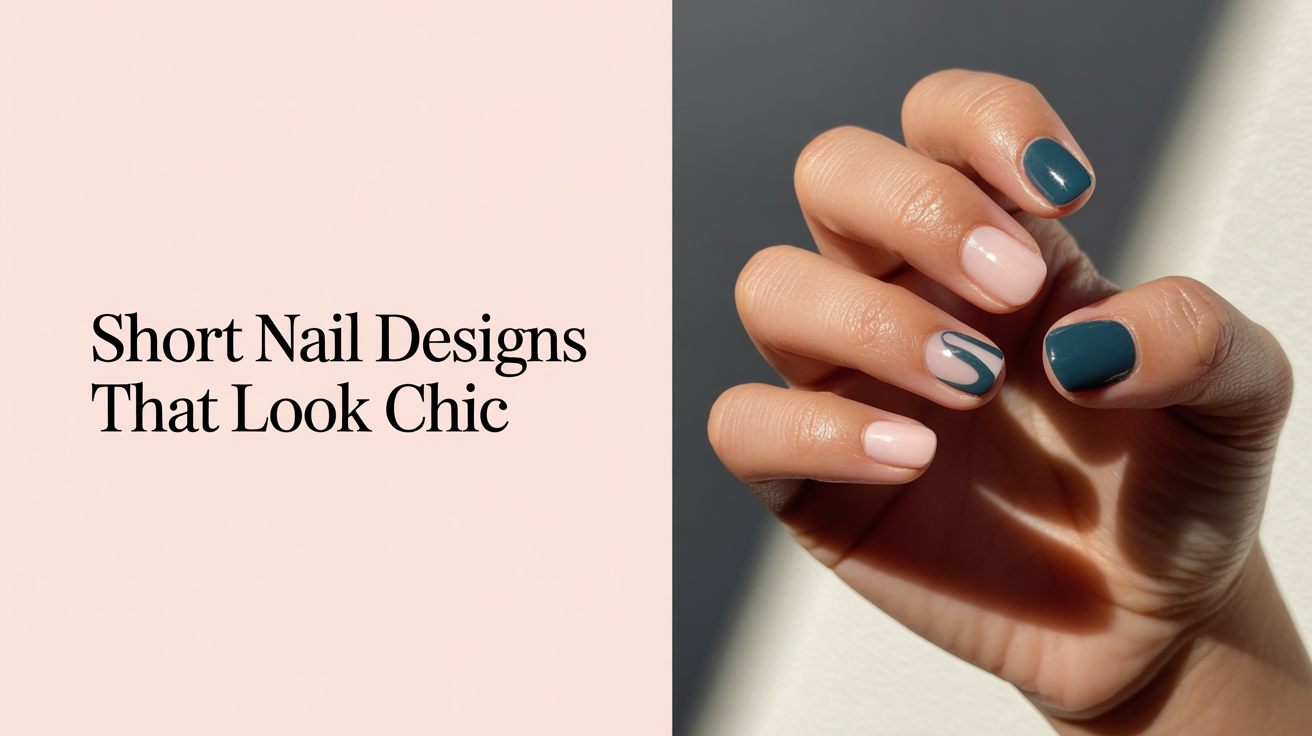
Short nails have a reputation for being practical more than pretty, but that is a holdover from a time when length was the only way to create visual interest. Modern short nail designs have gotten genuinely good, and the real advantage is that short nails wear art proportionally, cleanly, and without the breakage anxiety that comes with extensions.
If your nails are short by choice or by habit, here is what actually looks sharp on them.
Why Short Nails Are a Strong Canvas
The first thing to understand about short nails is that they are not a consolation prize. Nail artists consistently say that designs read more clearly on a shorter plate because there is less surface area competing for attention. A single stripe, a French tip with a twist, or a two-tone diagonal lands with more precision than it would spread across a longer nail.
Short nails are also easier to maintain. Any chip or growth shows later because there is simply less nail to notice it on. If you do your own nails at home, shorter nails give you better brush control and make cleanup faster. The learning curve for nail art is genuinely shallower when you are working on a compact area.
Choosing the Right Shape for Short Nails
Shape matters more at shorter lengths because there is less nail to compensate. The wrong shape can make fingers look stubby; the right one makes hands look proportional and tidy.
Square
Square nails are the most classic short shape. The flat tip and straight sides make nails look deliberate rather than bitten-short. They suit grid patterns, block color, and stacked French tips particularly well. On shorter fingers, a square shape reads as bold; on longer fingers, it can look sharp and editorial.
Rounded Square
A rounded square is a square shape with the corners filed down to a soft arc. This is probably the most versatile short nail shape because it flatters most finger lengths, sits comfortably without catching on fabric, and works with nearly every design. If you are new to nail art or want a shape you can wear with anything, start here.
Short Almond
Short almond nails taper gently to a softly pointed tip. On a short nail, you will not get the full dramatic almond silhouette, but the slight taper still elongates the finger visually. This shape suits thin, detailed nail art well because the narrowing tip draws the eye upward. Florals, minimalist line work, and gradient shading all look proportional on a short almond shape.
Oval
Oval is similar to short almond but keeps the tip more blunt and rounded rather than pointed. It is softer than square and suits people who find square uncomfortable but are not ready for the precision filing almond requires. Good for solid colors and simple two-color designs.
Short Nail Design Ideas That Work on Any Skill Level
Neutral Minimalism
A well-applied sheer nude or milky white is one of the best short nail designs because it reads as intentional, not bare. Look for shades with a slight pink or peach undertone rather than flat beige. Apply two thin coats and finish with a glossy topcoat. The result looks polished without requiring art skills, and it photographs well against almost any background.
Variations to try: sheer pink with a single ring finger painted in a deeper version of the same color family, or a translucent jelly polish over bare nails for a "your nails but better" effect.
Micro French Tips
The French tip has gone through a quiet renovation. The full-coverage stark-white smile line is still a classic, but the micro version, where the white strip is about one to two millimeters at most, has become the go-to for short nails because it fits the proportions better.
Color French tips are another easy win. Try burgundy or navy instead of white, or experiment with a very thin stripe in a contrasting color along the tip. For a breakdown of how far French tips have stretched beyond their original form, french tip nail designs beyond the classic covers the variations worth knowing.
Simple Negative Space
Negative space designs leave some of the bare nail visible as part of the pattern. For short nails, this is a particularly clever approach because it creates geometric interest without requiring the coverage a solid design needs. A half-moon cutout near the cuticle, a diagonal strip of bare nail through a solid color, or a simple framed edge in a contrast shade all read clearly on shorter plates.
These designs are also forgiving. Small variations in your brush line are easier to overlook because the asymmetry tends to read as intentional rather than messy.
Two-Color Looks and Color Blocking
Color blocking on short nails means dividing the nail plate into two distinct sections, often along a clean diagonal. One side in a deep olive, the other in cream, for example. Or dusty lavender meeting warm terracotta. The smaller the nail, the simpler the division needs to be. Stick to two colors and use tape or a striping brush for a cleaner edge.
A single accent nail in a different shade is also a form of color blocking and costs almost no extra effort. Painting nine nails in one color and the ring finger in a complementary shade changes the whole look.
Dots and Beginner-Friendly Simple Nail Art
Dots are among the easiest forms of simple nail art to execute at home. A dotting tool or the rounded end of a bobby pin makes clean circles without any freehand skill. Three dots near the cuticle, a half-circle of dots along the tip, or a scattered pattern in two colors all work well on short nails.
Other options worth trying: thin metallic stripes using a striping brush or striping tape, small painted stars near the tip, or a subtle marbled look created by dragging a toothpick through wet polish. None of these require a steady hand or years of practice, and all of them look better on a short nail than you might expect.
Making Your Designs Last
Short nails actually hold polish better than long ones because there is less free edge to snag and peel. Still, a few habits make a meaningful difference.
Prep the nail before you paint. Remove any oil with a swipe of alcohol or acetone on a lint-free pad. Even residual oil from your hands on the nail plate can cut wear time significantly. Push back the cuticle rather than cutting it; this creates a cleaner edge for your base coat to grip.
Apply a thin base coat and let it dry fully before adding color. Two thin layers of color outlast one thick layer every time. Cap the free edge at the end of each coat, meaning drag the brush along the very tip of the nail to seal it. This one step is the biggest factor in reducing tip chipping.
Refresh your topcoat every two days if you want to extend wear. One thin swipe over your existing manicure deposits a fresh protective layer without adding thickness.
If you are considering a longer-lasting option, gel vs acrylic nails which one is right for you walks through the key differences to help you decide whether upgrading to a salon service makes sense for your routine.
Frequently Asked Questions
Can you do nail art on short nails?
Yes. Many nail artists prefer working on shorter nails because designs read more clearly with fewer distractions. Small canvases reward precision. Dots, French tips, minimal line work, and color blocking all translate well to a short nail shape, and some designs look better at a shorter length than they do on extensions.
What nail shape is most flattering for short nails?
Rounded square works for most people. It is forgiving to file, comfortable to wear, and suits the widest range of designs. If your fingers are narrow, short almond can elongate them slightly. If you prefer clean, graphic looks, square is sharp without needing extra length.
How do I keep designs from looking cluttered on short nails?
Limit each nail to one design element rather than stacking multiple ideas. A solid base with one detail, a dot cluster or a single stripe, looks more controlled than trying to fit a complex pattern onto a small plate. Negative space is your best tool for keeping things airy and legible.
What colors suit short nails best?
There are no off-limits colors, but nudes, soft neutrals, and deep solids are especially reliable on shorter plates. Lighter colors tend to create an elongating effect. For warmer-season palette ideas, summer nail color ideas to try now is a good starting point for shades that work across different skin tones and nail lengths.
Do short nails chip faster than long nails?
They generally chip less, not more. There is less free edge to snag and peel. That said, prep and topcoat application matter regardless of length. Oily nail plates and skipped base coats cause most chip problems, not the length itself. A good base coat and sealed tip edges are the real solution.