Hairstyles
Effortless Updos for Long Hair
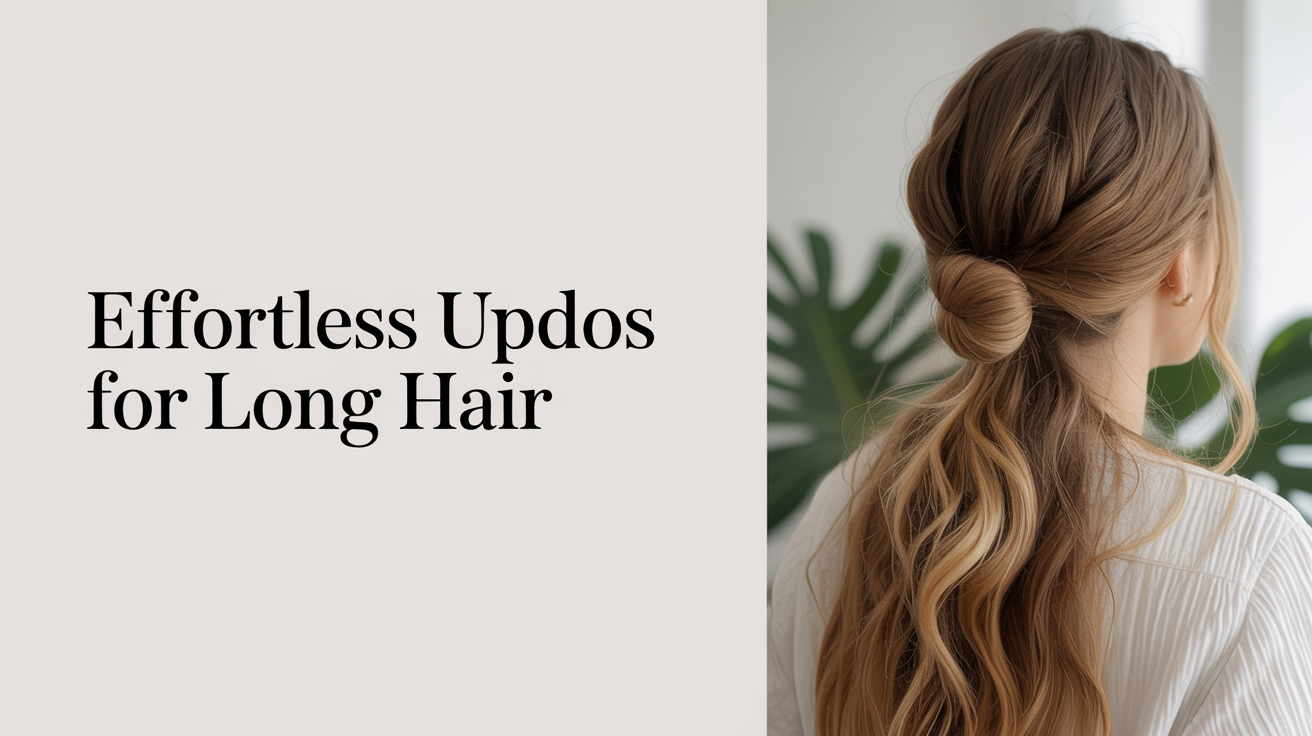
Long hair gives you options. The tricky part is choosing one when you're standing in the bathroom with ten minutes to spare. Most updo tutorials assume you either have a stylist on speed-dial or are competing in a gymnastics floor routine. This guide skips both extremes. Whether you want a pulled-together look for a Thursday at the office or something a little more polished for a Saturday event, these styles are built around techniques that are genuinely repeatable.
What Makes an Updo Work on Long Hair
The length that makes updos feel overwhelming is also what makes them forgiving. More hair means more coverage, so a few flyaways or a slightly lopsided twist won't ruin the look the way it might on shorter hair. That said, a couple of foundational habits make every style in this guide easier to pull off.
Start with the right texture
Freshly washed, slippery hair is the enemy of most updos. Hair that's a day or two old, or lightly spritzed with a texturizing spray, grips itself and holds shape without needing fifteen pins. If you've just washed your hair and need an updo today, dry it halfway and run a little dry shampoo through before you start. The grit makes a real difference.
Gather before you twist
No matter which style you're doing, use both hands to gather your hair as if you're pulling it into a ponytail first. This creates tension from the roots that keeps the final shape from sagging an hour later. Once the hair is gathered and tensioned, then you twist, fold, or pin.
Pin down, not across
A lot of updo failures come from placing bobby pins flat across a section of hair. Slide pins downward at an angle, crossing pairs when you can, so they grip the pin beneath them. This takes slightly more pins but means you're not re-doing things at 2 PM.
Bun Hairstyles That Actually Stay
The bun is the backbone of any updo repertoire. These are a few variations worth having in rotation.
The low knot bun
Gather your hair at the nape of your neck, twist it loosely once or twice, then coil it into a flat knot shape and secure with a hair tie plus two or three pins pushed inward through the base. Leave a few pieces loose around the face for softness, or keep everything tucked for a cleaner line. This one reads as polished enough for dinner and relaxed enough for a long afternoon.
The messy high bun
Pull hair into a high ponytail, twist it loosely, and wrap around the base without smoothing anything out. Secure, then gently tug at the loops and the crown section to create volume and a deliberately undone shape. The key is to pull before you pin, not after. Tugging once everything is pinned down usually just destabilizes the whole thing.
The braided bun
If you have a few extra minutes, braid your hair into a single loose plait, coil the braid around a center point at the nape or crown, and pin the tail underneath. The braid adds visual interest and also keeps fine or slippery hair from sliding out. You don't need to be particularly good at braiding. A loose three-strand braid is all it takes. For more braid-based styling ideas, easy braided hairstyles anyone can master has a range of techniques sorted by skill level.
Easy Updo Options for Everyday Wear
These styles take under five minutes once you've practiced them twice. Speed comes from repetition, not from some special talent.
The half-up twist
Section off the top third of your hair from ear to ear, twist each side back toward the center, then secure both twists together with a clip or a few pins. Leave the rest of your hair down. This is the fastest way to get hair off your face while still looking put-together, and it works on day-two or day-three hair without any prep.
The tucked ponytail
Pull hair into a low ponytail and secure with an elastic. Then use your fingers to create a small opening in the hair above the elastic, flip the tail up through that opening, and let it fall. The tail should now sit folded inside itself with the ends pointing back toward your nape. Secure the tail with a pin or two if needed. This is a classic because it takes thirty seconds and looks like you tried.
The loose French twist
Gather your hair on one side and sweep it toward the opposite side of your head, rolling it upward and tucking the ends under as you go. Secure with pins along the vertical fold. A French twist feels formal but the looseness of the "lazy" version (where the roll isn't perfectly smooth) is actually easier to achieve and holds better because the texture catches on itself.
Formal Updos for Special Occasions
A formal setting calls for a bit more structure, but not necessarily more complexity.
The chignon
A chignon is just a low bun, but the intention is neater. Smooth the hair before gathering (a little leave-in conditioner works for this, or a light layer of hairspray before you start), pull it low at the nape, twist the tail into a tight coil, and pin methodically around the perimeter of the bun rather than just through the center. The result is a clean oval shape that works under a veil, with statement earrings, or entirely on its own.
Pinned-up curls
If your hair holds curl, this is worth the setup time. Curl your hair in sections, let the curls cool completely, then loosely gather and pin them at the back in overlapping layers, leaving the ends slightly loose for texture. No curls need to align perfectly. The layered pinning creates a soft, gathered effect that reads as intentional even when the individual curls are going their own way.
The knotted updo
Divide hair into two sections. Tie those sections into a loose overhand knot low at the back of your head, then tuck and pin both tails underneath the knot. Add a few more pins around the shape to stabilize it. This is a surprisingly sturdy style once pinned properly, and the knotted shape has a sculptural quality that works for weddings, formal dinners, or any event where you'd normally reach for a standard low bun but want something that photographs a little more interestingly.
How to Make Any Updo Last Through the Day
Even a well-built updo needs a little help across eight or more hours.
A light hold spray misted over the finished style (from about a foot away, not directly on it) keeps flyaways down without flattening the shape. If the back of your neck tends to be where things fall apart, add an extra pin there before you leave the house. At the midpoint of your day, a quick press on any loose sections and a single pin usually buys several more hours.
For styles that are genuinely coming undone, the fastest fix is to take the whole thing down, re-gather with tension at the roots, and rebuild. Trying to patch a collapsing updo pin by pin often takes longer and ends up looking worse than starting over.
Frequently Asked Questions
Can I do an updo with layers or face-framing pieces?
Yes. Layers actually help with bun and twist styles because the varied lengths create natural texture. Face-framing pieces can either be incorporated into the style (swept back and tucked in) or left out intentionally. Leaving a few pieces loose around the face is usually more flattering than trying to catch every strand. If you're curious whether your current cut is the best setup for updos, the most flattering haircuts for round faces covers how length and layering interact with face shape.
What if my hair is too thick to stay pinned?
Thick hair needs more pins and wider-set elastics. Use a stronger hold elastic for the initial ponytail step, and increase your pin count rather than trying to find one magic pin that holds everything. Sectioning thick hair before building the updo (splitting it in two or three horizontal layers before gathering) also distributes the weight more evenly and makes the finished style more stable.
How do I get volume at the crown before pinning?
Tease the top section lightly before you gather, or use a volumizing spray at the roots and let it set for a minute. Once the updo is in place, gently lift the crown hair with a tail comb or your fingertips before you lock it in with pins. The teasing holds the height while the pins secure the shape.
What's the best updo for fine hair?
Fine hair does best with styles that don't pull too tight or too heavy. A low, loose chignon or a half-up twist puts less strain on fine strands than a high bun. Texturizing spray or dry shampoo before you start is especially helpful here because fine hair is naturally slicker and needs that added grip to hold any style.
Do I need a lot of accessories for updos to look finished?
Not at all. A simple bobby pin arrangement can be its own detail. If you want something more decorative, a single clip, a ribbon, or a few scattered pins at the base of a bun are enough. Piling on too many accessories at once tends to compete with the shape of the updo rather than add to it. Pick one thing and let the style do the rest.