Hairstyles
The Most Flattering Haircuts for Round Faces
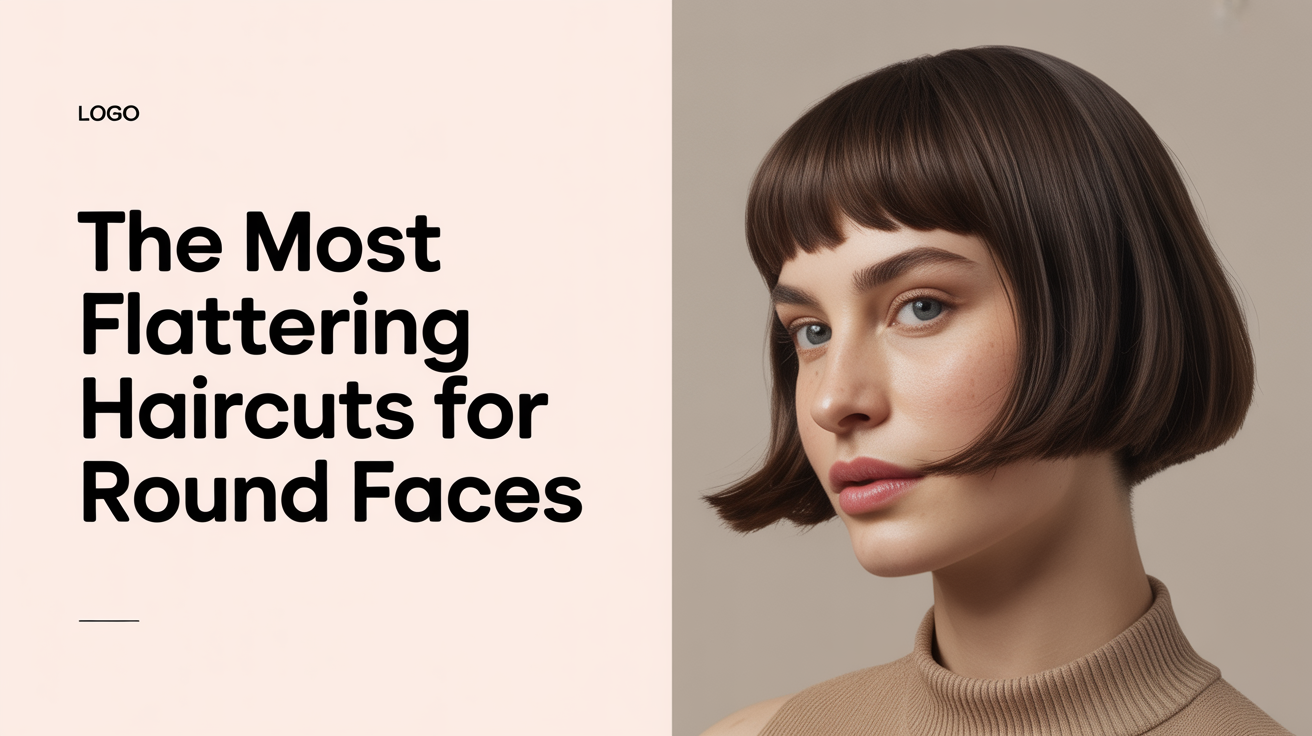
Round faces look best with cuts that add visual length and break up the widest points. That means long layers, off-center parts, and cuts that hit below the chin. It also means steering clear of anything blunt, voluminous at the cheeks, or dead-center parted.
This guide covers how to identify a round face, the styling principles that actually work, the specific cuts worth asking your stylist for, and the bangs situation (more nuanced than most guides admit).
At a Glance
- Round faces have roughly equal width and length, with the widest point at the cheeks rather than the temples or jaw.
- Long layers starting at or below the chin are the single most consistently flattering cut, and they work on any hair texture.
- A side part or deep side part does more elongating work than any cut alone, and it costs nothing.
- Curtain bangs and deep side-swept bangs flatter round faces; wide, blunt, temple-to-temple fringe tends to add width.
- Short cuts can work, but only with deliberate height at the crown. Equal volume all over reads rounder, not sharper.
- Ask your stylist to factor in hair texture specifically. The same cut name looks and behaves differently on fine versus thick hair.
How to tell if you have a round face
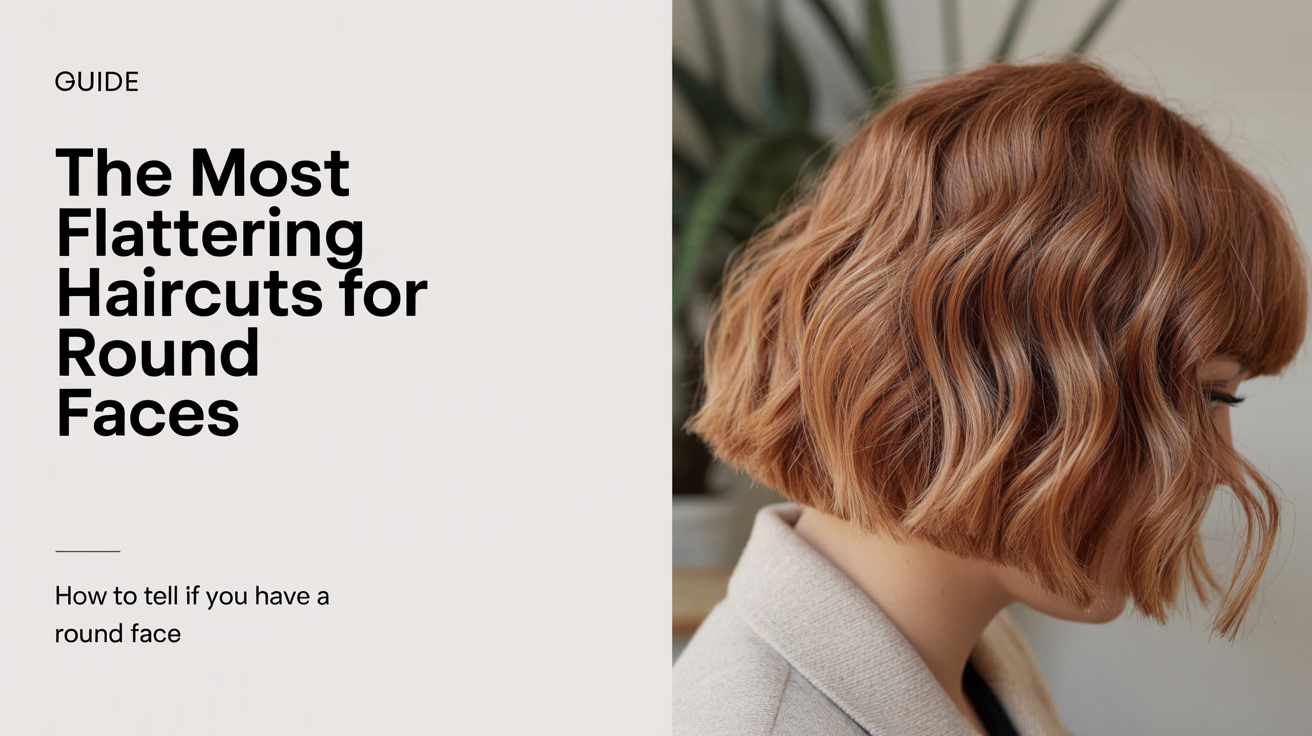
Face shape is easier to see than measure. A round face has roughly equal width and length, a curved jawline with no strong angles, and the widest point at the cheeks rather than the temples or jaw.
If you want to be more precise: pull your hair back, stand in front of a mirror, and trace your face outline on the glass with a dry-erase marker (or just mentally note the shape). Round faces form a soft circle. Oval faces are longer than wide. Square faces have a defined jawline with similar width at forehead and jaw. Heart faces are widest at the forehead and narrow to a point at the chin.
You can have a round face and a strong jaw. You can have a round face and prominent cheekbones. Face shape is a general guide, not a strict category. Your stylist will factor in your specific proportions, hair texture, and what you're actually willing to maintain.
Styling principles that add length and definition
Before getting into specific cuts, it helps to understand the underlying logic. Most flattering haircuts for round faces do one or more of these things:
- Add vertical length: height at the crown or length below the chin draws the eye up and down instead of side to side
- Break up width at the cheeks: layers, angles, and diagonal lines pull attention away from the widest point
- Create asymmetry: an off-center part alone changes how a face reads, because it shifts the focal point and disrupts the circular outline
- Keep volume low and flat at the sides, with more body at the crown or ends
One thing that rarely gets said: texture matters as much as cut. A long layer looks different on fine, straight hair (where it falls flat and creates clean lines) than on thick, wavy hair (where it adds movement and volume in all directions). Be honest with your stylist about your hair texture and how much time you actually spend styling. A cut that requires 20 minutes of blowdrying to look right is not going to look right most days.
That last point matters more than it sounds. Heat styling every day, especially at high settings, is also one of the more common ways hair gets damaged and stops holding a shape well. Dermatologists generally recommend the lowest heat setting your styling tool has and letting hair partially air dry before you bring in a blow dryer or flat iron, which both protects the hair and cuts down the daily styling time a face-framing cut actually needs.
The cuts that work best
Long layers
This is the most consistently flattering option for round faces, and also the most forgiving. Long layers add internal movement without removing length. The hair still falls past the shoulders (or wherever the length sits), but the graduated layers create a slimming, elongating effect.
The key detail to specify: ask for layers that start at or below the chin. Layers that start at the cheekbones will add width exactly where you don't want it.
Long layers also work on every texture. On straight hair, they create a feathered, face-framing effect. On wavy or curly hair, they reduce bulk at the sides and let the curl pattern show more clearly at the ends.
The lob (long bob)
A lob cut between the chin and collarbone works well for round faces because it hits below the widest point of the face. A classic chin-length bob, by contrast, tends to emphasize cheek width rather than counterbalance it.
For a lob to be most flattering, pair it with a side part and some internal layering. A blunt, one-length lob with a center part can read as a circle framing a circle. Add a slight A-line angle (shorter in back, longer in front) and the cut takes on a more elongating shape.
The shag
The shag got popular for a reason: it's built for face-framing. Heavy curtain bangs, short layers at the crown, and longer layers through the mid-lengths and ends create a shape that's naturally narrow at the top and widens slightly at the bottom, which counterbalances a round face more than almost any other cut.
If you're curious about curtain bangs specifically, this breakdown of curtain bangs covers how to cut, style, and grow them out in detail.
The wolf cut
The wolf cut is a rougher, more textured take on the shag: more volume at the crown, choppy layers throughout, wispy ends. It works well for round faces because it builds height rather than width. The layering at the crown creates the vertical elongation that round face shape guides always recommend.
It's worth knowing the wolf cut tends to need more maintenance than it looks. The layers grow out unevenly and can start to look shapeless after 8–10 weeks. If you're someone who goes 4–6 months between cuts, a cleaner long-layer look will hold its shape better.
Pixie cuts and short options
Short cuts can work on round faces, but they require more thought. A classic pixie with volume at the crown and close-cut sides is fine; the height compensates for the lack of length below the chin. A short cut that's equal volume all over tends to make round faces look rounder.
If you want something short, ask for texture and height at the top. A disconnected undercut with longer pieces on top is another option that creates strong vertical contrast.
A quick reference: cuts by how much styling they require
| Cut | Styling effort | Best hair texture | Why it works |
|---|---|---|---|
| Long layers | Low-medium | Any | Adds length, easy to air-dry |
| Lob with layers | Medium | Straight, wavy | Length below chin, internal movement |
| Shag | Medium | Wavy, curly | Face-framing layers, crown volume |
| Wolf cut | Medium-high | Any | Height at crown, choppy texture |
| Pixie with crown volume | High | Fine, straight | Vertical elongation, close sides |
Bangs for round faces
Bangs are where most advice gets oversimplified. You'll often read "avoid blunt bangs" or "stick to side-swept," but it depends on the specifics.
Curtain bangs are generally the most flattering option for round faces. They part in the middle or off-center, sweep outward toward the temples, and create a V-shape that draws the eye toward the center of the face rather than across the widest point. They're also versatile: you can wear them swept to one side, textured and parted down the middle, or pinned back entirely when you want a break.
Side-swept bangs work because the diagonal line from the part to the end of the bang creates an asymmetrical, elongating effect. A deep side sweep that reaches past the cheekbone is especially effective.
Blunt, straight-across bangs can actually work on some round faces, but they need to be the right width. A full, wide blunt fringe that extends to the temples adds horizontal width. A narrower blunt fringe that stays between the outer edges of the brows is much easier to pull off.
Micro bangs (very short, above the brow) expose a lot of forehead, which can feel like it emphasizes a round shape rather than lengthens it. That said, styling rules for face shapes are not laws. If you love the look, try it.
Bangs at a glance
| Bang style | Effect on round faces | Best paired with |
|---|---|---|
| Curtain bangs | Creates a V-shape, draws eye to center | Long layers, lob, shag |
| Deep side-swept | Diagonal line adds asymmetry and length | Any length, deep side part |
| Narrow blunt fringe | Neutral to flattering if kept within brow width | Long layers, shag |
| Wide blunt (temple-to-temple) | Adds horizontal width, usually less flattering | Not generally recommended |
| Micro bangs | Exposes forehead, can emphasize roundness | Personal preference over face-shape rules |
The part makes more difference than most people think
A center part on a round face mirrors the roundness and emphasizes the circle shape. Move your part an inch to one side and see how differently your face reads in the mirror. It's a small change with a noticeable effect.
A deep side part (close to or at the brow arch) is even more dramatic. The large sweep of hair to one side creates visual asymmetry and length. This works with almost any hair length, from a lob to long hair, and requires no cutting at all.
If you wear braids or updos regularly, apply the same logic, but keep tension loose. Braids that start off-center or pull diagonally across the head are more elongating than symmetric styles that sit exactly in the middle, and loosening the style slightly around the hairline also protects against the scalp strain that comes from wearing tight styles too often. The American Academy of Dermatology specifically calls out tight ponytails, buns, and braids as a cause of hair breakage and, over time, hair loss at the follicle, which is a good reason to keep any face-framing braid loose rather than pulled taut. For ideas on braided styles that work with this principle, these easy braided hairstyles are worth a look.
Styling tips that work with round face shapes
The right cut does most of the work, but a few styling habits reinforce what it's doing.
Blowdry with a round brush for crown volume. Lift the roots at the top of the head while blowdrying rather than at the sides. This gives you height without width.
Use a diffuser if you have curls or waves. A diffuser distributes volume more evenly and tends to create height rather than the sideways expansion that can happen with air-drying.
Apply product at the ends, not the roots, on the sides. A light serum or oil through the ends of hair at the sides keeps those sections from puffing out. Keep root-lifting products confined to the crown.
Updos work, but placement matters. A topknot or high bun adds height. A low bun worn centered at the nape emphasizes cheek width. If you're doing an updo, go high or wear it off-center. For specific ideas, these effortless updos for long hair have styles that suit round faces well.
Limit daily heat styling where you can. Between cuts, a face-framing shape holds up longer, and the hair itself stays healthier, if you're not running a flat iron or curling wand over it every single day. Two or three heat-styled days a week with the lowest effective setting, and air-drying or a light diffuse the rest of the time, tends to keep both the shape and the hair's condition intact.
FAQ
What haircut is most flattering for a round face?
Long layers below the chin are the most consistently flattering option, they add visual length, work on every texture, and are low-maintenance as they grow out. A lob with a side part and internal layering is a close second.
Should people with round faces avoid short hair?
No, but short cuts need more intentional shaping. Short hair that builds volume at the crown (like a pixie with height on top) works. Short hair that's equal volume all over tends to read as wider. Talk to your stylist about building vertical emphasis into any short cut.
Do bangs make a round face look rounder?
Depends on the bangs. Curtain bangs and side-swept bangs are generally flattering because they create diagonal or asymmetric lines. Wide, blunt bangs that extend to the temples add horizontal width and can emphasize roundness. Narrow, textured bangs stay more neutral.
What part works best for a round face?
A side part or deep side part is most effective. Moving the part off-center breaks the circular symmetry of a round face and adds an elongating diagonal line. Center parts can work with the right cut, but they're harder to pull off.
Does hair texture change which cuts work for round faces?
Yes, significantly. Fine, straight hair shows every layer and line cleanly but can go flat at the sides without volume-building products. Thick or curly hair needs careful thinning in the right places so layers don't puff out sideways. Ask your stylist to factor your texture in specifically. "Long layers for a round face" means something different depending on the hair you're working with.
How often should a face-framing cut like a shag or wolf cut be trimmed?
Most face-framing cuts with heavy layering need a trim every 8 to 10 weeks to keep the shape crisp, since the shortest layers at the crown grow out fastest and start to blend into the rest of the length. Longer, simpler layer cuts (like the classic long-layer option) can stretch to 12 weeks or more between visits because there's less precision shaping to maintain. If you're not sure which category your cut falls into, ask your stylist directly when you book the appointment, it changes how often you'll realistically need to be in the chair.
Can bleach or color change which cuts and bangs work?
Indirectly, yes. Heavily lightened hair is more porous and prone to breakage, which affects how well fine layering and face-framing pieces (like curtain bangs) hold their shape between washes. If your hair is color-treated and drier than usual, ask your stylist about slightly blunter, less aggressive layering, since fewer thin, separated pieces means less visible damage and better day-to-day movement.