Hairstyles
Easy Braided Hairstyles Anyone Can Master
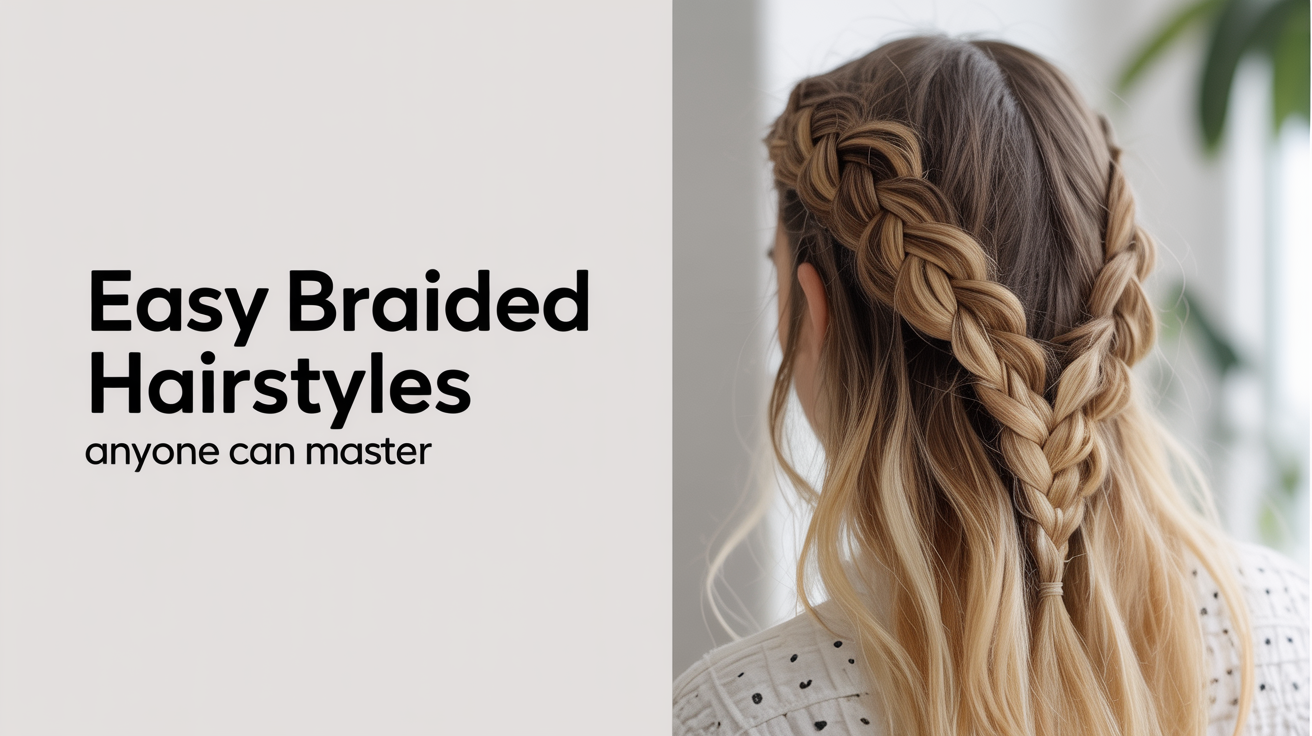
Braided hairstyles have a way of looking far harder than they are. Most of the braid styles people are hunting online come down to a handful of core techniques, and once you have those in your hands, the variations are just remixes. This guide covers the ones that actually work on real hair, in real time, without a YouTube tutorial playing on loop in the corner of the mirror.
At a Glance
- Almost every braid style traces back to two techniques: the three-strand cross (dutch, french, fishtail) and the twist-and-wrap (rope braid).
- Even, index-finger-width sections matter more than speed. Thin sections slip, thick sections look chunky.
- Second-day hair with a little natural oil or dry shampoo grips better than freshly washed, slippery hair.
- A dutch braid needs hair long enough to reach the nape, roughly four to five inches in the back at minimum.
- Keep any braid loose around the hairline. Tight, repeated tension there is one of the documented causes of hair thinning over time.
- Fabric-covered or spiral hair ties protect the ends better than bare rubber bands, especially on color-treated hair.
Why braids are harder than they look (and how to fix that)
The biggest obstacle is tension. Consistent, even tension is what separates a braid that holds from one that falls apart by noon. Most beginners grip too tight at the roots and lose the grip by the ends, which produces a lumpy, uneven result.
The second issue is section size. Thin sections slide through each other too easily and create a loose, floppy braid. Sections that are too thick make the crossover stiff and the braid looks chunky rather than defined. For most hair types, sections about the width of your index finger work well.
The third, less obvious issue is mirror direction. Braiding your own hair from the back means everything you do is mirrored, so left and right instructions from a tutorial can feel backward the first few times. Practicing on a friend, or on a mannequin head if you're serious about it, builds the muscle memory faster than repeatedly fighting your own reflection.
A few things that help regardless of which braid style you're attempting:
- Start with second-day hair. Freshly washed hair is slippery and fights braiding. One day of natural oil gives the hair some grip.
- Dampen sections slightly with a spray bottle if your hair is very fine or straight.
- Keep your elbows up. It sounds minor, but dropping your arms means you drop your sections.
- Pull each crossover snug before you move to the next. Don't wait until the end to tighten.
Tension matters for more than looks, too. Braiding too tightly, especially at the hairline, is one of the causes of traction alopecia, hair loss from repeated pulling on the follicle. The American Academy of Dermatology advises loosening braids around the hairline and stopping if you feel pain or stinging at the scalp, which is good practice even for a loose everyday braid, not just long-term protective styles. As a rough guide, if you can't move your eyebrows normally right after braiding, or the scalp feels tight rather than just secured, it's too tight and worth redoing looser.
How to do a dutch braid
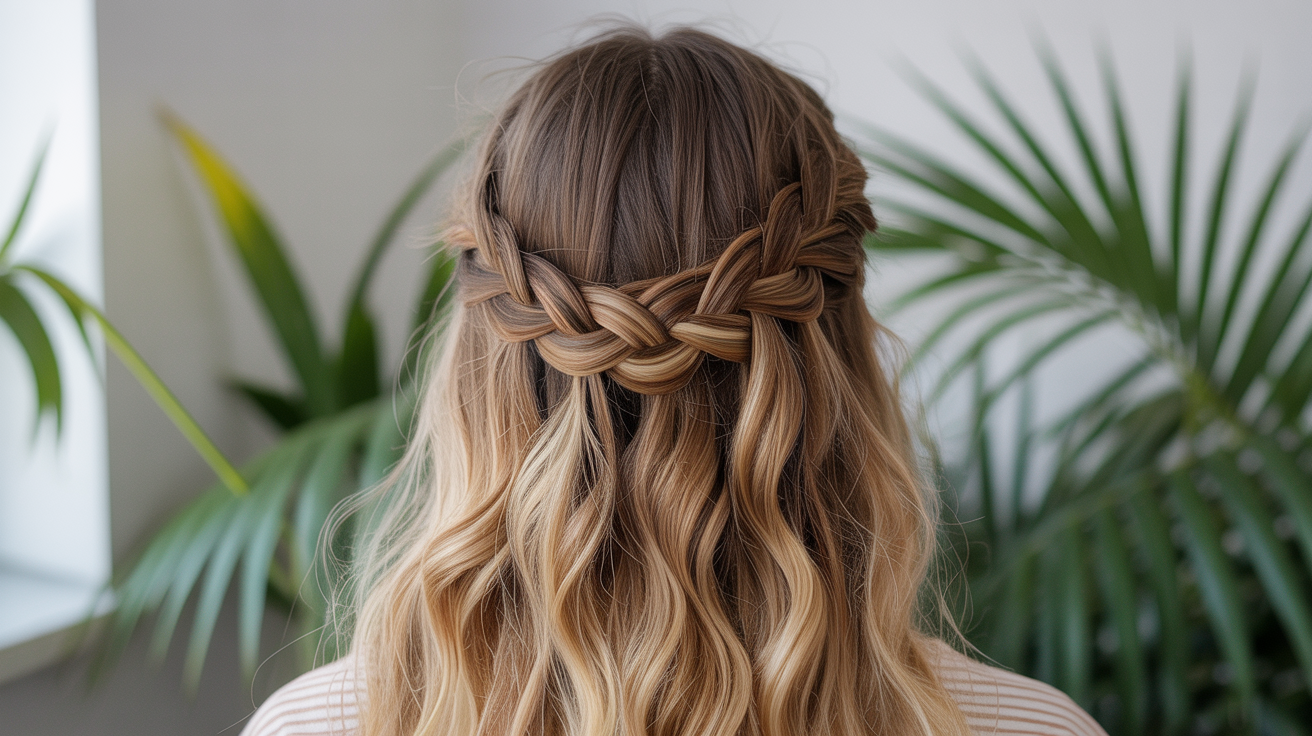
The dutch braid gets more attention than any other braid style right now, and for good reason: it sits on top of the hair rather than sinking into it, so it reads as bolder and more deliberate than a standard three-strand braid.
The difference between a dutch braid and a french braid is one small mechanical change: in a french braid, you cross strands over the middle. In a dutch braid, you cross them under. That single swap is what makes the braid pop outward.
What you need
A tail comb, two small hair ties or clips, and whatever you'll use to secure the end. A clear elastic works for most braid styles without adding bulk.
A texturizing spray or dry shampoo is worth having on hand even if your hair isn't fine. It adds grip without the stiffness of a heavier hairspray, and a light pass at the roots before you start makes the first few crossovers noticeably easier to control. Skip anything with a strong hold, since a braid needs hair that can still move slightly as you're working it, not hair that's locked in place before you've even begun.
Step-by-step
- Part your hair where you want it and section off a triangle at the crown, roughly the width of two fingers. Divide that triangle into three equal strands and hold them with both hands.
- Cross the right strand under the middle strand. Then cross the left strand under the middle. You've started the braid.
- Before the next crossover, use your right index finger to scoop up a thin section of hair from the right side of the head and add it to the right strand. Cross the right strand under the middle.
- Scoop up a thin section from the left side and add it to the left strand. Cross left under middle.
- Repeat steps 3 and 4, keeping your scoops consistent in size. Work down the back of the head toward the nape.
- Once you run out of loose hair to add, finish with a regular three-strand braid to the ends and secure.
If the braid looks loose or wavy rather than raised and clean, the problem is almost always that you're not pulling the crossover tight enough before picking up the next section. Go slower and snug each pass.
Common dutch braid variations
Two dutch braids going straight back are one of the most reliable options for working out, keeping hair out of the face, or heading into a day where you know you won't have time to touch it up. They're also a good practice braid because you can compare both sides in real time.
A single dutch braid worn to the side, starting at the temple, works well as an alternative to a loose half-up look, because the structure holds without needing pins or a second layer of product.
Easy braids that don't require any special technique
Not everything has to be a dutch braid. Some of the most wearable braid styles are also the most low-effort.
The rope braid. Divide your hair into two sections. Twist each section in the same direction (clockwise, for example), then wrap them around each other in the opposite direction (counterclockwise). The tension from twisting in opposing directions is what holds it. This works on wet or dry hair and takes under two minutes.
The messy fishtail. A fishtail sounds technical but it's actually just two sections and very thin crossovers. Divide the ponytail into two halves. Take a small piece from the outside edge of the right half and cross it to the left. Then take a small piece from the outside edge of the left half and cross it to the right. Keep going. The messiness is intentional. After you secure the end, pull the edges out slightly to make it look fuller and more relaxed.
The knotted half-up. Take two sections from either side of the temples, tie them in a loose overhand knot at the center back, and secure. It reads as styled but takes thirty seconds. If your hair is longer, you can take a second pair of sections just below the first knot and repeat.
For days when you want structure without a full braid, these pair well with effortless updos for long hair, particularly the knotted half-up, which transitions easily into a twisted bun by tucking the ends.
Braid styles for different hair lengths and textures
Most braid tutorials assume waist-length, medium-thick hair. That covers a small fraction of people. Here's what actually changes with different hair.
| Hair type | What works well | What to adjust |
|---|---|---|
| Fine, straight | Rope braid, half-up dutch braid | Use texturizing spray before braiding; go slower to keep sections even |
| Thick or coarse | Fishtail, single dutch braid | Dampen hair before starting; use a stronger elastic |
| Curly (loose curls) | Two dutch braids, wash-and-braid technique | Braid while damp; the curl pattern adds natural texture to the braid |
| Short (chin to shoulder) | Half-up braid styles, knotted styles | Don't fight the length; work with what reaches comfortably |
| Layered | Rope braid works best | Layers slip out of three-strand braids; rope twisting captures them better |
One thing worth knowing about shorter hair: a half-up dutch braid starting at the crown works even if your hair only reaches your shoulders, because you're only adding hair from the top section. The braid runs out of loose hair to incorporate fairly quickly, and then you just finish with a small three-strand braid to the ends. Pair this with curtain bangs and it becomes one of those looks that photographs much better than it feels like it should.
How long each style actually takes
| Braid style | Realistic time (beginner) | Realistic time (practiced) |
|---|---|---|
| Rope braid | 3-4 minutes | Under 2 minutes |
| Knotted half-up | 2-3 minutes | Under 1 minute |
| Single dutch braid | 10-15 minutes | 5-7 minutes |
| Two dutch braids | 20-25 minutes | 10-12 minutes |
| Messy fishtail | 12-15 minutes | 6-8 minutes |
The gap between beginner and practiced time is almost entirely about section consistency. Once your hands learn to grab the same amount of hair every time without looking, the speed follows on its own.
Making braids last longer
A well-done braid should last a full day without major adjustment. If yours is falling out by mid-morning, something in the foundation is off.
The most common cause is no anchor. If you start a braid without a base (even just a loose hair tie at the starting point that you can remove later), the whole thing slides down as the day goes on. For dutch braids in particular, a small clip at the crown while you get started gives you something to braid against.
Dry shampoo sprayed at the roots before braiding adds friction and grip. You don't need much. A light pass is enough. If you use too much, the hair gets stiff and won't move through your hands smoothly.
Sleeping in braids changes the texture of your hair by morning, which can be a good thing. Loose overnight braids give wavy, slightly crimped hair that holds braid styles better the next day. It's worth trying if you usually struggle with fine hair that won't cooperate.
If you have a face shape that benefits from volume at the sides, loosening the braid slightly around the temples, just pulling the loops out gently with your fingertips, can add width where you want it. This works particularly well alongside flattering haircuts for round faces, which often use volume at the crown and temples to create length.
What you secure the end with matters more than most people think, too. General hair-care guidance from dermatologists recommends covered or fabric-wrapped hair ties over bare rubber bands, since an uncovered elastic grips and pulls at the strands right where you're removing it, which is exactly where breakage tends to show up first on repeatedly braided ends.
Frequently Asked Questions
How long does it take to learn a dutch braid?
Most people can do a passable dutch braid on themselves within a week of daily practice. The first few attempts will feel mechanical and the result will probably be uneven. That's normal. The hands learn faster than the brain expects; it's more muscle memory than technique. Give it five minutes every morning for a few days.
Can you do these braid styles on very short hair?
Some of them, yes. The rope braid and half-up knotted styles work from about chin length up. A full dutch braid needs enough hair to reach the nape of the neck, which usually means at least four or five inches of length in the back. If you're in that in-between phase after a cut, the half-up dutch braid starting just at the crown is your best option.
What's the difference between a dutch braid and a cornrow?
They use the same under-crossover technique, but cornrows lie flat against the scalp with very tight tension and sections that are usually parted in straight geometric lines. A dutch braid sits up off the scalp and uses much looser tension. Cornrows also typically use smaller sections and are designed to stay in for days or weeks.
Why does my braid look bumpy instead of smooth?
Uneven section sizes. When one crossover picks up more hair than the one before it, it creates a ridge. Slow down and try to keep each scoop the same width. It also helps to comb each section before you pick it up rather than grabbing the hair loose.
Do braids work on color-treated hair?
Yes, and braids are actually a low-manipulation style that's gentler on treated hair than, say, heat styling every day. The one thing to watch is elastics: use fabric-covered or spiral hair ties rather than standard rubber bands, which can break color-treated hair at the point of contact.
My scalp hurts after braiding. Is that normal?
A little tightness right when a braid is fresh is common and usually eases within an hour as your scalp adjusts. Ongoing pain, stinging, or small bumps along the hairline is not normal and means the braid is too tight. Take it down and redo it looser, giving yourself an extra half-finger of slack at the part. Repeated tight braiding at the same hairline over months is how traction alopecia develops, so it's worth listening to persistent discomfort rather than pushing through it for the sake of how the style looks that day.
Can I braid hair that's still wet?
Yes, and for some braid styles it actually works better. The rope braid and dutch braids on wavy or curly hair both benefit from being done on damp (not soaking) hair, since the shape sets as it dries and holds longer than a braid done on fully dry hair. Fine, straight hair is the exception. It braids more cleanly once mostly dry, since wet fine hair tends to be extra slippery and slides out of the crossovers.