Hairstyles
Hairstyles for Fine or Thin Hair That Add Volume
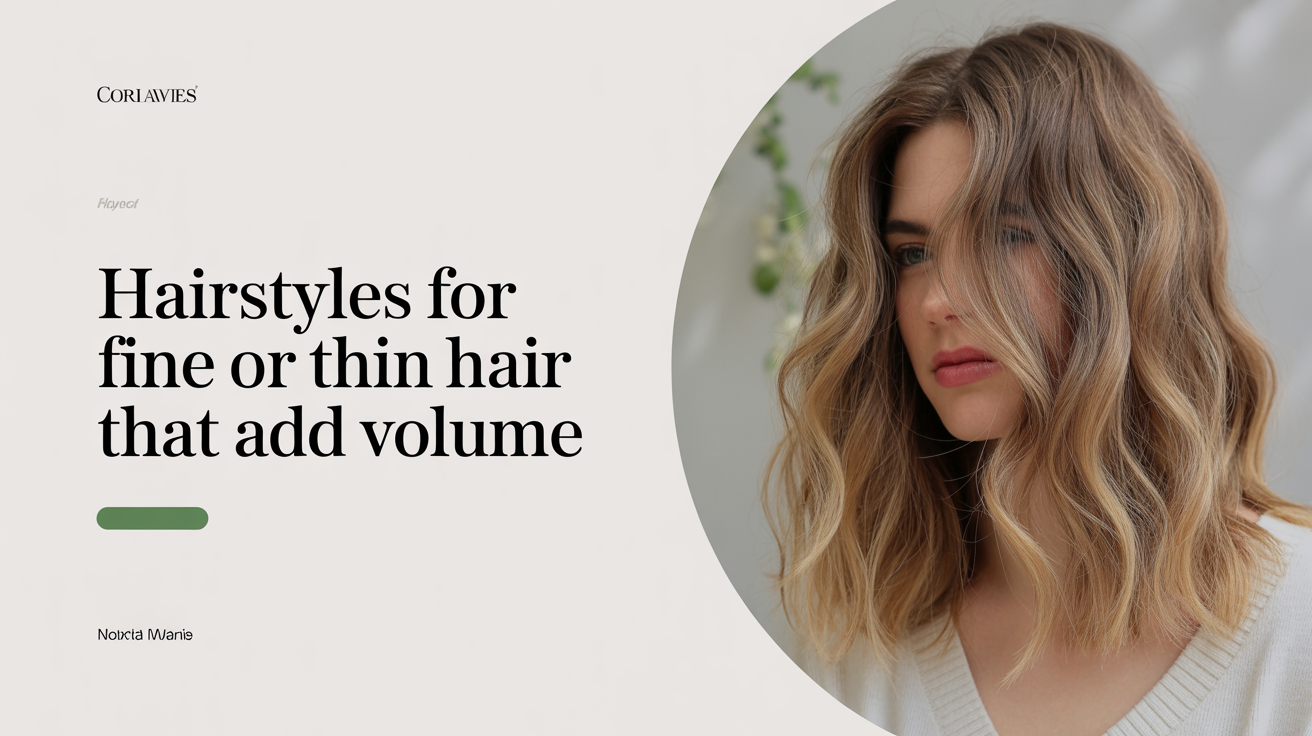
Fine hair has a few particular frustrations. You style it in the morning, and by noon it's lying flat against your head like it gave up. You try adding product for grip and end up with that greasy, weighed-down look that makes things worse. Volume seems like something other people have, reserved for those with a full, coarse texture.
Here is the thing: hairstyles for fine hair are not about forcing your hair to behave differently. They are about working with the structure you have, choosing cuts that build in visual density, and using techniques that add lift at the root rather than coating every strand with product. It is a different approach, but the results are real.
The Cuts That Actually Build in Volume
Your haircut is doing more work for you (or against you) than any styling product. The shape of a cut determines whether your hair falls flat or holds some movement throughout the day. A few specific silhouettes consistently perform well for fine and thin hair.
The Textured Bob
A blunt bob sits heavy at one length, which can read as "flat" rather than "full." A textured bob, by contrast, has subtle point-cutting or piece-y ends that create slight gaps in the perimeter. Those gaps catch light differently and give the impression of more going on. Ask for a bob with the ends "chipped out" or "texturized at the tips," keeping length somewhere between the chin and collarbone so the hair does not get so long that gravity takes over.
Layers That Start at the Right Place
The word "layers" makes some fine-haired people nervous because a bad layering job from years ago left them with wispy pieces that lost all body. The key is where the layers begin. Layers that start too high up the head remove weight from areas that need it and leave you with thin ends that go limp fast. Layers that begin at the cheekbone or below, moving through the mid-lengths and ends, add movement without stripping density. Tell your stylist you want "long layers" or "layers that start at the jaw," and specify that you want to keep weight at the top.
The Modern Shag
The shag has had a long comeback, and it works particularly well for fine hair because it is built around the idea of distributed texture. Curtain bangs, face-framing layers, and subtle razoring through the ends all create a style that looks full even when your individual strands are fine. The shag also gives you a lot of styling flexibility: air-dried, it gets a natural tousled quality; rough-dried with a round brush, it can look polished with noticeable volume at the crown.
Styling Habits That Change Everything
A good cut gives you a strong foundation, but the way you dry and style your hair is what determines whether it looks flat by 10 a.m. or holds shape through the afternoon.
Flip Your Head to Dry
Drying your hair upright, with the hair lying flat on top of your head, trains it to fall that way. Flip your head forward and rough-dry from underneath. This does two things: it lifts the root away from the scalp and disrupts the natural direction the hair wants to lie. Once the hair is about 80 percent dry, flip back up and use a round brush or a flat paddle brush to smooth and direct. The lift you create underneath stays once the hair cools.
Root Spray Over Dry Shampoo (But Timing Matters)
Dry shampoo gets recommended constantly for fine hair, and it does absorb oil and add texture. The problem is most people apply it when their hair is already flat and slightly greasy. At that point, it is more cleanup than preparation. Try applying a light root spray or dry shampoo to clean, dry hair at the root before you style. This gives the product something to grip and adds grit that lets the root hold its position once you style it. A small amount goes a long way: two or three short bursts at the crown, work it in with your fingers, and then proceed with drying.
The Blow-Dryer Angle That Matters
Pointing the nozzle of your dryer straight down the hair shaft smooths the cuticle but does nothing for volume. Instead, direct the airflow upward or sideways at the root. Use a round brush to lift a section away from the scalp and aim the heat at the base of that section, not the ends. Hold that tension for a few seconds after the heat, let the section cool before releasing, and you will find the root stays lifted much longer than it would with a downward-drying technique.
Products That Help Without Weighing Hair Down
Product selection is where fine hair styling often goes wrong. Heavy creams, thick serums, and rich conditioning treatments coat each strand and pull it toward the ground. Choosing lighter textures and applying them strategically makes a noticeable difference.
Volumizing mousse is one of the most underrated options. A golf-ball-sized amount worked through damp hair before drying adds volume and hold without the film that some sprays and serums leave. Apply from mid-length to ends, not directly on the roots, so you do not flatten what you are trying to lift.
Sea salt sprays add texture through a similar mechanism to what happens when your hair dries after a swim: the minerals slightly swell the hair shaft, adding grip. For fine hair, these work best on hair that is almost fully dry rather than soaking wet. A light mist, scrunched in with your hands, gives a tousled quality that reads as fuller than pin-straight. If you want a more polished version of that texture, take a look at how to get effortless beach waves for techniques that adapt well to fine hair.
Skip the heavy conditioner at the root. Conditioner is necessary for fine hair, especially if you color, but applying it from root to tip coats the hair nearest the scalp and causes it to lie flat. Apply only from mid-shaft to ends, where the hair is oldest and most likely to need moisture.
Color and Highlights as a Volume Tool
Color is not a styling technique in the traditional sense, but certain coloring approaches make fine hair appear denser.
Highlights placed throughout the hair create dimension, and dimension reads as texture. Where there is texture, there appears to be more hair. Multi-tonal color, rather than a single flat shade, prevents fine hair from looking like a sheet of one color laid on top of the head. Balayage-style painting, concentrated through the mid-lengths and ends rather than saturating every strand uniformly, is a practical choice: it gives contrast without requiring you to maintain heavy root coverage every six weeks.
Root shadows (a slightly darker shade at the scalp) add a sense of depth that makes the hair look more substantial. A skilled colorist can build in a color gradient that makes hair appear fuller without any change to the actual cut or your styling routine.
Frequently Asked Questions
Can fine hair really look thicker, or is it always going to look thin?
Visually, yes. Fine hair and thin hair are not the same thing, though many people have both. Fine refers to the diameter of individual strands; thin refers to overall density on the scalp. A good cut, the right color, and consistent styling techniques can make both look significantly more substantial. You are not changing the hair's structure, but you are using shape, light, and texture to shift how it reads.
What is the single best haircut for thin hair?
There is no one answer, but the textured bob and the modern shag come up most often for good reason. Both distribute the hair's weight in ways that create visual fullness. If you are not ready for a shorter cut, long layers starting at or below the jaw are the gentlest way to add movement to longer lengths without sacrificing density at the top. The hairstyles and cuts for thick hair guide is worth a read for contrast: understanding what works for thick hair helps clarify why the opposite principles apply here.
How do I add volume without product buildup?
The two main strategies are choosing lighter product formulas and washing more frequently. For many fine-haired people, washing every other day works better than stretching to every third or fourth day, because oil accumulates at the root and flattens the hair faster than it does for coarser textures. When you use product, start with less than you think you need and add more only if necessary. Buildup is almost always a result of applying too much, not from using product at all.
Does fine hair need a special shampoo?
A volumizing shampoo is genuinely useful here. These formulas tend to be lighter and deposit less residue than moisturizing shampoos, which can be slightly heavy for very fine strands. Look for shampoos without silicones in the first few ingredients. Silicones are smoothing agents that build up over time and weigh fine hair down even after rinsing. Clarifying once every week or two also helps reset the scalp and remove anything that has accumulated.
My hair is flat again by lunch. What am I doing wrong?
Usually one of three things: the hair was not fully dry before you finished styling (damp hair always falls flat as it dries), the product was applied too close to the root, or the hair was touched too much after styling. Fine hair loses its shape from handling. Style it, let it cool and set, and resist rearranging it afterward. A very light-hold finishing spray can seal the style without adding weight.