Hairstyles
How to Get Effortless Beach Waves
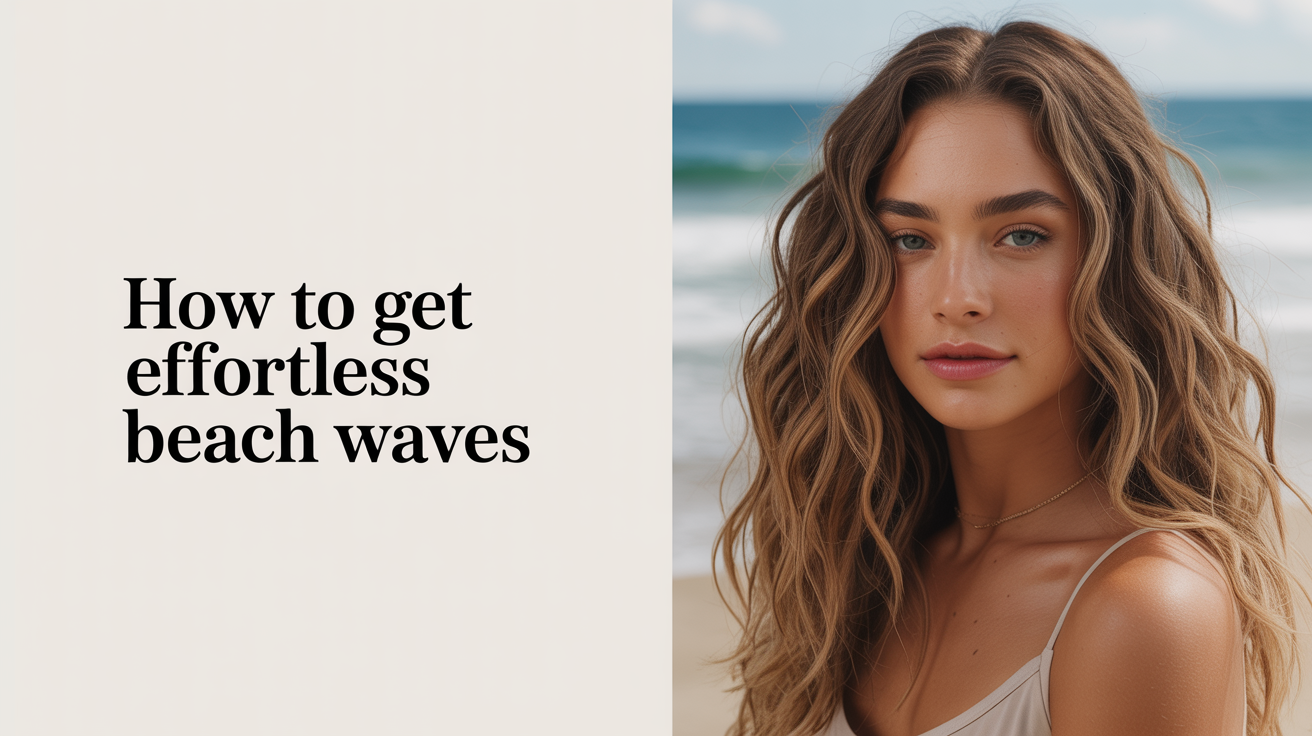
Beach waves are the hair equivalent of getting dressed without trying too hard. The look reads relaxed and polished at once, and it works on hair that's fine, thick, short-ish, or very long. The secret isn't a specific product or a single technique. It's understanding how to create a bend that doesn't look uniform, because perfect symmetry is what separates a salon blowout from actual waves.
Here's how to get beach waves at home, using a few different methods depending on your tools and how much time you have.
What Makes Beach Waves Different from Regular Curls
A traditional curl spirals consistently around a barrel and looks like a curl. Beach waves are looser, mix different bend directions, and have a natural variation in texture that makes the hair look like it dried in motion rather than in front of a mirror.
A few things set them apart:
- Direction changes. Real waves don't all bend the same way. Alternating the direction you wrap sections of hair around a wand gives you that mismatched, natural result.
- Looser tension. Wrapping hair loosely around the barrel, rather than pulling it taut, creates a softer shape with more give.
- Not brushed out. Brushing loosens curls into waves, but beach waves are usually finger-combed, not brush-combed. Brushing too aggressively creates frizz rather than texture.
- Texture at the ends. Salt sprays and texturizing products roughen the cuticle slightly, giving hair that lived-in grip.
Understanding this logic makes every technique easier to apply, whether you're using heat or skipping it entirely.
The Right Tools for Wavy Hair
You don't need to buy anything new to get good beach waves. These are the three approaches that work consistently.
Curling Wand
A curling wand (a barrel without a clip) is the most direct route to wavy hair. A 1-inch to 1.25-inch barrel gives you the right amount of bend without over-curling. Wands with a tapered barrel create extra variation because the root end of each section curls tighter than the tip, mimicking how natural waves grow in.
One note: a clamp-based curling iron also works, but the clamp leaves a dent where it folds the hair. If that's what you have, skip clamping and simply wrap the hair around the barrel, holding the ends with your fingers.
Flat Iron
A flat iron can create beautiful waves with an S-wave technique. You clamp the iron onto a section near the root, rotate the iron away from your face, then push downward while keeping that rotation. Each section comes out with a loose S-shaped bend. This method gives you more control over wave width than a wand does, and it tends to look a bit softer overall.
The No-Heat Braid Method
If you want wavy hair without any heat, braids do the work. This takes longer (usually overnight or at least a few hours), but the result is soft, frizz-free texture that looks the most naturally "beach." Tight braids create tighter waves; loose braids create a gentle bend. More braids give finer wave segments; fewer braids give wider, looser texture. Easy braided hairstyles cover a range of techniques if you want to explore beyond a basic three-strand plait.
How to Prep Your Hair for Beach Waves
Good prep is where most people leave results on the table. Hair that's been prepped well holds a wave for hours. Hair that hasn't drops the style within an hour or two.
Start with second-day hair
Freshly washed hair is often too slippery to hold a curl well. Second-day hair has a small amount of natural oil on the shaft, which gives the wave something to grip. If you only have clean hair to work with, a light pass of dry shampoo at the roots adds some grit before you start.
Use a heat protectant if you're using tools
Spray a heat protectant through mid-lengths and ends before reaching for a wand or flat iron. This isn't just about protecting hair from damage. It also helps the cuticle sit flatter while the wave sets, which translates to less frizz in the finished look.
Add texture before you style
A light mist of salt spray or texturizing spray on damp hair (before blow-drying or before braiding) builds texture into the hair shaft itself. The wave then has something to hold onto before you even pick up a tool.
Step-by-Step: Beach Waves with a Curling Wand
This is the method that gives you the most consistent results in the shortest time.
Section and prep
Clip the top half of your hair up and work on the bottom layer first. Sections should be about an inch wide. Thicker sections give you looser waves; thinner sections give you tighter bends with more definition. Work from underneath so each finished wave falls cleanly without getting mashed under sections you haven't styled yet.
The wrapping technique
Hold the wand pointing downward. Wrap a section of hair around the barrel, leaving the last inch or so of the ends free. That loose tip is what gives beach waves their slightly undone finish. Hold the wrap for 8 to 10 seconds, then release.
For the next section, wrap in the opposite direction from the first. This alternating technique creates a layered, multi-dimensional wave rather than a head full of matching curls all bending the same way.
Work through the bottom layer, then let the top layer down and repeat.
Cooling and finishing
Once all sections are done, let the waves cool completely before touching them. The wave sets as it cools, and manipulating it while still warm causes it to relax and drop quickly.
Once cool, break up the waves with your fingers. Flip your head upside down, scrunch gently a few times, then flip back. A small amount of texturizing cream or pomade worked through the mid-lengths and ends (start with less than you think you need) separates the waves and takes the edge off any overly polished curl shapes. Finish with a light-hold flexible hairspray. A stiff spray makes the waves look crunchy; a flexible one adds hold while keeping movement.
How to Make Beach Waves Last Longer
A few habits make a real difference in how long the style holds.
Let it set before you move. Sitting down for ten minutes after styling (rather than immediately throwing on a coat or bag strap) lets the waves cool and set without getting crushed.
Avoid constant contact. Running your fingers through waves repeatedly breaks them down faster than anything else. The occasional finger-comb is fine. Constant touching flattens the texture.
Sleep with a loose bun. If you want to wear beach waves two days in a row, twist the hair into a loose bun at the nape of your neck before bed. The waves mostly survive the night and often look better on day two, when they've relaxed slightly from their initial set.
Refresh with salt spray. A few spritzes of salt spray and a light scrunch can revive flattened sections without re-curling. Let the spray dry without touching it, and the texture comes back.
Frequently Asked Questions
Can you get beach waves on straight hair?
Yes. Straight hair often holds a wave well once it's been styled with a wand or flat iron, especially with a texturizing product worked in beforehand. Fine straight hair may need only 8 seconds on the barrel; thicker or more resistant hair might need 12 to 15 seconds to hold the bend.
How do you get beach waves without heat?
The braid method is the most reliable no-heat option. Braid slightly damp hair (not soaking wet), sleep in the braids, and release them in the morning. Applying a small amount of mousse or leave-in cream before braiding adds definition and helps combat frizz when you undo the plaits.
Do beach waves work on short hair?
They do, though the technique shifts slightly. Shorter hair benefits from a smaller barrel (around 3/4 inch) because there isn't as much length to wrap. A flat iron S-wave technique also works well for shorter lengths. Haircuts that suit your face shape can help you figure out whether adding wave texture makes sense for your specific length and structure.
What's the difference between salt spray and texturizing spray?
Salt spray uses sea salt or magnesium sulfate to swell the hair shaft and create grip. The result can feel slightly crunchy at first, which you scrunch out. Texturizing spray relies on lightweight polymers or waxes to add volume and separation with less stiffness. Salt spray is better for creating hold and lived-in texture from scratch; texturizing spray is better for finishing or refreshing waves that already exist.
Why do my beach waves fall flat so quickly?
The two most common reasons are styling on freshly washed hair and manipulating the waves before they've fully cooled. Clean hair is slippery and holds a set less effectively than second-day hair. And touching warm waves, even gently, causes them to relax before the shape has a chance to set into place.