Hairstyles
Hairstyles and Cuts for Thick Hair
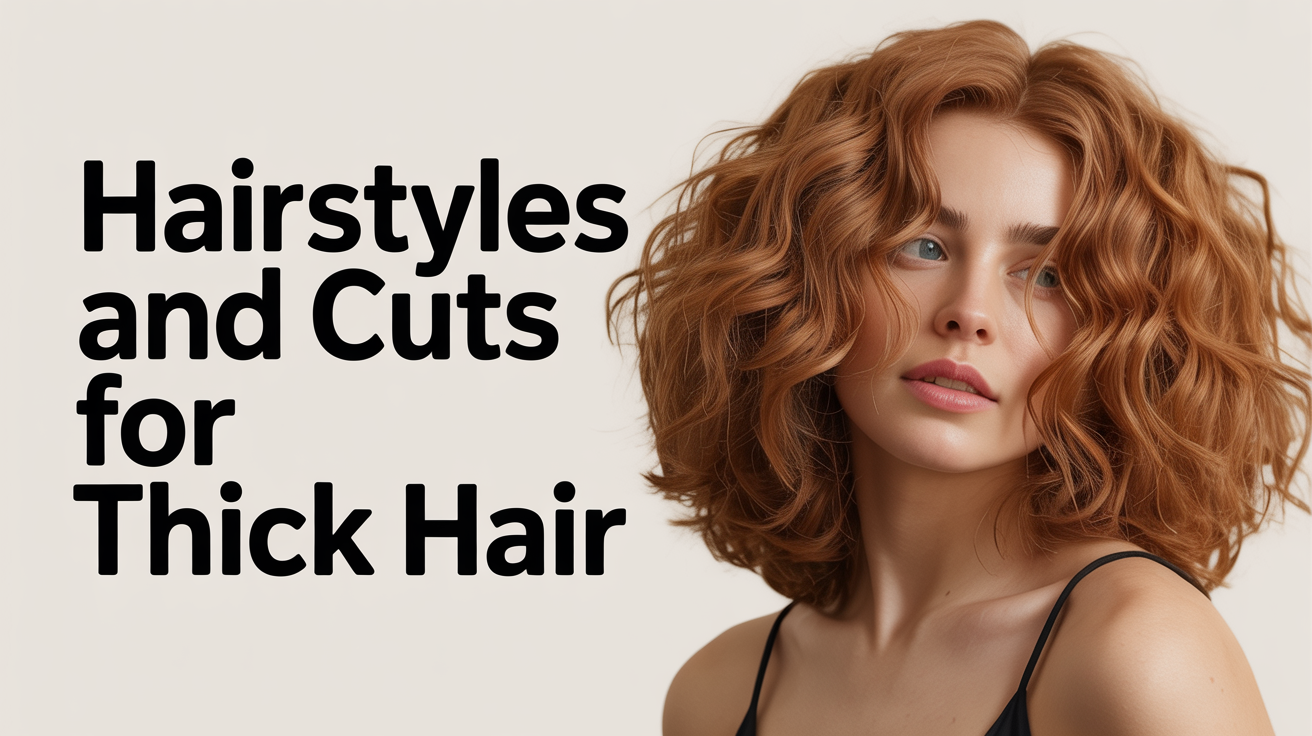
Thick hair comes with a lot going for it: body, staying power, and the kind of fullness that people with fine hair spend money trying to fake. The flip side is that the wrong cut turns it into a frizzy triangle, the wrong style leaves you hot and uncomfortable by noon, and "just air dry it" is rarely as simple as it sounds. The good news is that most thick hair problems are cut problems. Get the shape right and daily styling becomes much easier.
Here is a practical look at which cuts work, which thick hair styles hold up through the day, and how to manage thick hair without spending an hour with a diffuser every morning.
Why the Right Cut Makes Such a Difference
Thick hair has high density, meaning more individual strands per square inch of scalp. It also tends to be coarser in texture, which means each strand carries more structural weight. Left uncut for too long, thick hair will puff outward rather than hang down, creating the classic triangle silhouette: flat at the crown, wide at the ends.
A skilled cut does two things. First, it removes internal bulk without shortening the outside length (this is where thinning and layering come in). Second, it builds shape into the hair so it falls in a predictable direction rather than expanding in all four directions at once.
The Problem with Blunt Ends on Very Thick Hair
Blunt cuts can look polished on thick hair, but only when the density is managed throughout the rest of the cut. If your stylist cuts a sharp blunt line at the ends without any internal layering or thinning, the bottom of your hair acts like a shelf, catching all the weight and flaring outward. Ask specifically about point cutting or channel cutting at the ends to soften the perimeter without removing the clean look.
How Layers Work (and When They Help)
Layers reduce surface area at different lengths through the hair, letting the strands separate and move instead of stacking. Face-framing layers pull weight away from the widest part of the head. Internal layers (cut underneath, not at the surface) are nearly invisible but create movement. If you have had layers that looked choppy or thin on top, the likely cause was that the layers were cut too short or too close together. Long, graduated layers with at least four to six inches between them work better on thick hair than closely stacked short ones.
The Best Thick Hair Cuts
The Long Shag
The shag haircut has a lot of layers, curtain bangs or face-framing pieces, and a deliberately undone quality. For thick hair, it is one of the most functional cuts available. The layering throughout the length removes bulk consistently rather than concentrating it at one point, and the face-framing pieces soften the silhouette around the jaw. It also air dries well. Thick hair, especially wavy or curly thick hair, benefits from the movement the shag creates. You can wear it loose, half-up, or twisted back on heavier days.
If you are curious about curtain bangs specifically, curtain bangs: how to cut, style, and grow them out covers the styling mechanics in detail.
The Layered Lob (Long Bob)
The lob sits anywhere from the collarbone to the jaw and is almost universally flattering on thick hair. The key is that it has to be layered, not blunt. A layered lob removes the bulk that a very long cut accumulates at the ends, gives the hair enough length to tuck behind the ear or pull back, and still leaves enough weight to avoid the poofy effect that shorter cuts can create on thicker textures. Ask for long internal layers and a soft perimeter rather than a sharp blunt line.
The Shoulder-Length Cut with Face Frames
If you prefer a single-length look with minimal layering, shoulder length is the sweet spot for thick hair. It is short enough that the hair does not accumulate too much weight at the bottom, but long enough to be versatile. Face-framing pieces, cut to fall around the chin or cheekbone, break up the roundness that thick hair can create around the face. This works especially well if you have a round or square face shape. For more on that, the most flattering haircuts for round faces has a detailed breakdown.
The Pixie or Grown-Out Pixie
Going short solves the bulk problem immediately. A pixie or close crop removes the sheer volume of hair that needs to be styled, and many women with thick hair find that short cuts are actually the easiest to maintain daily. The grown-out pixie, where the top is left longer (two to four inches) and the sides are cut close, works particularly well because the length at the crown keeps the hair from looking too blunt or severe. The trade-off is more frequent trims, roughly every four to six weeks, to keep the shape clean.
Thick Hair Styles for Every Day
Knowing which thick hair cuts work is half the equation. The other half is having go-to styles that hold without requiring significant effort each morning.
The Low Bun (That Actually Stays)
Thick hair can be heavy, and that weight works against up-dos that rely on tension to stay in place. A low bun works better than a high bun on most thick hair because the weight of the hair pulls downward rather than fighting against itself. Twist the hair loosely, wrap it into a bun, and secure it with two or three large bobby pins crossing in an X. A thin elastic band around the base before pinning helps with staying power. The bun does not need to be tight to hold.
Braids and Twisted Styles
Braids are one of the best thick hair styles because they control volume and last all day. A simple three-strand braid at the nape stays put for hours. A loose French braid works on second-day hair when the natural texture has some grip. Easy braided hairstyles anyone can master covers the techniques if you want step-by-step guidance on different braid types.
Half-Up, Half-Down
Pulling back the top section of hair and leaving the rest down is a low-effort style that manages the crown volume without requiring a full updo. The top section needs to be twisted or clipped away from the face, which reduces the heat buildup on the back of the neck and makes the overall shape look more deliberate. Use a large claw clip or a fabric scrunchie (which creates less tension and does not leave a crease) to secure the top portion.
Loose Waves with a Large Barrel Iron
Straight thick hair can look flat on top and heavy at the bottom. Adding loose waves with a 1.5- to 2-inch barrel iron distributes the volume more evenly and makes the hair look lighter. Work in large sections, alternate the direction of each curl away from the face, and do not brush the waves out. Shake the hair gently with your fingers instead. The result holds better than tightly wound curls and does not require heat spray layered over the entire head.
How to Manage Thick Hair Day to Day
Products Worth Using
A lightweight smoothing cream applied to damp hair before air drying reduces frizz without weighing the hair down. Heavy serums and oils work better on the ends only. Dry shampoo is useful at the roots on second-day hair, but use it sparingly: too much product buildup on a thick scalp leads to itching and heaviness. On humid days, an anti-humidity spray over the finished style helps maintain shape better than nothing.
Tools That Help
A boar-bristle brush distributes scalp oil down the hair shaft and reduces static on dry hair. A wide-tooth comb is better for detangling thick hair when wet because it creates less breakage than a paddle brush on soaked strands. If you blow-dry, a concentrator nozzle directs airflow in one direction, which reduces frizz compared to diffusing air all around the head.
Frequently Asked Questions
Should I get my thick hair thinned out?
Thinning can help, but it depends on how the stylist does it. Thinning shears used throughout the mid-lengths and ends to remove internal bulk are generally fine. Thinning used heavily at the top of the head can cause shorter pieces to pop up as the thinned sections grow out. Ask your stylist to thin the underlayers and avoid the outer surface of the hair.
How often does thick hair need to be cut?
Every eight to twelve weeks is a good baseline for most thick hair cuts. If you are wearing a shorter cut like a pixie or bob, closer to six to eight weeks keeps the shape clean. Thick hair does not split as visibly as fine hair, so it is easy to go too long between cuts, but the shape deteriorates after about three months.
Why does my thick hair get so frizzy after washing?
Frizz on thick hair is usually a moisture issue. Thick hair takes longer to fully absorb water, and the outer cuticle lifts when the hair is not fully dried or when humidity draws moisture back in. Drying the hair more completely before going outside, using a small amount of smoothing cream while damp, and finishing with a light hold spray all help. A microfiber towel instead of a regular terry cloth towel reduces friction during drying.
Can thick hair look good air dried?
Yes, but it helps to have a cut with some movement built in, like a shag or a layered lob. Completely blunt cuts tend to dry flat on top and wide at the bottom. If you air dry regularly, ask your stylist to cut with air drying in mind, which usually means more internal layering and a softer perimeter.
Is thick hair harder to color?
Processing time is often longer for thick hair because the product needs to penetrate more strands. The hair also tends to be more resistant to lightening, especially at the roots. This is not a reason to avoid color, but it is worth telling your colorist upfront so they can allocate enough time and use the right developer strength.