Hairstyles
Half-Up Half-Down Hairstyles for Any Occasion
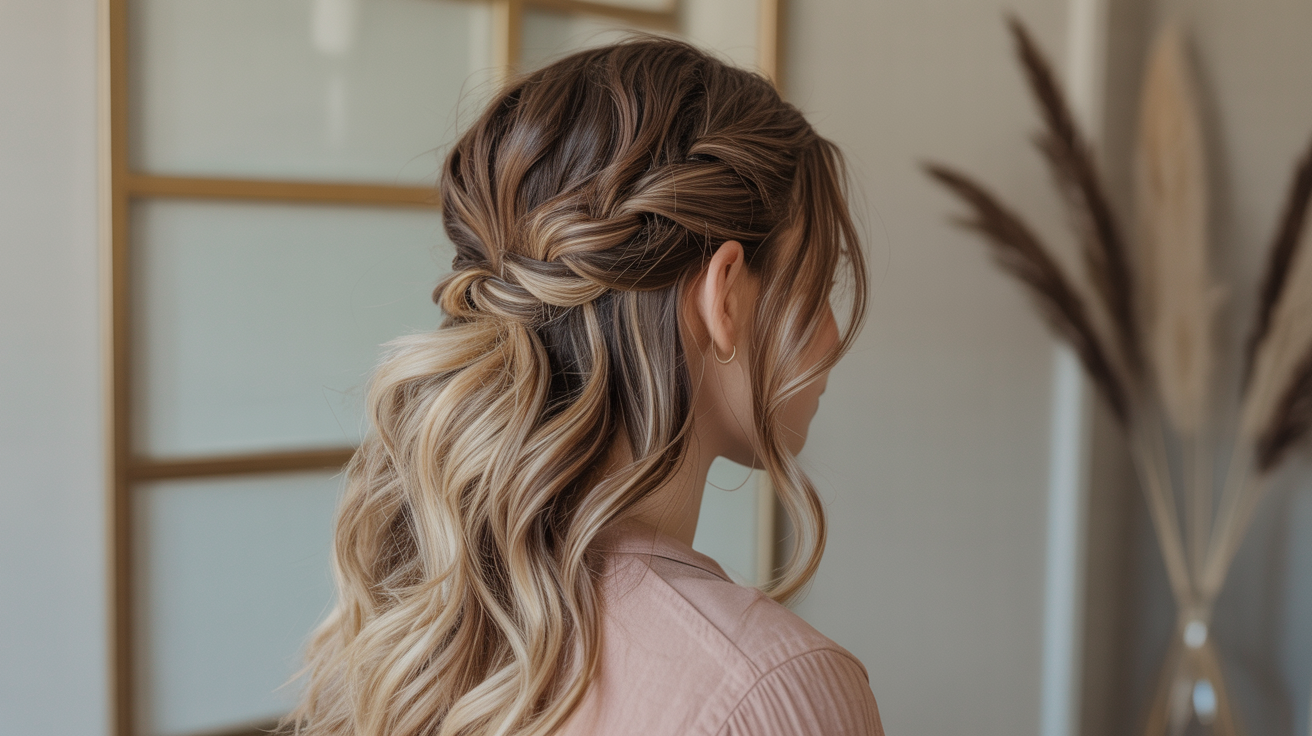
The half-up half-down sits in useful territory that a full updo and fully loose hair both miss. It keeps hair off your face without the tightness of a full ponytail. It looks finished without requiring much effort. And because the variation range is so wide, the same general concept scales from a Tuesday morning at your desk to a wedding reception without much trouble.
The catch is that "half-up" covers a lot of ground, and the specific version you choose matters more than people tend to assume. A loose, low clip reads entirely differently than a braided pull-through, even if both technically qualify. This guide breaks down the versions worth actually knowing, what makes each one work, and how to adapt them to different hair types and settings.
At a Glance
- The half-up works because the top section adds height and frames the face while the loose length below keeps the look soft, a combination few other styles pull off at once.
- A twisted clip or simple knot takes under five minutes and covers most casual settings.
- Braided crown pull-throughs and statement clips move the same basic shape into dressy or event territory.
- The top section should run roughly temple to temple, about the top third of your hair. Too much reads as a low ponytail; too little looks accidental.
- Fine hair needs a light tease and a clip with real grip; thick hair needs a smaller top section so the proportions stay balanced.
- Keep the clip or elastic loose enough that you don't feel constant pulling at the scalp. Ongoing tension in the same spot is a documented cause of hair thinning over time.
Why the Half-Up Half-Down Works Where Other Styles Fail
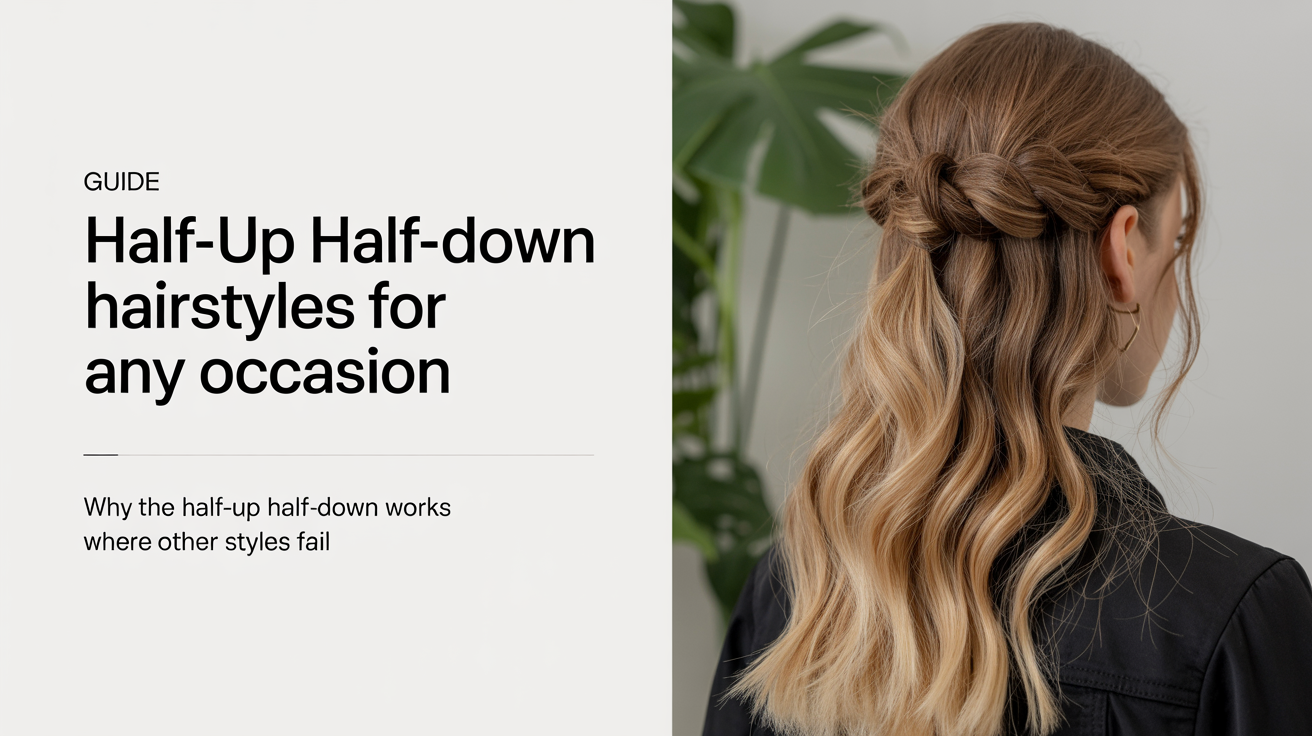
A full updo can feel formal in the wrong direction for relaxed occasions, and it also puts stress on fine hair if worn too often. Wearing hair completely down works for plenty of situations, but it gets in the way during meals, outdoor events, or any activity that involves movement. The half-up threads between those two without needing a complicated compromise.
The style also has a flattering quality that is harder to articulate but easy to notice: the upper section creates height and frames the face, while the length falling below keeps the look soft. That combination tends to suit a wider range of face shapes than either a tight updo or flat, unstyled loose hair.
There is also a practical advantage worth naming. If your hair is not freshly washed, styling the upper layer (which is most visible) while leaving the lower length less scrutinized works well. A smooth twisted section at the crown covers a lot.
One more advantage worth naming directly: a half-up style puts far less ongoing tension on the scalp than a full high ponytail or bun, because the elastic or clip only has to secure a third of your hair rather than all of it. That matters if you tend to get a dull, tight ache at the base of a tight ponytail by the end of the day. That sensation is a real, documented phenomenon sometimes called a "ponytail headache," caused by sustained pressure on the sensitive nerves around hair follicles and the scalp, and it eases within an hour of loosening the style. A half-up done with a reasonably loose clip largely avoids the problem in the first place.
The Casual Versions Worth Knowing
These are the styles that take under five minutes and work for everyday settings, whether that is running errands, working from home, or a low-key dinner with friends.
The Twisted Clip
Take a section of hair from roughly temple to temple across the top of your head. Twist it loosely (not tightly, or it will look stiff), pull it back toward the center crown, and secure it with a claw clip or a few bobby pins. The looseness of the twist is the key detail. A tight, flat twist reads more severe; a relaxed one with a bit of volume looks intentional without looking polished to the point of formality.
For hair that is naturally wavy or has some texture, you can leave the twist slightly undone at the ends so they fan out a little before the clip. That softens the whole look considerably.
The Simple Knot
Take that same top section, pull it into a low ponytail, then twist the length into a small knot and secure it with a hair tie or two crossed bobby pins. The knot sits at the back of the crown rather than at the nape of the neck. This version works especially well on thicker or longer hair because the knot has enough bulk to stay in place on its own without too many pins.
Pull a few pieces loose around your face once the knot is set. Wispy pieces at the temples soften the style and prevent it from looking overly neat, which can read stiff on casual days.
How to Make It Look Dressy
The same half-up structure becomes formal or occasion-ready with a few adjustments: more deliberate texture in the top section, a decorative clip or pin instead of a standard hair tie, or a braided element that takes the style into evening territory.
The Braided Crown Pull-Through
This is the version that photographs well and holds up through a long event. Part your hair down the center. Starting at one temple, take a small section and begin a simple French braid that follows your hairline toward the back of your head. Do the same on the other side. When both braids meet at the center back, combine them into a single low bun or let them cascade into the loose hair below.
For a quicker version, skip the French braiding and instead braid two separate sections starting at each temple, then cross them at the back and pin them so they form a crown-like band across the upper part of the head. This is sometimes called a braided crown half-up, and it has a slightly romantic quality that suits ceremonies or evening events well. If you want more ideas for building on braid techniques, easy braided hairstyles anyone can master covers the foundational methods clearly.
The Half-Up with a Statement Clip
The styling here is almost the same as the twisted clip described above, but the clip does the visual work. A large pearl-embellished clip, a tortoiseshell octopus clip, or a gold geometric barrette replaces the simple claw clip and transforms the whole register of the style. You are still wearing the same basic shape, but the accessory signals something more deliberate.
One thing that helps: tease the upper section very lightly before clipping it. A small amount of volume at the crown reads as "done" in a way that flat, smooth hair against the head does not.
The Twisted Half-Up Bun
Take the top section, split it in two, and twist each piece in the same direction. Wrap them around each other, then wind them into a small bun and pin securely. This version is more structured than a knot and works well with a dress or anything that asks for slightly more effort. It pairs particularly well with off-shoulder or low-back necklines, where the combination of exposed shoulders and a gathered crown creates a balanced silhouette.
For anyone who wants to bridge this style toward a fuller updo for very formal occasions, effortless updos for long hair covers where to go from here.
Matching the Style to the Occasion
| Occasion | Best version | Time needed | Key detail |
|---|---|---|---|
| Everyday, errands, WFH | Twisted clip | Under 5 minutes | Keep the twist loose, not stiff |
| Casual dinner, coffee | Simple knot | 5-7 minutes | Pull face-framing pieces loose after |
| Office, daytime event | Half-up with statement clip | 5-10 minutes | Light tease at the crown for volume |
| Wedding guest, party | Twisted half-up bun | 10-15 minutes | Pairs well with off-shoulder necklines |
| Bridal party, ceremony | Braided crown pull-through | 15-25 minutes | Holds longest through a full event |
Adjusting for Your Hair Type
Fine or Thin Hair
The temptation with fine hair is to skip the half-up entirely because there is not enough bulk to look substantial. The fix is to tease gently at the roots of the top section before styling and to use a volumizing spray before you start. Even a small amount of texture at the crown makes the pulled-back section read as fuller than it is. Avoid pulling too tight, because that flattens fine hair against the scalp and removes whatever lift you created, and it also puts more sustained tension on hair that's already prone to breakage.
A small jaw clip works better than bobby pins here. Pins tend to slide out of fine hair, especially toward the end of the day, while a clip with good tension holds the section in place.
Thick or Coarse Hair
Thick hair has the opposite problem: the upper section can look bulky in a way that overpowers the loose length below. The solution is to use less hair than feels natural, starting with a narrower top section that sits just at and behind the temples rather than all the way to the ears. This keeps the overall proportion balanced. A scrunchie rather than a thin elastic also prevents the indentation marks that tight ties leave in coarse hair.
Wavy or Curly Hair
Half-up styles look genuinely beautiful on wavy and curly hair because the loose length below the clip shows off the texture in a way that full updos cannot. Let the hair air dry or diffuse fully before styling, then lightly scrunch the top section before clipping so it does not look too smooth compared to the textured length below. Matching the clip or tie to the warmth in your hair color adds a cohesive quality that feels considered.
One adjustment specific to curls: avoid combing or brushing the top section once it's dry, since that breaks up the curl pattern and creates frizz rather than the smooth twist you get on straight hair. Section and clip with your fingers instead, working with the curl's natural clumping rather than against it.
Frequently Asked Questions
Does the half-up half-down work on short hair?
Yes, with some adjustment. The key is that there needs to be enough length to clip back without the sections being too short to stay in place. A chin-length bob can work with a small section pulled back and pinned, though you may need more pins than someone with longer hair. The braided versions generally require at least shoulder-length hair to have enough length for the braid to register visually before it meets the clip.
How do I stop the style from sliding down throughout the day?
The two main culprits are a clip that does not have enough grip and hair that is too slippery (usually because of conditioner or product on the top layer). A claw clip with stronger tension or bobby pins crossed in an X shape hold better than lighter accessories. If your hair is freshly washed and very smooth, a light pass of texturizing spray on the upper section before styling gives the clip something to grip.
What accessories work best for the half-up?
Claw clips and jaw clips in a medium-to-large size are the most practical because they are quick and hold well. Barrettes work for a flatter look but require more pinning to stay secure on thicker hair. Scrunchies are especially comfortable for everyday styles and come in enough fabric options that they can look either casual or dressed up depending on the material.
Can I do a half-up style on second-day hair?
Second-day hair is often easier to work with for these styles than freshly washed hair because it has more grip and natural texture. The only thing to watch for is that the top section does not look flat or greasy against the light. A small amount of dry shampoo at the roots of the upper section before styling refreshes the volume and ensures the pulled-back section looks intentional rather than just tied back to hide the state of your hair.
How much hair should I include in the top section?
A common proportion is to take the hair from temple to temple across the crown, which usually amounts to roughly the top third of your total hair. That amount balances well against the loose length below. If you take too much, the style starts to look like a low ponytail. If you take too little, the pulled-back section looks thin and can seem accidental rather than styled. Start with that temple-to-temple guideline and adjust based on how the proportions look for your specific face shape and hair volume.
Is it bad to wear a half-up style every day?
Not in the way a tight, high ponytail worn daily can be. Because a half-up only gathers a portion of the hair and is typically secured more loosely, it puts less sustained pull on the scalp than styles that pull all of the hair back tightly. Dermatology guidance on hairstyle-related hair loss generally recommends wearing tight, pulled styles only occasionally rather than as a daily default, and a loosely clipped half-up is a reasonable everyday alternative precisely because it doesn't rely on constant tension to hold its shape.
What's the difference between a half-up style and a half-updo?
In practice, the terms are used interchangeably. If there is a distinction worth drawing, "half-up" usually refers to the more casual, quick versions (a clip, a simple knot), while "half-updo" tends to describe the more constructed, braided, or pinned variations built for events. Neither term is used consistently across the industry, so it's more useful to describe the specific technique (twisted clip, braided crown, twisted bun) than to rely on the label alone.