How-Tos
How to Accessorize Any Outfit
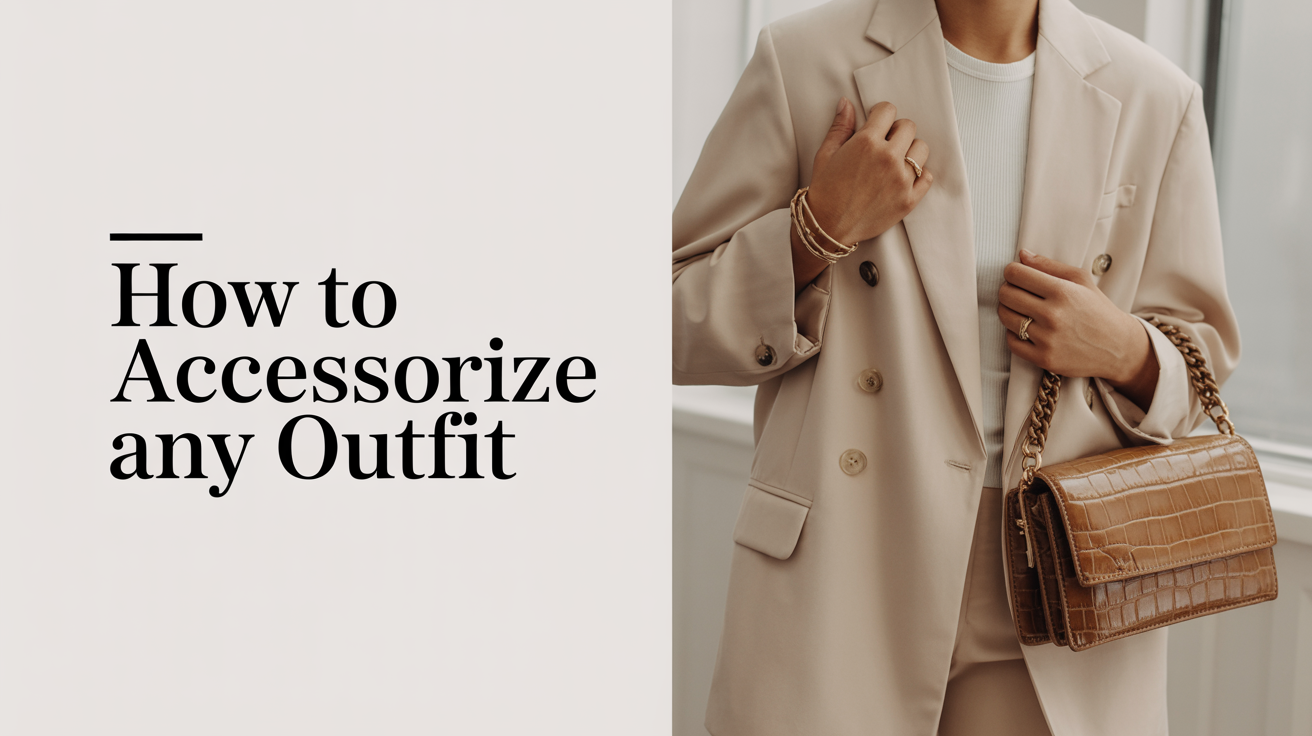
Accessorizing well is less about following rules and more about understanding a few reliable principles. Pick the right ones for your outfit and you're done. No checklist, no formula. The goal here is to give you enough of a framework that you can make quick decisions on your own, whatever you happen to be wearing that day.
Start with One Anchor Piece
Before you reach for a handful of jewelry or layer three bags, pick one thing you want the eye to land on. That's your anchor. It might be a wide statement necklace, a bold pair of earrings, a structured tote, or a colorful scarf tied at the neck. Everything else you add should support that piece, not compete with it.
This doesn't mean the rest of your accessories have to be boring. It means they should be quieter. If the anchor is your earrings, keep the necklace simple or skip it. If you're wearing a patterned silk scarf as the focal point, a plain leather belt and minimal jewelry let the scarf do its job.
Why proportion matters here
The size of your anchor piece should roughly balance with the visual weight of your outfit. A chunky, textured sweater can hold a large pendant necklace. A simple slip dress in silk looks cleaner with something small and refined, a thin chain or small hoops. When the accessory is heavier than the clothing, the overall look reads as off, even if you can't immediately name why.
Proportion applies to bags, too. Oversized parka with a tiny crossbody? Fine, intentional contrast. Voluminous maxi skirt with a large carry-all? Now the bag and the skirt are fighting for the same visual space. One of them needs to recede.
Jewelry Styling Without Overthinking It
Jewelry is where most people get stuck. The options are endless and there are real decisions to make: metals, stone colors, delicate versus bold, stacked versus single statement.
Mixing metals
Mixing gold and silver is not the style mistake it once was framed as. What matters more is that the metals you're combining are doing something intentional. Two thin chains, one gold and one silver, in different lengths reads as layered and deliberate. A gold cuff with a silver watch on the same wrist reads as accidental unless you've thought it through.
A practical approach: let one metal lead and the other show up in one or two small places. Your main necklace is gold, your stacked rings include one silver band. That ratio keeps it from looking like you grabbed everything off the nightstand at once.
Delicate stacking versus single statement
These are two different strategies and they don't mix well. If you're stacking, stack. Add several thin rings across different fingers, layer two or three fine necklaces at slightly different lengths, wear a set of small hoops alongside tiny studs. The combined effect is the point.
A single statement piece is a different approach entirely. One big ring. One sculptural earring style. One bold cuff on an otherwise bare wrist. That piece works because it has space around it. The moment you start adding comparable-scale pieces nearby, neither one lands.
Bags, Belts, and the Structural Accessories
Bags and belts are functional, but they have a real effect on how an outfit reads.
When to use a belt
A belt does two things: it defines the waist and it introduces a new material or color into the look. Both of those effects are worth thinking about before you add one.
If your outfit already has a natural waist point, a tucked blouse or a dress with built-in ruching, a belt is optional and you should ask whether it adds anything. If the outfit lacks structure and you want to create a defined silhouette, a belt solves that cleanly.
Belts also let you pull in a color that reads elsewhere in your accessories or shoes. A tan leather belt that matches your sandals creates visual continuity without being too matchy. A colored belt, say, a red one with a navy dress, becomes a focal point in the same way a statement necklace would. Treat it accordingly and keep your other accessories quieter.
Bag size and what it signals
Bag size affects how polished an outfit reads and how it functions. A large tote is practical and casual. It works with day outfits, office looks, anything where you're carrying actual things. A structured medium bag (think a ladylike satchel or a boxy top-handle) bridges casual and polished. A small crossbody or a clutch reads as intentional and dressed-up.
The issue comes when the bag's formality is wildly out of step with the rest of the outfit. A formal satin clutch with jeans and a tee looks like you forgot to change your bag. A big canvas tote with a silk midi dress has the same mismatch energy, though in reverse. Neither is a hard rule, but it's worth noticing.
Accessories That Shift With the Season
Some accessories have a clear seasonal home and pulling them slightly out of season can actually work in your favor.
Scarves are the most versatile seasonal accessory. A silk scarf in autumn reads as a deliberate styling move, not a summer holdover. In winter, switching to a wool or cashmere version gives you the same knotted-at-the-neck or draped-over-the-shoulder effect with a different texture. Scarves are also one of the easiest ways to introduce a print into an otherwise plain outfit without committing to a patterned garment.
Hats follow a similar logic. A wide-brim felt hat in October or November grounds a transitional-season outfit and reads as intentional. A woven summer hat with a cotton dress in July needs nothing else to make the look feel complete.
Socks are underused as accessories. A printed or textured sock with loafers or mary janes, showing just a small cuff above the shoe, adds a layer of interest to what might otherwise be a basic shoes-with-trousers combination. It's a small detail and it lands.
How to Accessorize Patterned or Busy Outfits
Heavily patterned clothing, florals, plaid, large geometric prints, already has visual complexity built in. The accessories you add should settle the outfit down, not add more noise.
A classic pairing: with a bold floral dress, wear simple gold hoops, a neutral tote, and clean sandals or pumps. The pattern is doing the work. Your accessories are the straight-man. If the pattern has a clear accent color, you can pull that color into one accessory (a bag, a shoe, a single earring color) and it reads as polished.
Stripes are slightly more flexible. Fine horizontal stripes or a narrow Breton pattern sit close enough to a neutral that you can add a small statement piece without competing. A bold stripe, though, especially in high contrast colors, works best with the same quiet-accessories approach you'd use for florals.
If you feel like a patterned outfit needs more, check your shoes before adding more jewelry. Shoes are often the piece that completes the look without adding visual clutter.
For more guidance on building the foundation of your wardrobe, how to build a capsule wardrobe that works covers the basics in a practical, non-prescriptive way. And if you're still figuring out what styles actually feel right for you, how to find your personal style is a useful starting point before you invest further in accessories.
Frequently Asked Questions
Can I wear the same earrings every day and still look put-together?
Yes. A pair of simple gold or silver hoops, or small studs, works across almost any outfit category. Daily earrings don't need to be different every day. What shifts the look is everything else around them.
How do I accessorize when I genuinely don't have much?
Work with what you have and focus on one thing. A thin scarf worn as a headband, a simple gold ring, or a well-chosen bag can be enough. You don't need a full jewelry wardrobe to look accessorized. You need one thing that reads as intentional.
Is there a rule about not wearing too much jewelry?
There's no fixed number. The real question is whether the pieces feel like they belong together or whether they're competing. If you could remove one item and the look would improve, remove it. If each piece is doing something distinct, keep it.
How do I know if my accessories are matching too closely?
If every piece is the same metal, the same size, and the exact same finish, it can read as a little stiff. Slight variation, one matte and one polished surface, one delicate piece and one with more presence, makes the combination feel more like personal style and less like a purchased set.
Do accessories need to match my shoes?
Not exactly, but there should be some connection. If your shoes are brown leather, a brown leather bag or belt creates continuity without being a head-to-toe match. If your shoes have a bright accent color, you can pick up that color once elsewhere without overdoing it. Exact matching across every piece tends to look deliberate in an overly formal way unless that's the specific look you're after.