How-Tos
How to Dress for Your Body Type
The goal of dressing for your body type isn't to minimize or hide anything. It's to understand proportion: what creates visual balance for your specific frame, so you can make faster, smarter decisions when you're standing in a fitting room or scrolling through an online cart.
This guide covers how to figure out your shape, what tends to work well for each one, and how to translate that into actual outfits. None of this is a rulebook. It's a starting point.
At a Glance
- Compare three landmarks (shoulders, waist, hips) to sort yourself into a rough category: hourglass, pear, inverted triangle, rectangle, or apple.
- The categories are loose models built on real measurement research, not strict bins. Most people sit between two of them.
- Shop for fit first in the area that matters most for your shape (hips for a pear, shoulders for an inverted triangle); tailoring fixes almost everything else.
- Necklines and structured shoulders do more visual work than most people expect, often more than the cut of the bottom half.
- Sizing itself is inconsistent across brands because most labels grade one sample pattern up or down rather than re-cutting for different proportions.
- Build two or three go-to outfit formulas for your shape instead of styling every outfit from scratch.
How to identify your body shape
You don't need a tape measure for this, though having one helps. The general method is to compare three areas: your shoulders, your waist, and your hips.
Stand in form-fitting clothes and look in a full-length mirror straight-on. Ask yourself:
- Are your shoulders and hips roughly the same width?
- Do you have a defined waist, or does your torso go fairly straight up and down?
- Are your hips noticeably wider than your shoulders, or the other way around?
If you want numbers, measure your bust, waist, and hips, then compare the differences. This is roughly how a body-shape calculator built on a published clothing-science classification study sorts people into categories: a waist that measures around 9 inches smaller than the bust, or 10 inches smaller than the hips, points to an hourglass. Hips more than an inch wider than shoulders with a defined waist is a pear. Shoulders wider than hips is an inverted triangle. Bust and hips roughly equal with a less-defined waist is a rectangle.
This kind of classification isn't a marketing invention. Apparel researchers at North Carolina State University's College of Textiles analyzed thousands of 3D body scans and statistically validated nine distinct body shapes using bust, waist, and hip ratios, the same measurement logic behind the simplified five-category version most styling guides use. The takeaway from that research is useful on its own: shape categories are measurable and real, but they're a spectrum with nine statistically distinct points, not five hard walls. So if you land between two categories below, that's expected, not a sign you did the measuring wrong.
Most people land somewhere between categories, and that's fine. Use the closest match as a rough guide, not a verdict.
Dressing an hourglass shape
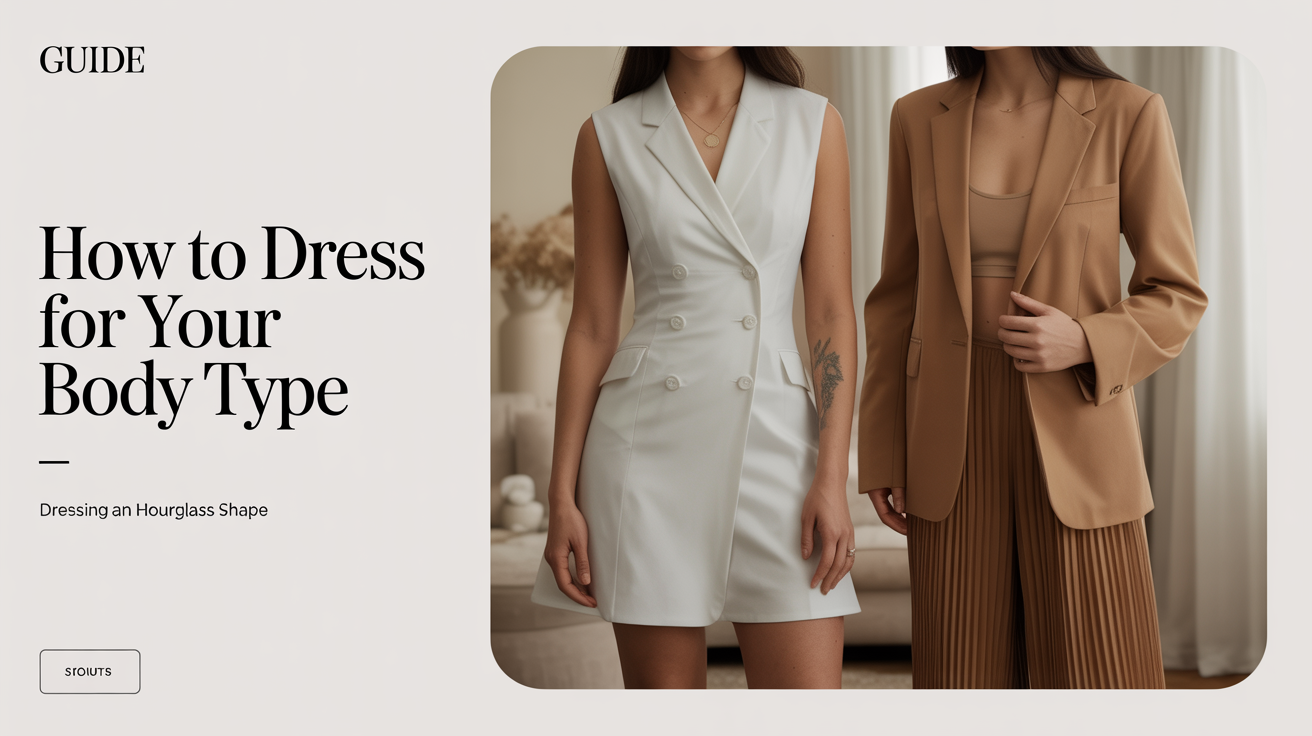
The hourglass silhouette has shoulders and hips in similar proportion with a defined waist. It works well with clothes that follow the body's natural contour. The waist is the asset here, so most styling advice centers on not hiding it.
What tends to work
- Wrap dresses and wrap tops anchor at the narrowest point and drape naturally over the hips
- Belted coats and blazers create the same effect on heavier layers
- High-waisted trousers and skirts worn with a tucked-in shirt are a reliable formula
- Bodycon styles work if you like them, but they're not required; a fit-and-flare silhouette gives the same balance with more movement
What to watch
Boxy, oversized tops can lose the waist definition entirely. If you like that aesthetic, try balancing it with high-waisted or slim-cut bottoms so the proportion reads cleanly. A cinching belt worn over an oversized shirt, sitting right at the natural waist rather than the hip, is the fastest fix if you already own boxy pieces and don't want to replace them.
Dressing a pear shape
A pear shape means hips and thighs carry more width than the shoulders. The common advice to draw the eye upward still holds, but it's worth understanding why rather than following it blindly. When the upper and lower body look closer in visual weight, the overall silhouette reads as more balanced.
What tends to work
- Structured or padded shoulders on jackets and blazers add width where you have less of it
- Boat necks, square necks, and off-the-shoulder tops all widen the shoulder line
- Dark, simple bottoms paired with a patterned or textured top shifts visual interest upward
- A-line skirts skim the hips without gripping them, which is often more comfortable anyway
- Straight-leg and wide-leg trousers balance hip width better than skinny cuts, which can emphasize the contrast
What to watch
Front pockets on trousers add bulk right at the hip. If you find certain jeans uncomfortable or unflattering through the seat and thigh, it's usually a fit issue, not a you issue. Try a different cut or brand before writing off the style entirely. Rise matters more than most people expect on a pear shape too: a mid-rise that sits an inch or so below the natural waist often fits the hip curve better than a true high-rise cut for a straighter torso.
Dressing an inverted triangle shape
Broader shoulders and a narrower lower body is the inverted triangle. Balance here runs in the opposite direction from a pear: you're adding visual weight below and keeping the top line simple.
What tends to work
- Wide-leg, flared, or pleated trousers add volume to the lower half
- Midi and maxi skirts with some structure or fullness do the same
- V-necks and scoop necks are softer on the shoulder line than boat necks or structured necklines
- Patterns and textures on the bottom half, solid or simple on top
- Peplum tops and fit-and-flare dresses can work well because they build out the hip naturally
What to watch
Heavy embellishment on the shoulders (structured pads, ruching across the chest, strapless tops with wide horizontal details) can increase the contrast you're trying to soften. This doesn't mean avoid those styles, just be deliberate about when you reach for them. Raglan sleeves, which slope from the collar to the underarm instead of sitting in a hard seam at the shoulder point, are a quiet way to soften shoulder width in tops you wear often.
Dressing a rectangle shape
A rectangle body shape means the bust, waist, and hips are all close in measurement, with little visible waist definition. The usual goal is to create the impression of curves, but honestly, plenty of people with this shape prefer a sleek, column silhouette and don't want to add volume anywhere. Both approaches are valid.
If you want to create more definition
- Belts at the natural waist on dresses and long tops pull in the middle visually
- Wrap dresses are effective here too, for the same reason as with an hourglass: they define the waist
- Peplum details and fit-and-flare cuts add hip volume
- Two-tone outfits with a darker center panel create a narrowing effect
If you prefer a clean, straight line
- Column dresses and straight-cut trousers lean into the shape rather than working against it
- Oversized blazers and long coats look particularly good without fighting the silhouette
- Slip dresses hang well on a less-curved frame
Either way, well-fitting clothes matter more than the particular style. A column dress in the wrong size reads sloppy. The same dress in the right size looks intentional.
Dressing an apple shape
An apple shape carries more weight through the midsection, with the bust and waist roughly similar or the waist being the widest point. Most apple-shape advice focuses on drawing attention to the legs and keeping the torso line long and uninterrupted.
What tends to work
- Empire waist styles sit just under the bust, before the midsection, and then fall straight: comfortable and balanced
- V-necks elongate the torso and draw the eye vertically
- Straight, tailored trousers and skirts create a clean lower line
- Long, open cardigans and duster jackets create a vertical stripe down the front, which lengthens the overall silhouette
- Wrap tops with a defined tie can sit above the widest point of the waist
What to watch
Tight horizontal bands at the waist (structured waistbands that sit at the widest point, or belts worn right at the middle) can create an uncomfortable pressure point both literally and visually. High-waisted cuts that sit above the belly button usually work better. A fabric with a bit of stretch (even 3 to 5 percent elastane in an otherwise structured trouser) tends to sit better through the midsection all day than a completely rigid weave.
Quick-reference styling table
| Body shape | Add visual weight here | Keep simple here | Necklines that work |
|---|---|---|---|
| Hourglass | Neither; define the waist | Avoid boxy midsection | Most necklines |
| Pear | Shoulders, upper body | Hips | Boat, square, off-shoulder |
| Inverted triangle | Hips, thighs | Shoulders, chest | V-neck, scoop |
| Rectangle | Waist (if desired), hips | Anywhere if going column | Most necklines |
| Apple | Legs, neck | Midsection | V-neck, deep scoop |
Measurement quick-check by shape
If you have a tape measure handy, this rough table translates the mirror check above into numbers. None of these are hard cutoffs; they're the general ranges apparel researchers use as reference points.
| Shape | Bust vs. waist | Hip vs. waist | Shoulder vs. hip |
|---|---|---|---|
| Hourglass | Waist about 9 in smaller | Waist about 10 in smaller | Roughly equal |
| Pear | Waist smaller, moderate | Hips 1+ in wider than shoulders | Hips wider |
| Inverted triangle | Bust wider, moderate waist | Shoulders wider than hips | Shoulders wider |
| Rectangle | Within about 3 in of each other | Within about 3 in of each other | Roughly equal |
| Apple | Waist close to or wider than bust | Waist wider than hips | Roughly equal |
Putting it together in everyday outfits
Knowing your shape is useful. Actually applying it when you're getting dressed is where it gets easier with practice.
A few habits that help:
Shop for fit first, style second. If a piece fits well through the most problematic area for your shape (hips for a pear, shoulders for an inverted triangle), you can usually make the rest work with tailoring. If it doesn't fit there, no amount of styling fixes it. A basic tailor visit for taking in a waist or shortening a hem typically costs $15 to $30 and turns an almost-right piece into one you'll actually wear.
Build around one formula. Most people with a consistent personal style have two or three combinations they return to. An hourglass person might default to wrap top plus high-waisted wide-leg trousers. A pear might default to structured blazer plus A-line skirt. Finding your formula saves a lot of morning decision-making.
Use proportion to guide mixing patterns and textures. If you're adding a bold print, put it where you want the eye to go. A pear in a floral blouse and solid dark trousers reads differently than a pear in a floral skirt and solid blouse. Neither is wrong; they just say different things.
For more on building a wardrobe that works with your shape long-term, the capsule wardrobe guide covers how to choose pieces that mix and match. And if you're still working out what aesthetic you're going for before thinking about proportion, finding your personal style is worth reading first. Once you have a color direction, picking colors for your skin tone rounds out the picture.
FAQ
What if I don't fit clearly into one body shape category?
Most people don't. The categories are loose models, not precise bins. Use whichever one is closest to your actual proportions and borrow from adjacent advice as needed. If your shoulders and hips are similar but you don't have much waist definition, you're somewhere between hourglass and rectangle. Try both sets of suggestions and keep what works. This is backed by the underlying research too: apparel studies that scan thousands of real bodies typically find nine or more statistically distinct shapes, not five, which is exactly why simplified categories always leave people in between.
Does body shape styling advice still apply if I'm plus-size?
Yes, the same proportion principles apply across sizes. The specific challenge at plus sizes is often fit, and it's a sizing problem more than a body problem: most clothing lines simply grade a single sample size up or down rather than re-cutting the pattern for a fuller waist or hip, which is why a size that should fit the waist can end up several inches off through the hips. Brands that cut specifically for plus sizing tend to produce better results than brands that size up from a straight-size pattern. When in doubt, prioritize brands known for extended-size fits over brands that only recently added sizes.
How much does posture change how clothes look on my body?
More than most people account for. Rounded shoulders can affect how a structured jacket sits. Swayback posture affects where waistbands fall. If something that should fit well keeps looking off, check posture before assuming it's a body shape issue. Standing in front of a mirror and rolling your shoulders back and down before assessing fit is a quick way to rule this out before you blame the garment.
Can I wear styles that "aren't recommended" for my shape?
Of course. These are guidelines, not rules. If you like a style, try it. The worst that happens is you decide it doesn't work for your taste. Some people find their shape advice genuinely useful and follow it closely; others decide they like what they like and dress accordingly. Both approaches produce good outfits.
Do I need to know my measurements to use this guide?
No. A visual assessment in the mirror is usually enough to identify your general shape. Measurements are useful if you're shopping online and need to determine whether a piece will fit through specific areas, but for understanding proportion and styling principles, they're optional.
Does my body shape change over time?
Yes, and it's worth reassessing every couple of years or after a major life change (pregnancy, significant weight change, menopause, a shift in activity level). Proportions shift gradually, and a formula that worked well five years ago can quietly stop working without an obvious single moment where it changed. If pieces that used to be reliable suddenly feel off across the board rather than just running small or large, it's worth doing the mirror check again rather than assuming it's the brand.