How-Tos
How to Organize Your Closet So Getting Dressed Feels Easy
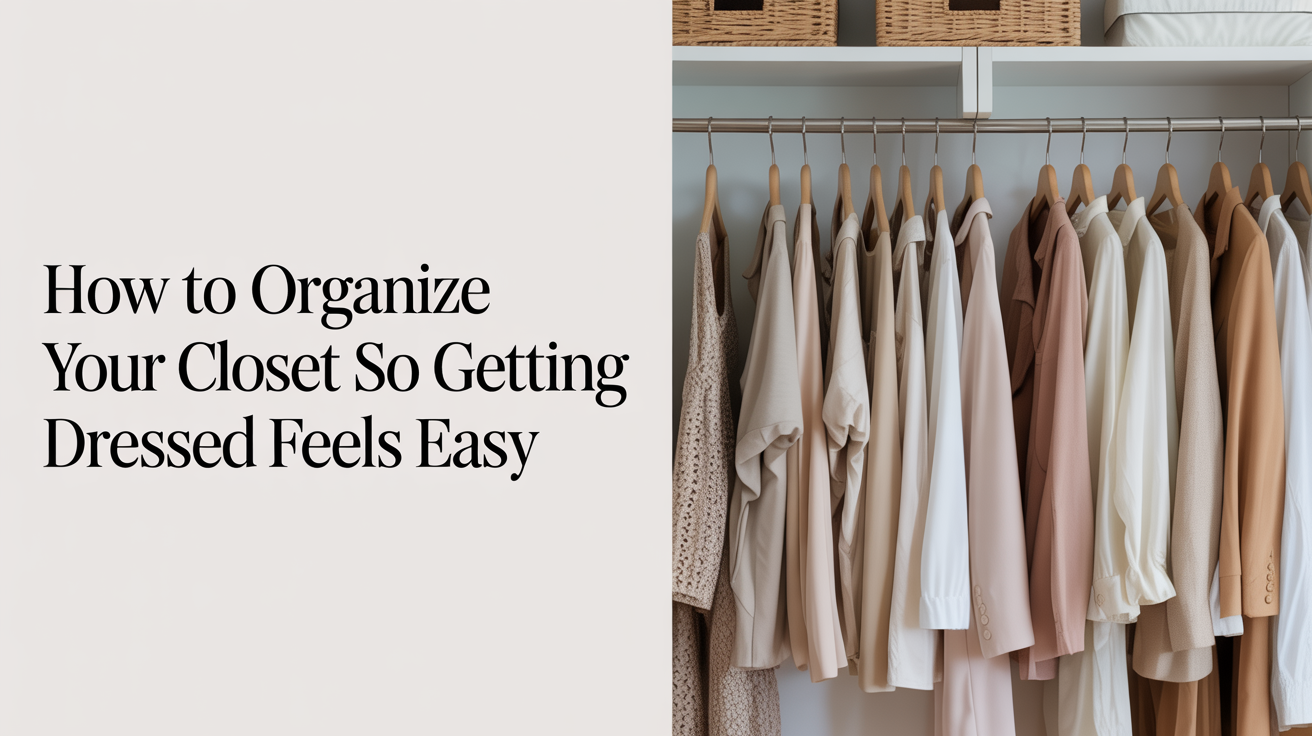
The morning rush has a predictable shape: you open the closet, stare at what's inside, and feel like you own nothing. The clothes are there. Plenty of them. But somehow nothing works, nothing is easy to reach, and fifteen minutes disappear before you've found a single complete outfit.
The problem is rarely the clothes. It's the system, or the absence of one.
Learning how to organize your closet isn't about buying a matching set of velvet hangers or following someone else's rigid method. It's about reducing friction at 7 a.m. so that getting dressed is a two-minute decision rather than a mood-deflating puzzle. Here's how to build a setup that actually holds.
Start With a Declutter That Actually Works
Before rearranging anything, the closet needs editing. Not painfully, not perfectly, just practically.
The goal of decluttering isn't to own less for its own sake. It's to clear out everything that interrupts the mental scan when you're standing in front of your wardrobe. Every item you're keeping out of guilt or vague future hope is a distraction from the things you'd actually reach for.
The Category-by-Category Method
Pull out one type of clothing at a time rather than everything at once. Start with tops, then bottoms, then dresses, then outerwear, and work through each group completely before moving to the next. This keeps the process manageable and prevents the classic mid-purge abandonment when you've emptied every drawer onto your bed and your energy gives out.
For each item, ask one direct question: have I worn this in the past twelve months? If the answer is no, and you can't name a specific upcoming occasion where you'd actually wear it, it goes. Not maybe. Out.
For things you're genuinely unsure about, try the "decide later" method: put the items in a closed bin, leave it for one month, and if you never went looking for any of it, let it go. The month removes the anxiety of a permanent decision.
What to Actually Remove
A few categories that tend to clog closets without adding anything:
- Clothes that fit your body of three years ago, not your body now
- Duplicates kept as backup that you never use (three nearly identical black camisoles, for instance)
- Items waiting for a repair that hasn't happened in the past six months
- Pieces you like in theory but have never actually put on
Once those are out, you'll have a clearer picture of what you're genuinely working with.
How to Organize Your Closet by Category and Color
The arrangement of what remains is where most closet organization tips diverge, but the underlying principle stays the same: visibility is everything. If you can't see it, you won't wear it.
Group clothing first by type, then within each type by color. Blouses together, then trousers, then jeans, then dresses, then blazers. Within each group, run dark to light (or light to dark; pick one direction and stay consistent). The specific direction matters less than the habit of always returning things to the same place.
The Order That Saves Time in the Morning
Arrange categories in the order you actually use them. If you live in jeans and tops, those should be front and center, easy to grab without shifting anything else. Occasion wear and pieces you reach for a handful of times a year can live toward the back or on a higher rod.
Think about your real getting-dressed sequence. Most people reach for bottoms first, then tops, then a layer. Organizing the closet to match that flow rather than what looks balanced in a reference photo is a small shift that pays off daily.
If you share a closet, each person gets a clearly defined zone with no bleed-over. It sounds almost too simple, but separate zones are the fastest way to stop the space from deteriorating back into chaos.
Storage Moves That Create Real Visibility
The physical setup of the closet matters more than most wardrobe organization ideas acknowledge. You can declutter thoroughly and arrange by category, but if the storage itself is working against you, things will pile back up within two weeks.
Folding vs. Hanging: Where Each Wins
Not everything should be hung. Knitwear stretches on hangers over time. Heavy denim does too. T-shirts and casual tanks eat up enormous rod space when hung but stack neatly when folded. The general rule: hang things that wrinkle easily (linen, silk, structured blouses) and fold things that are either too heavy for hangers or too casual to need drape preservation.
For delicate pieces with specific care requirements, the storage approach matters beyond just space. Check how to care for delicate fabrics before deciding what gets hung versus folded versus boxed, especially for anything with particular wash or storage instructions.
For folded items, vertical filing in drawers beats horizontal stacking. Stand items on their folded edge so you can see every piece in the drawer at once, rather than lifting the whole pile to find what's at the bottom. This one change produces an immediate improvement in how quickly you can locate something.
The Zones Worth Defining
Break the closet into zones based on how often you reach for each category.
Daily zone: Everything you wear most weeks. This is prime real estate, eye level and easy to grab. Nothing should have to be moved to reach it.
Seasonal zone: Off-season pieces, event-specific items, anything worn a few times a year. Upper shelves, the back of the closet, or a separate storage bin all work. Label it so you're not opening every bin in December looking for your coat.
Accessories zone: Belts, scarves, and bags need a consistent home or they end up on top of everything else. A few hooks on the inside of a door, a small bin on a shelf, or a dedicated section of the closet all work. The specific solution is secondary; the consistency is what matters.
Keeping the Closet Working Day to Day
A well-organized closet doesn't require daily maintenance, but it does need two or three small habits to prevent the slow slide back to chaos.
The most effective habit is one-in, one-out. Any new item that comes in means something leaves. This isn't minimalism as a philosophy; it's a way of keeping the volume stable so the system can continue doing its job. When the closet is compressed to the point where things are hard to see, the friction returns.
The second habit: return items to their zone after wearing rather than draping them over a chair. The chair-pile is where most closet organization systems quietly die.
A light monthly edit also helps. Fifteen minutes, not a full overhaul, just a pass through to pull out anything that hasn't been touched, reassess what's actually getting use, and note whether anything needs repair or has worn out. This catches drift before it compounds into a project.
If you're thinking about building a wardrobe that's genuinely easier to dress from in the first place, building a capsule wardrobe that works covers how to select pieces that coordinate across multiple outfits. A more intentional wardrobe makes any closet organization method work better because there's less to sort through and more of it is actually compatible.
Frequently Asked Questions
How long does it take to organize a closet from scratch?
Most closets take two to four hours for a full reorganization, including the declutter. Breaking it into two shorter sessions, one for editing and one for arranging, makes it less exhausting and easier to complete carefully. Rushing through the declutter step tends to produce a closet that looks tidier but still holds too much.
What closet storage products are actually worth buying?
Slim velvet hangers are the highest-return purchase: they take up roughly half the rod space of plastic hangers and keep clothes from slipping. Beyond that, a set of shelf dividers for folded sweaters, a few clear bins for accessories, and hooks for the back of the door are sufficient for most spaces. Elaborate matching systems often require a more precise closet layout than most people have.
How do I organize a small closet when there's limited space?
In smaller closets, maximizing vertical room matters most. A second hanging rod installed under shorter items (blazers, shirts, folded jeans over a hanger) doubles usable rod space without any structural changes. Over-the-door organizers handle accessories without taking shelf or floor space. Clear boxes stacked on high shelves keep seasonal items visible. Keep the daily-use zone tight, containing only what you genuinely wear regularly.
Should I organize by color or by clothing type?
By type first, then by color within each type. Organizing purely by color looks cohesive but creates friction because you're scanning every category at once. Organizing by type means you go directly to the right section, then find the color you want within a much smaller range of options. The type-then-color method is faster in practice.
How do I stop the closet from getting cluttered again?
The two habits that maintain a closet longer than any organizing system: one-in, one-out for new purchases, and returning items to their correct spot rather than setting them somewhere "for now." A fifteen-minute monthly check catches drift before it accumulates. The initial declutter is a one-time project; the habits are what make it last.