Nails
How to Strengthen Weak, Brittle Nails Naturally Over Time
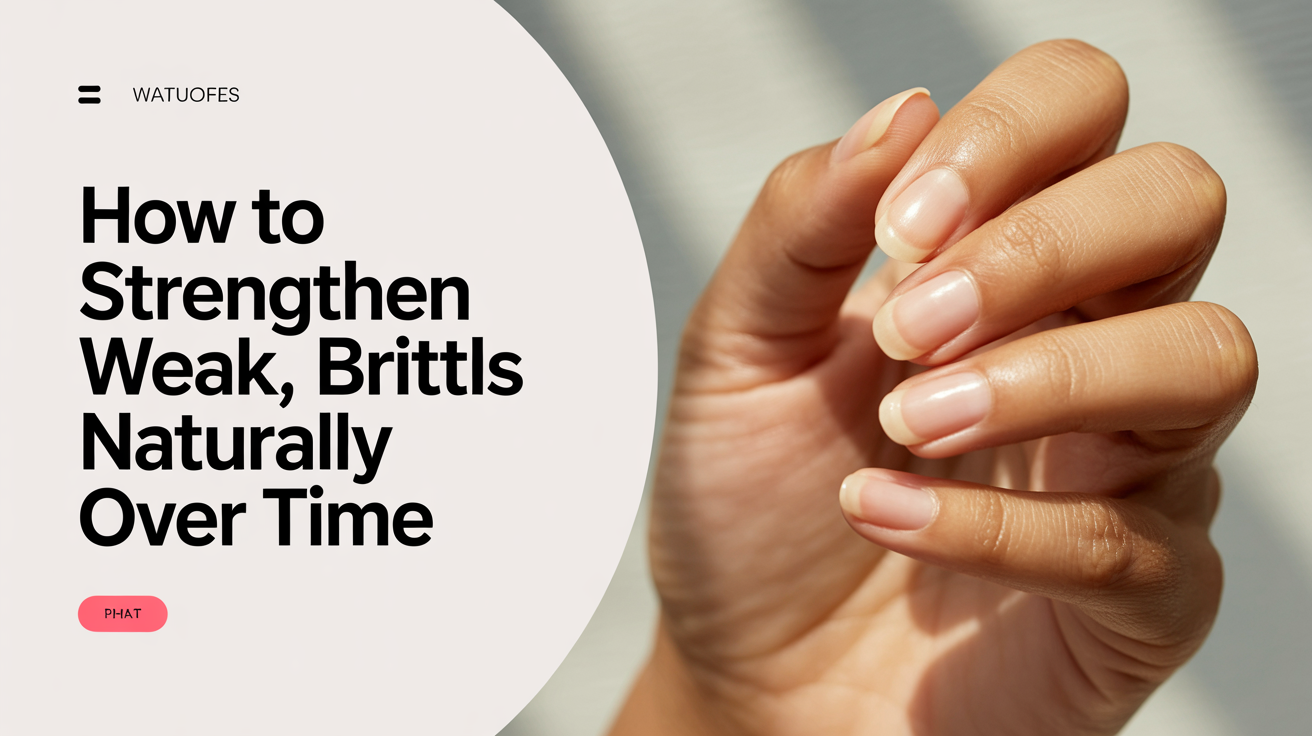
If you've ever watched a nail split halfway down the plate for no obvious reason, or picked at a peeling layer until it tore further than you meant it to, you already know the frustration. Learning how to strengthen weak nails is less about a single fix and more about removing the things that keep damaging them while you wait for new, healthier growth to come in. There's no overnight cure here. But the process is genuinely predictable once you understand what's happening under the surface.
Why Your Nails Got Weak in the First Place
Brittle or peeling nails almost always trace back to a habit or a product, not bad luck. Before you can fix the problem, it helps to know which of these apply to you, because the fix is different depending on the cause.
Over-Filing and Aggressive Shaping
Every time a nail file passes over the free edge, it removes a thin layer of keratin. Do this too often, in the wrong direction, or with a coarse-grit file, and you thin the nail plate faster than it can rebuild itself. A back-and-forth sawing motion is especially rough on the edge; filing in one direction at a time is gentler and leaves a cleaner, stronger edge. If you're also unsure what shape suits your nail bed best, our guide to nail shapes walks through options that put less stress on weak corners, like a soft square or rounded oval instead of a sharp point.
Frequent Gel or Acrylic Removal
Soaking off gel polish or acrylic extensions, especially when it involves scraping or peeling rather than gentle acetone soaking, strips layers off the nail plate along with the product. Do this every two to three weeks for months at a time and the nail simply doesn't get a chance to recover between removals. This is one of the most common causes of thin, bendy nails that catch on everything. If you love the low-maintenance look of a fresh manicure but your nails need a break, it's worth reading about how to make a manicure last longer so you're not removing and reapplying more often than necessary.
Harsh Cleaning Products and Constant Water Exposure
Dish soap, all-purpose cleaners, and even plain hot water strip natural oils from the nail plate and surrounding skin. Nails swell slightly when wet and contract as they dry, and repeating that cycle many times a day (washing dishes, cleaning bathrooms, doing laundry) causes microscopic cracking over time. This is a big one for anyone who assumes their nails are just "naturally weak" when the real culprit is being submerged in water for hours a week.
Dehydration, Both Internal and External
Nails need moisture the same way skin does. Dry winter air, frequent hand sanitizer use, and low water intake all show up eventually as brittleness or a nail that splits into layers at the tip. This one is easy to overlook because the damage shows up weeks after the dehydration, not immediately.
Daily Habits That Actually Help
None of these require a special budget or a dramatic routine change. Consistency matters more than intensity.
Use cuticle oil daily, not just during a manicure. A drop massaged into the cuticle and side walls of each nail, ideally at night, keeps the surrounding tissue flexible and helps slow moisture loss from the nail plate itself. Jojoba oil, vitamin E oil, and plain sweet almond oil all work reasonably well; the specific oil matters less than doing it every day.
Wear gloves for wet or chemical-heavy chores. Dishwashing gloves during dishes, and cotton-lined rubber gloves for cleaning, protect nails from the repeated wet-dry cycle described above. This single habit change is one of the most effective and most skipped pieces of advice out there.
File in one direction, with a fine-grit file, when nails are dry. Wet nails are softer and more prone to tearing under file pressure. A glass or fine-grit file used gently, always in one direction, keeps the free edge smooth instead of creating tiny fractures that grow into splits.
Keep nails at a shorter, more supportive length while they recover. A longer free edge has more leverage to catch, bend, and snap. Trimming down temporarily isn't a step backward, it's giving new growth a fighting chance to harden before it's asked to survive daily wear at full length.
Give your nails an occasional break from polish and enhancements. Even breathable polishes create some degree of moisture imbalance if worn constantly. A few polish-free days between manicures lets the nail plate reset. If bare nails feel too plain in the meantime, press-on nails are a reasonable middle ground that let you skip the exposure of gel or acrylic; see our guide on press-on nails and how to apply them so they actually last for a rundown of the current options.
What Nail Supplements Can (and Can't) Do
This is where it's easy to get pulled in by bold marketing claims, so it's worth being blunt about what's actually known.
Biotin is the most commonly recommended nail supplement, and there is some plausible reasoning behind it: biotin deficiency, which is genuinely rare in people eating a varied diet, is linked to brittle nails and hair. If you already get enough biotin from food, however, taking more probably won't do much, since there's limited strong evidence that extra biotin helps nails that aren't deficient in the first place. It's also worth knowing that high-dose biotin supplements can interfere with certain lab tests, including some thyroid and cardiac tests, so mention any supplement use to your doctor before bloodwork.
Collagen, silica, and multivitamins marketed for hair-skin-nails get discussed often in beauty circles, but the research behind them is thin and mixed, and results (where they exist at all) tend to be modest at best. None of this means supplements are useless for everyone. It means you shouldn't expect a bottle of pills to outperform the basic habits above, and you shouldn't spend months waiting on a supplement while ignoring the over-filing or harsh product exposure that's actually causing the problem.
If your nails are weak alongside other symptoms, like fatigue, hair thinning, or changes in skin, that's a signal to talk to a doctor rather than self-treat with supplements. Weak nails are occasionally a sign of an underlying health issue, and a quick blood test can rule that out.
What to Expect: A Realistic Timeline
This is the part people find hardest to accept: you cannot repair the nail that's already damaged. You can only protect the new nail growing in underneath it and let time do the rest.
Nails grow slowly, and a full nail plate takes months to fully replace itself, longer on toes than fingers. In the early weeks of a new habit routine, don't expect the existing nail to look dramatically different. What you're watching for instead is the portion closest to the cuticle, the newest growth, looking smoother, less ridged, and less prone to peeling than what grew in before you changed anything. As that new section grows out toward the tip over the following months, the overall nail gradually looks and behaves better, and the older, more damaged section eventually gets trimmed away entirely.
Patience matters more than any single product here. People often give up on a new nail routine after a couple of weeks because the tips still look rough, not realizing that the tips are the oldest, most damaged part of the nail and were never going to improve. Watch the base, not the tip, for your real progress signal.
Frequently Asked Questions
How long does it take to fix weak, brittle nails?
There's no fixed number that applies to everyone, since nail growth speed varies by person, age, and even the season. In general, look for gradual improvement over a period of months rather than weeks, and judge progress by how the newest growth near the cuticle looks, not by the older, already-damaged tips.
Can weak nails ever fully become strong nails permanently?
Mostly, yes, if the underlying cause was a habit or product rather than a health condition. Nails that were damaged by over-filing, harsh chemicals, or frequent enhancement removal typically recover well once those stressors stop. If the weakness keeps returning despite consistent care, it's worth checking with a doctor for an underlying cause.
Is it bad to wear nail polish while trying to strengthen weak nails?
Not necessarily. The bigger issue is usually the removal process, especially soaking off gel or acrylic frequently, rather than polish itself. Choosing gentler formulas, giving nails occasional polish-free breaks, and being patient during removal all help more than avoiding polish altogether.
Should I stop getting manicures completely while my nails recover?
You don't have to stop, but spacing them out and choosing removal methods that don't involve peeling or scraping makes a real difference. A gentle soak-off done by someone experienced is far less damaging than a rushed removal at home.
Do biotin supplements actually work for brittle nails?
They may help specifically if you have a biotin deficiency, which is uncommon in people with a varied diet. For nails that are weak due to over-filing, chemical exposure, or dehydration rather than deficiency, biotin is unlikely to make a noticeable difference on its own, so it's best treated as a possible extra step rather than a primary fix. Check with a doctor before starting any supplement, especially if you take other medications or have upcoming bloodwork.