Hairstyles
The Best Haircuts and Layers to Try for a Square Face Shape
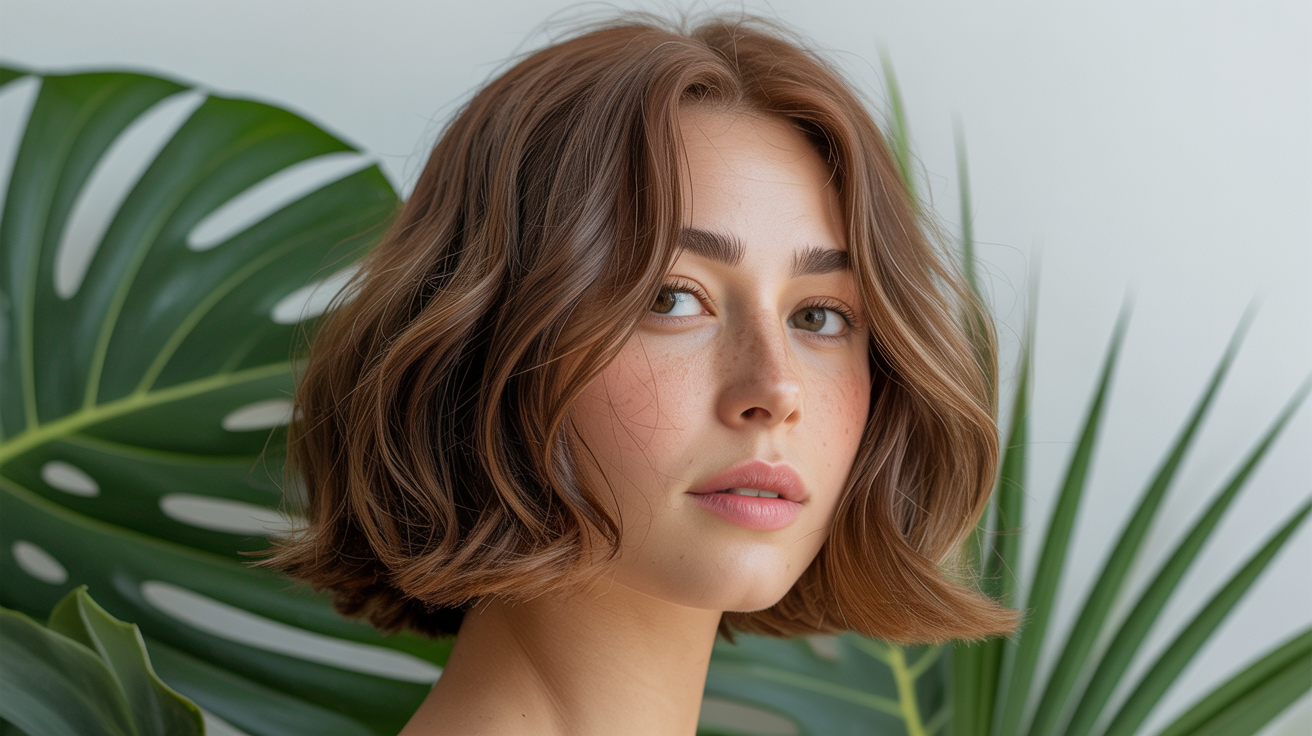
If your forehead, cheekbones, and jawline all land at roughly the same width, and your jaw has a strong, angular corner rather than a soft curve, you likely have a square face shape. It is a great shape to work with, honestly, because it photographs well and holds a cut for a long time. The trick with haircuts for square face shape is not to hide the jaw. It is to break up the straight lines around it so the whole face reads as a little rounder and softer, without losing the structure that makes the shape striking in the first place.
How to Tell If You Have a Square Face Shape
Before picking a cut, confirm the shape rather than guess from a mirror at a bad angle. Pull your hair back, look straight on, and check three things: the width of your forehead, the width of your cheekbones, and the width of your jaw. On a square face those three measurements are close to each other, and the jawline has a defined corner instead of tapering to a rounded chin. The face also tends to look about as wide as it is long, or close to it.
This differs from a rectangle face, which has the same even width but more length, and from an oval, where the jaw narrows noticeably below the cheekbones. If you are between shapes, that is normal, and most square-face guidance still works fine on a softened square or a square-oval blend.
The Cuts and Layers That Soften a Square Jaw
The general rule for square faces is to add movement and curve near the jawline and avoid anything that lands as a hard, straight edge right at the corner of the jaw. Layers do the heavy lifting here because they break a single blunt line into several shorter, softer ones.
Long Layers and Soft Waves
Long layers that start around the cheekbone or just below it are one of the most reliable haircuts for square face shape overall. The layering removes weight from the ends, so instead of a heavy, straight curtain sitting flush against the jaw, you get movement that curves inward and outward at different points. Waves amplify this: a loose wave from a curling iron, a wand, or just texture spray scrunched into damp hair creates soft, rounded shapes right where the jaw is widest, which visually breaks up the corner.
If you want length but worry about it looking flat, ask for layers that begin no lower than your chin, with the shortest layer landing around the jaw itself. That short layer does the actual softening work; everything longer is there for volume and movement.
Side-Swept Fringe
A side-swept fringe, sometimes called a side bang, is one of the simplest additions for a square face because it interrupts the forehead width, one of the three measurements that make the shape read as square. A fringe swept diagonally across the brow, rather than cut straight across, adds a diagonal line that softens the top of the face and draws attention toward the eyes instead of the jaw corners.
If you already have layers you like, adding a soft side fringe is a low-commitment way to test the effect. It grows out easily into a longer face-framing piece, and if you do not love it, it blends back into your length within a few months. For a longer-term version with more coverage, curtain bangs part in the center and frame both sides of the face, which works for a square shape as long as the pieces are layered enough to curve rather than hang straight.
Short Haircuts That Still Work With a Strong Jawline
Short hair on a square face is absolutely workable. The key is length placement relative to the jaw. A blunt bob that ends exactly at the jawline is the classic mistake, because it draws a horizontal line right where the face is already widest, reinforcing the square shape instead of softening it. Move the same bob a little longer, ending an inch or two below the jaw, or shorter, ending above it, and the line no longer lines up with the widest point.
A layered lob, cut between the chin and shoulders with soft, textured ends, is one of the more forgiving short options. So is a shag, built entirely from choppy layers with no single straight line to worry about. Pixie cuts also work well, especially with soft pieces left longer around the cheekbones and a bit of length at the nape; a very close crop with sharp edges is what tends to look severe, not the short length itself.
Cuts and Styling Choices That Tend to Emphasize the Jaw
A few specific choices consistently make a square jaw look more angular, so it is worth knowing what to avoid even if you love the look on someone else.
- A blunt cut ending right at the jaw. As mentioned above, this is the single most common miss. The horizontal line sits exactly on the widest, most angular part of the face.
- Very geometric, sharp-edged cuts with no layering. A one-length bob or a heavily blunt cut with a razor-straight perimeter emphasizes corners everywhere, including the jaw.
- A center part with straight, flat hair and no fringe or face-framing pieces. This leaves the full width of the forehead and jaw exposed with nothing to soften the transition between them.
- Slicked-back styles with no volume at the temples. Pulling everything back tightly removes softness around the top of the face and puts full focus on the jaw's corners.
None of these are off-limits forever. A blunt bob with a little face-framing layering, or a slicked style with volume left at the crown, can still work. It comes down to layering and softness near the jaw, not avoiding entire categories of haircut.
How Texture and Parting Change the Effect
Texture matters almost as much as the cut itself. Naturally straight, sleek hair shows every line clearly, which is part of why blunt cuts read as harsher on a square face than on a rounder one. Adding texture, through a natural wave, a loose curl, or texturizing spray and a diffuser, breaks up those lines even on a cut that was not specifically layered for a square face.
Parting also shifts how wide the top of the face looks. A dead-center part draws a vertical line straight down the middle and can make the forehead look wider and more geometric. A deep side part shifts weight to one side and creates a diagonal line similar to a swept fringe, which tends to be more flattering for this shape. If you have thick hair that holds a part well, a deep side part paired with layers does a lot of the softening work with little daily styling effort.
How to Describe the Look to Your Stylist
Stylists hear "I have a square face" fairly often, but the more useful information is what you want the cut to do, not just the shape you think you have. A few phrases that tend to get the right result:
- "I'd like layers that start around my cheekbones and get shorter near my jaw, so there's movement right at the jawline."
- "Can we avoid a blunt line that ends exactly at my jaw? I'd rather it end a bit above or below that."
- "I want a side-swept fringe or face-framing piece, not a straight-across bang."
- "I have a strong jawline and want the cut to soften it a little without losing the shape."
A reference photo helps too, but describe what you like about it specifically (the layer placement, the fringe angle, the wave pattern) rather than just handing over the picture. That gives the stylist a clearer target, especially if the reference model's hair texture or density is different from yours.
Frequently Asked Questions
Are bangs good for a square face shape?
Yes, with a caveat. A side-swept or curtain-style fringe with some diagonal movement softens the forehead width and generally works well. A blunt, straight-across fringe cut at a hard horizontal line can add another straight edge to a face that already has several, so it is less consistently flattering, though it can still work with enough softness in the rest of the cut.
Can a square face wear short hair?
Yes. Short hair is not the issue; length placement relative to the jaw is. Bobs, lobs, shags, and pixies all work well as long as the ends do not create a hard horizontal line right at the jaw and there is some layering or texture to soften the perimeter.
Do layers really make a difference for a square jaw?
They do, mainly because they replace one long, straight line with several shorter ones at different lengths, which reads as softer and more rounded even though the underlying face shape has not changed. The effect is subtle rather than dramatic, but it is consistent enough that most professional guidance for square faces centers on layering.
What haircut should I avoid with a square face?
The clearest one to avoid is a one-length, blunt cut that ends exactly at the jawline with no layering, since it lines up a straight edge with the widest, most angular part of the face. Very sharp, geometric cuts with a razor-straight perimeter and no softening pieces have a similar effect.
Is a middle part or side part better for a square face?
A deep side part tends to be more flattering because it shifts weight to one side and creates a diagonal line, similar to a side-swept fringe. A center part is not off-limits, especially with layers or waves, but on its own it can make the forehead and jaw width both look more prominent.