Outfits
Outfit ideas for a job interview that still feel like you
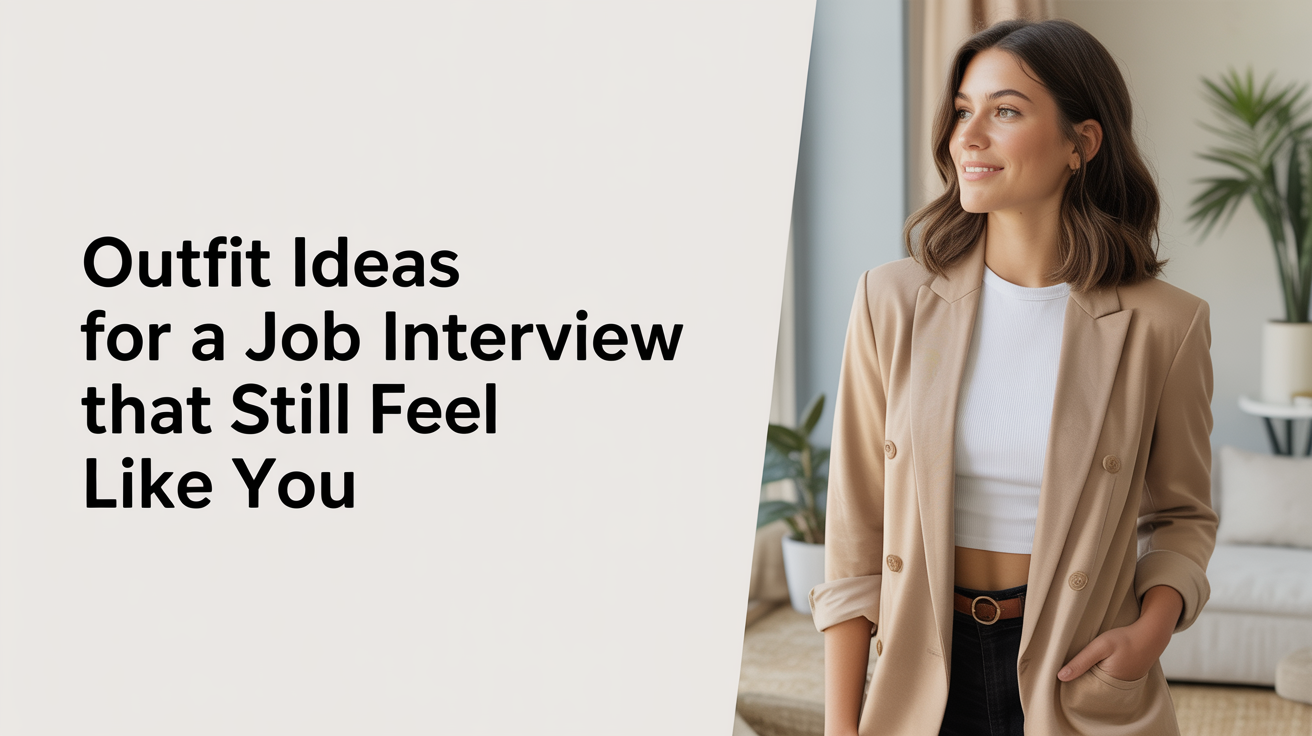
The hardest part of picking job interview outfit ideas isn't finding something professional. It's finding something professional that doesn't feel like a costume. You want to walk in looking like you already work there, not like you raided a stranger's closet the night before. The outfits that actually land in interviews are simpler than most advice makes them sound, and they lean more on fit and fabric than on any specific piece.
Before you touch your closet, you need one piece of information: what does this company actually look like day to day.
Read the room before you get dressed
Job postings say "business casual" or "professional attire," but those words mean different things depending on the industry, and sometimes different things at two companies down the street from each other. Do a little homework first.
Start with the company's own photos. Look at the "team" or "about" page on their website, and scroll through their LinkedIn and Instagram if they post them. Notice what people are actually wearing in office shots, not the polished headshots. A law firm's team photos will usually show suits and closed-toe shoes across the board. A design studio's photos might show sneakers, denim, and one person in a blazer they clearly own for meetings only.
Also weigh the role against the culture. A finance or client-facing position at a casual company usually calls for the more polished end of what you see in those photos, since you're the one meeting clients or handling numbers people trust. A creative or internal role at a formal company gives you a little more room to show personality, as long as the pieces are clean and well fitted.
When you genuinely can't tell, dress one notch more polished than what you saw. It's easier to remove a blazer in the lobby than to explain why you showed up underdressed.
Three outfit formulas that work almost anywhere
You don't need a new outfit concept for every interview. You need two or three formulas you trust, so getting dressed on interview morning is a five-minute decision instead of a small crisis.
The blazer and trouser formula
A well-fitted blazer over tailored trousers and a simple top is the closest thing to a universal interview outfit. It reads as competent without reading as stiff. For a traditional industry (law, finance, government, established corporate), keep the palette to navy, charcoal, black, or a soft neutral, with a clean neckline underneath. For a creative or startup environment, the formula still works, you just have more freedom with color: a rust or deep green blazer, a patterned top, or trousers with a slight flare instead of a straight leg.
The structured dress formula
One good sheath or shirt dress removes the guesswork of matching pieces. Look for structure at the shoulder and waist rather than anything clingy, and a hem that sits at or just below the knee. In conservative industries, a solid color or a subtle pattern keeps it safe. In creative fields, a dress with more color or a bolder print can work in your favor, since it signals confidence without saying a word. Add a blazer or cardigan over it if the office runs cold or the role is client facing.
The knit set formula
A matching knit top and cardigan, or a fine-knit top with a coordinating skirt or trouser, has become one of the most reliable smart casual interview looks, especially for companies that lean casual but still expect you to look put together. It reads as intentional rather than thrown together, and it photographs well for video interviews too. It can skew too relaxed for very formal industries unless you add a blazer on top, so use your research from the first section to decide.
Whichever formula you choose, fit matters more than price. A twenty-dollar blazer tailored to your shoulders will outperform a designer one that's a size too big.
Once you've landed the role, our guide to work outfit ideas for a polished office look has more combinations for day-to-day dressing.
What to leave at home
A few small choices can undercut an otherwise great outfit, and they're easy to fix once you know to check for them.
Strong perfume or cologne. Interview rooms are often small, and some interviewers have sensitivities or strong preferences. Skip fragrance entirely or wear the lightest amount, applied hours before so it's faded by the time you sit down.
Noisy jewelry. Bracelets that clink against a table or earrings that swing when you turn your head pull focus from what you're saying. Stick to one or two quiet pieces, like small studs and a thin necklace.
Wrinkled or fuzzy fabric. Wrinkles read as careless even when they aren't, and lint or pilling does the same. Steam or press anything you're wearing the night before, and do a quick lint check under bright light before you leave.
Shoes that don't match the effort of the outfit. Worn-down heels or scuffed toes are one of the most noticed and least fixed details. A quick polish goes further than people expect.
Anything brand new that you haven't test-worn. New shoes that haven't been broken in, or a shirt you've never sat down in, can turn into a distraction mid-interview. Wear anything new around the house first.
A five-piece capsule that covers multiple interviews
If you have more than one interview coming up, build a small rotation instead of buying a single outfit. Five well-chosen pieces, mixed and matched, can carry you through most first and second-round interviews without repeating the exact same look twice.
| Piece | Why it earns a spot |
|---|---|
| One structured blazer in navy or charcoal | Layers over almost everything else on this list and instantly raises the formality of a simple top |
| One pair of tailored trousers | Pairs with the blazer, the knit top, or on its own with a blouse |
| One shirt or sheath dress in a solid color | A one-and-done option for days you want to think less about the outfit |
| One fine-knit top or cardigan | Softens the blazer-and-trousers look and works alone for smart casual settings |
| One pair of closed-toe shoes with a low or mid heel | Comfortable enough to walk to public transit or a parking lot, polished enough for a formal office |
Rotate the blazer over the dress on one visit, pair the knit top with the trousers on another, and add or remove the blazer depending on how formal the specific company reads. If you're still working out which of these directions actually fits your build and your habits day to day, our piece on how to dress for your body type walks through proportion and fit in more detail than we have room for here.
Quick fit and color checklist
Run through this before you leave the house:
- Blazer or top sits flat across the shoulders with no pulling at the buttons.
- Trouser or skirt hems are the right length for the shoes you're wearing.
- No visible wrinkles, pet hair, or lint.
- Colors stay mostly in one family (neutrals, or neutrals plus one accent) rather than competing prints.
- Shoes are clean and in good repair.
- Bag or portfolio is free of clutter poking out the top.
- You've sat down in the outfit for a few minutes to check for gaping buttons or a skirt that rides up.
If you're newer to figuring out what colors and shapes you actually like wearing versus what you think you're supposed to wear, it's worth spending an evening on how to find your personal style before your next interview round, so your outfit choices get easier over time instead of starting from zero each time.
Frequently Asked Questions
Is it ever okay to wear jeans to a job interview?
For most interviews, no, even at casual companies. Dark, well-fitted trousers or a structured skirt read as intentional in a way jeans usually don't. The exception is a final-round interview where you've already confirmed, through research or a recruiter, that the entire team wears denim daily and dressier clothing would actually stand out.
What color should I avoid wearing to an interview?
There's no single color to avoid, but very bright, saturated colors head to toe can pull attention away from the conversation. Keep most of the outfit in neutrals and use one color as an accent, whether that's a blouse, a bag, or a pair of shoes.
How much jewelry and accessories are too much for an interview?
A general rule is one to two visible pieces beyond a watch, such as small earrings and a simple ring or necklace. If you're unsure whether a piece is too much, our guide on how to accessorize any outfit covers how to edit a look down without stripping out your personality entirely.
What if I only have one interview outfit and multiple rounds with the same company?
Vary it in small, deliberate ways. Swap the top under the blazer, switch from trousers to the dress, or change your shoes and accessories. Interviewers notice repeated outfits less than people fear, but a small change shows you put thought into each round.
Should I dress differently for a video interview than an in-person one?
Wear the same top half you'd wear in person, since the formula and formality should still match the company's culture. Pay closer attention to plain or solid colors near your face, since busy patterns can look distracting on camera, and do a quick test call in your outfit under your actual lighting first.